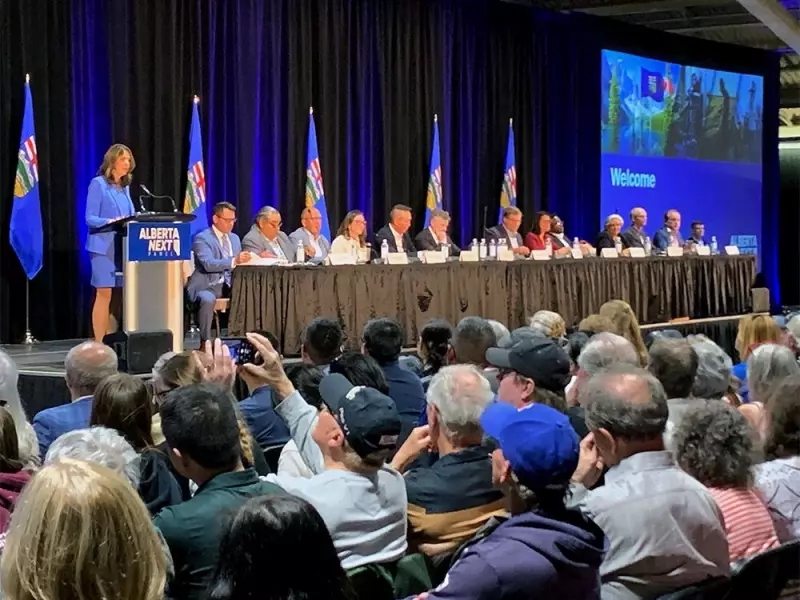
A government-appointed panel in Alberta has delivered a significant report, urging the province to put several foundational issues directly to its citizens. The Alberta Next panel, chaired by Premier Danielle Smith, has formally recommended holding referendums in 2026 on establishing an Alberta Pension Plan, taking greater control over immigration, and pursuing constitutional amendments to strengthen provincial powers.
Key Recommendations for Alberta's Future
The panel's final report, originally scheduled for release on December 31, was made public on Friday, December 19, 2025. It outlines seven core recommendations across six major topics debated during a series of public consultations held over the summer and into the fall. These topics included immigration, pensions, provincial policing, equalization payments, taxation, and constitutional reform.
Premier Danielle Smith stated in a press release that the feedback gathered through the Alberta Next initiative showed a clear sentiment among residents. "Albertans were clear that for too long, decisions made outside this province have limited Alberta’s ability to grow our economy and chart our own course," Smith said. The provincial government has now received the recommendations and will review them.

Province-Wide Consultations Shape Report
The 15-member panel, composed of politicians, policy experts, and community leaders, was created by Premier Smith to examine Alberta's future within Canada and address long-standing grievances with the federal government in Ottawa. To gather public input, the group conducted an extensive tour, holding 10 in-person town halls and one virtual session.
These consultations took place in cities across the province, including Edmonton, Calgary, Red Deer, Sherwood Park, Fort McMurray, Lloydminster, Medicine Hat, Lethbridge, Airdrie, and Grande Prairie. The diverse geographic reach aimed to capture a wide spectrum of Albertan perspectives on the province's direction.
The Case for Referendums in 2026
The panel's central proposal is to ask Albertans to vote directly on three critical issues in a 2026 referendum. The first and most debated topic was the potential creation of an Alberta Pension Plan (APP) and a withdrawal from the Canada Pension Plan (CPP).
According to the report, town hall discussions revealed both support and apprehension. Some participants expressed concerns about whether an APP could be managed as effectively as the CPP, and questioned the plan's stability if Alberta's demographic or economic advantages were to diminish in future decades. The report notes that by law, any move to exit the CPP requires a provincial referendum and must guarantee that contribution rates and benefits for Albertans remain the same or improve.
The second recommended referendum question concerns immigration. The panel found "clear support" among participants for Alberta to exercise more control over who settles in the province. The report indicates that some Albertans linked federal immigration management to pressure on local job markets and social services, while others cautioned against using the topic as a form of scapegoating for broader economic challenges.
Finally, the panel recommends a referendum to seek a mandate for pursuing constitutional amendments. These changes would be aimed at formally strengthening Alberta's jurisdictional authority within the Canadian federation, a long-standing objective for the province's government.
Path Forward for the Province
The release of the Alberta Next report marks a pivotal moment in the province's ongoing discussions about its role in Confederation. With the recommendations now in hand, the ball is in the court of Premier Smith's government to decide next steps. The proposed 2026 referendum date provides a timeline for further analysis, public education campaigns, and legislative preparation should the government choose to act on the panel's advice.

The debate over an Alberta Pension Plan, in particular, is expected to intensify, requiring detailed financial analysis and robust public discourse. Similarly, the question of provincial control over immigration touches on complex agreements with the federal government and would necessitate careful negotiation. The panel's work has successfully framed these monumental questions, setting the stage for what could be a defining period in Alberta's political history.