

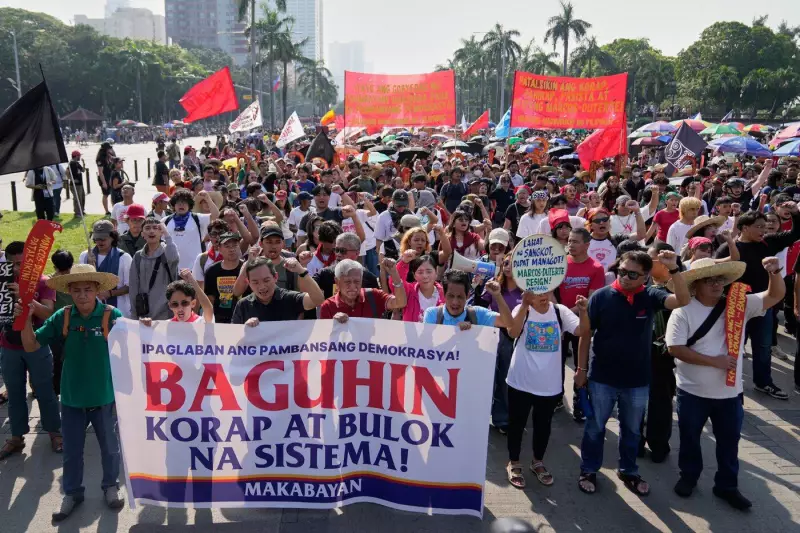
In a devastating blow to one of the world's most disaster-prone nations, a multi-billion dollar investment in critical flood control infrastructure in the Philippines has been systematically looted by government officials, according to reports. The scandal, emerging in late 2025, highlights how corruption is exacerbating the impacts of the climate crisis on vulnerable populations.
Billions Vanish as Climate Threats Mount
The Philippines, an archipelago nation frequently battered by typhoons and severe flooding, had allocated substantial funds to bolster its defenses against rising waters. This strategic investment was meant to protect communities and infrastructure from the increasing frequency and intensity of storms linked to climate change. However, an investigation has revealed that instead of building vital barriers and drainage systems, officials siphoned off the funds for personal gain.
The scale of the theft is monumental, involving billions of pesos intended for public safety. This malfeasance occurred against a backdrop of clear and present danger, with scientific consensus warning of more extreme weather events for the region. The looting represents a catastrophic failure of governance, directly endangering millions of citizens who live in flood-prone areas.

Public Outrage Erupts in Manila Streets
The revelation of the scandal sparked immediate and fierce public backlash. On Sunday, November 30, 2025, protesters took to the streets of the capital, Manila, to voice their anger and demand accountability. Demonstrators shouted slogans during an anti-corruption protest, as captured in photographs by The Associated Press.
The protest underscores the deep-seated frustration among Filipinos who are tired of seeing public resources diverted while they bear the brunt of natural disasters. The stolen funds were not merely statistics on a balance sheet; they represented concrete projects that could have saved homes, livelihoods, and lives during the next major storm event.
A Global Lesson in Accountability and Climate Resilience
This scandal serves as a stark international case study in the intersection of corruption, climate adaptation, and public trust. For countries like Canada, which also faces significant climate adaptation challenges and invests heavily in infrastructure, the Philippine case highlights the critical importance of transparent governance and robust oversight mechanisms.
The fallout from the stolen funds leaves the Philippines in a perilously weakened position. The nation must now confront not only the existing physical threats from its environment but also a profound crisis of confidence in its institutions. Rebuilding both the lost infrastructure and public trust will be a long and difficult process, made more urgent by the relentless advance of climate change.
The events in the Philippines stand as a grim reminder that financial investment alone is insufficient to address the climate crisis. Effective, honest, and accountable governance is the indispensable foundation upon which all physical defenses must be built.






