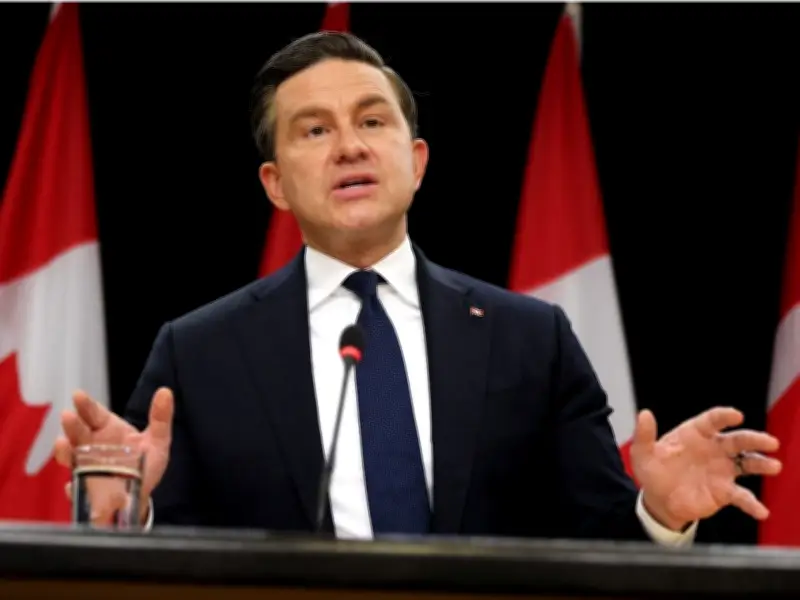
Conservative Party of Canada leader Pierre Poilievre continues to alienate key conservative figures, raising questions about his commitment to winning the next federal election. According to columnist Brian Lilley, Poilievre's recent actions suggest he may not want the job of prime minister badly enough.
Poilievre's Stampede BBQ Attack on Doug Ford
On Sunday at his Stampede BBQ in Calgary, Poilievre used the introduction of newly elected B.C. Conservative Party Leader Kerry-Lynne Findlay to take a shot at Ontario Premier Doug Ford and his team. “The future premier of British Columbia, Kerry-Lynne Findlay, way to go, fresh off a big win against Liberal lobbyists from out east,” Poilievre said.
This was a direct jab at Kory Teneycke, who managed Ford's last three election victories and ran Caroline Elliott's campaign in the B.C. Conservative leadership race. Elliott finished second to Findlay. Poilievre also targeted former employees who worked on Elliott's campaign, including Anthony Koch and Ben Woodfinden.

Alienating Conservatives Who Could Help Him Win
Teneycke is a longtime Conservative, having served as Stephen Harper's director of communications, managed Harper's 2015 campaign, and run Maxime Bernier's 2017 leadership bid. He is also an old friend of Poilievre and his former campaign manager Jenni Byrne, though that relationship is now strained. After Elliott lost, Conservative MPs spent significant caucus time celebrating that “Kory lost,” with Poilievre participating.
Lilley writes: “Instead of mending fences, as Poilievre’s current chief of staff and campaign manager, Steve Outhouse, promised earlier this year, Poilievre is making matters worse.” In the 2025 election, where Poilievre lost to Mark Carney's Liberals and lost his own seat, he either froze out or alienated Doug Ford, Jean Charest, Patrick Brown, Nova Scotia Premier Tim Houston, Peter MacKay, and others. Their help could have secured victory, but the campaign was all about Pierre.
Rift Between Ford and Poilievre Runs Deep
The rift predates the last election. Ford called Poilievre after he won the Conservative leadership, but Poilievre never returned the call. He would visit Toronto without meeting Ford, while his lieutenants openly attacked the premier. Poilievre's supporters often label Ford as not a true Conservative, calling him “Comrade Doug,” even though Ford has won three majority governments.
Lilley notes that Poilievre does not pick fights with Conservatives in Quebec or Atlantic Canada, who are often more centrist than Ford. This selective hostility undermines Poilievre's chances at the ballot box. “Poilievre needs to decide whether he wants to be smug and right, in his own mind, or whether he wants to win elections,” Lilley concludes.