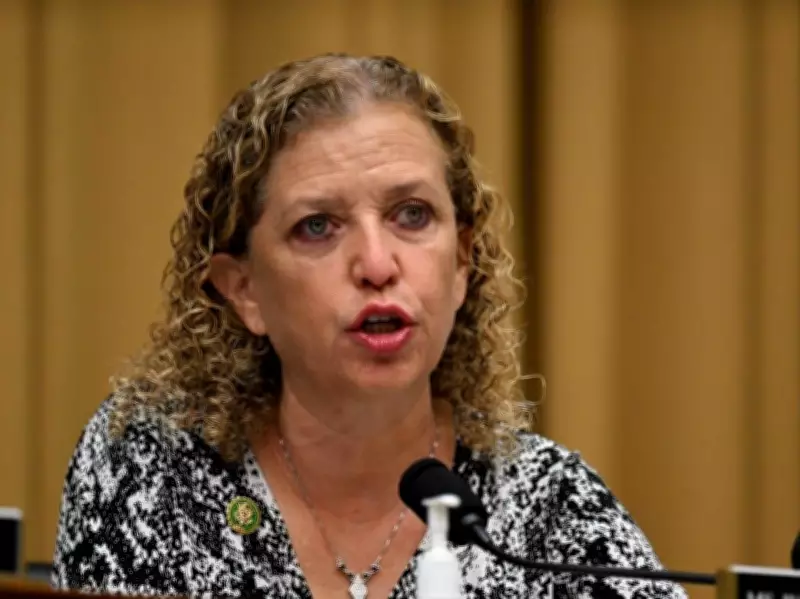
Former Democratic National Committee Chair Rep. Debbie Wasserman Schultz (D-Fla.) is facing sharp criticism from fellow Democrats for her decision to seek election in a predominantly black congressional district in Florida. The controversy highlights the ongoing tensions within the party over racial identity and representation.
District Demographics and Controversy
According to the Miami Herald, the newly redrawn 20th District has a population that is 45% Black, down from 53% under the previous map. At least five Black Democrats are also vying for the seat. Wasserman Schultz's current district, which is approximately 43% Hispanic, 32% white, 15% Black, and 5% Asian, has been redrawn and is expected to lean Republican. Consequently, she announced her candidacy for the seat formerly held by Rep. Sheila Cherfilus-McCormick, a Black woman who resigned amid scandal but is now running to reclaim her position.
Reactions from Rivals
Cherfilus-McCormick criticized Wasserman Schultz's move, stating, "This is not the moment for forum shopping. This is not the moment to say this is easier. What matters in this moment is to make sure all the strides we have made to make sure Black representation is actually present matters." Another candidate, Elijah Manley, took to social media to accuse Wasserman Schultz of "carpetbagging" and representing everything wrong with the Democratic establishment, including insider trading and ties to payday lenders.

Black Legislative Caucus Weighs In
The Florida Black Legislative Caucus issued a strong statement against Wasserman Schultz's candidacy: "Our party cannot credibly denounce the dismantling of Black political power by Republicans while treating one of Florida's few remaining majority-Black districts as a political opportunity for an incumbent seeking a safer seat. We cannot claim to defend voting rights, racial justice, and representation while undermining Black political power when it becomes politically convenient."
Wasserman Schultz's Defense
Wasserman Schultz argues that race should not be a determining factor in her ability to represent the district. She points out that she has represented nine of the 14 cities in the new district and that her voting record aligns with progressive values. The liberal Americans for Democratic Action rated her 95% in 2023, the same score as Black Rep. James Clyburn of South Carolina. She draws a parallel to Barack Obama, who did not believe he needed to be white to represent a predominantly white state or country.
Historical Context
Obama appointed Wasserman Schultz as DNC chair in 2011 and strongly endorsed her reelection in 2016, praising her as a "strong, progressive leader" and a "hardworking, committed Chair." However, her current predicament underscores the paradox of identity politics—a narrative she helped promote as DNC chair. Critics argue that by seeking a safer seat in a Black-majority district, she is undermining the very principles of representation she once championed.
As one observer noted, "Live by the race card. Die by the race card." The controversy serves as a stark reminder of the complexities and contradictions within the Democratic Party's approach to race and representation.