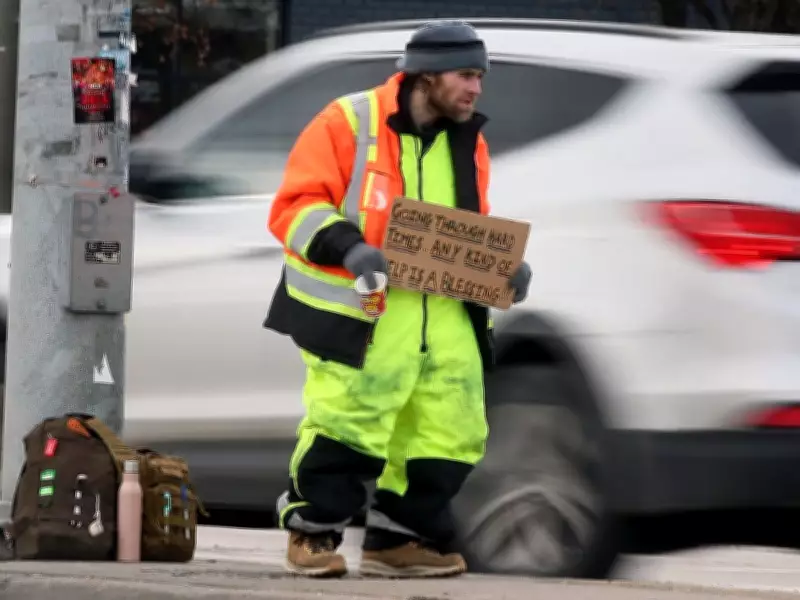
Windsor city council has launched a novel approach to address persistent roadway panhandling concerns, this time targeting those who give money rather than those who ask for it. Following legal advice that outright bans violate constitutional protections, municipal leaders are pursuing an educational campaign aimed at redirecting charitable impulses toward more effective channels.
Shifting Focus from Receivers to Givers
During Monday's council session, officials directed city administration to identify dangerous "hot spots" where panhandling frequently occurs at busy intersections. At these locations, the city plans to erect signage informing passersby about "better, alternative ways of giving" that could more effectively address underlying social issues.
"I don't think we want to punish people that are suffering from poverty or mental health or addictions issues, but we have to do something," explained Ward 3 Councillor Renaldo Agostino, who championed the initiative. "The only way to stop people from panhandling is to find alternative methods of giving your money to places where it counts."

Constitutional Constraints and New Approaches
City legal advisors have consistently warned that prohibiting peaceful panhandling would likely violate freedom of expression protections under the Canadian Charter of Rights and Freedoms. Previous attempts to restrict panhandling in residential, business, and tourism districts have failed due to these constitutional concerns.
Mayor Drew Dilkens expressed hope that Windsor could "break new case law" on the subject by demonstrating that certain panhandling locations create unsafe conditions. "I'm all for something that's going to try and make a difference, and let the public know we're trying to make a difference on this front," Dilkens stated during council deliberations.
Comprehensive Education Strategy
The council motion calls for a multi-pronged approach that extends beyond signage. City staff have been directed to develop:
- An education program highlighting alternative resources and supports for individuals who rely on panhandling
- A separate education initiative for potential donors about more effective charitable options
- Advocacy efforts directed at provincial and federal governments for increased support addressing mental health, addiction, poverty, and homelessness
Before implementation, city administration will prepare a detailed report about a potential pilot project for council consideration at a future meeting. This report will outline specific locations, signage designs, educational materials, and implementation timelines.
Historical Context and Recent Efforts
This represents Windsor's latest attempt to address roadway panhandling concerns. In July 2022, Ward 1 Councillor Fred Francis requested investigation into creating a bylaw prohibiting panhandling in specific districts. During that discussion, Mayor Dilkens expanded the proposed restrictions to include boulevards and pedestrian refuges, though these efforts ultimately stalled due to constitutional concerns.
The current approach reflects a strategic pivot toward public education rather than prohibition. As Councillor Agostino noted, "We're not going to be able to stop people from panhandling. We can't make it illegal." Instead, the city hopes to influence donor behavior while advocating for systemic solutions to the underlying social issues that drive panhandling.
"I'm hopeful the report comes back in a way that lets us act to create a safer community for us all," Mayor Dilkens concluded, emphasizing the dual goals of roadway safety and compassionate response to social challenges.