U.S. Automakers' Gas-Guzzler Revival Risks Future Competitiveness Against Chinese EVs
In a dramatic shift that echoes Detroit's historical love affair with raw power, American automakers are enthusiastically reviving their production of gas-guzzling trucks, SUVs, and muscle cars. This resurgence comes as President Donald Trump's administration has gutted climate regulations, freeing manufacturers to sell as many combustion-engine vehicles as the market will bear.
The Return of American Muscle
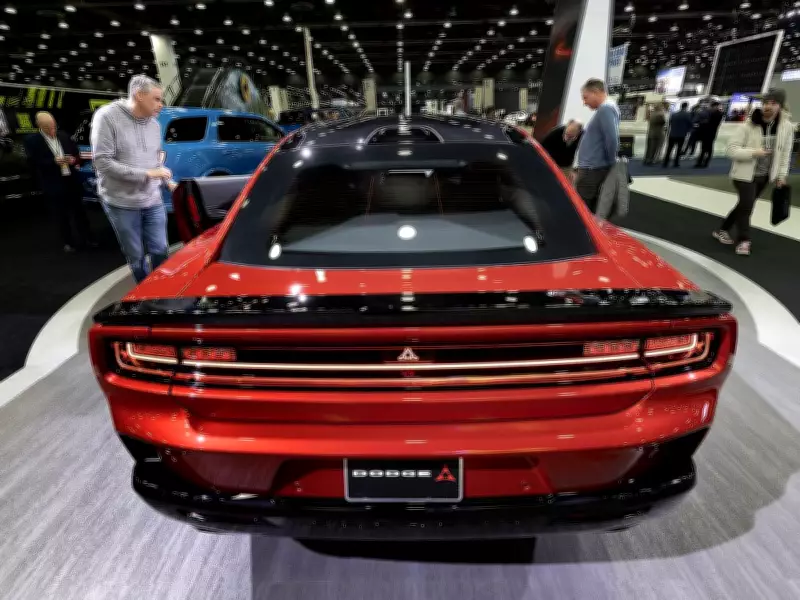
The Detroit Auto Show recently showcased this renewed commitment to traditional power, with beasts like the Dodge Charger and Ford's Mustang Dark Horse laying down rubber and capturing attention. These vehicles, powered by rumbling V-8 and Hemi engines, represent what Ford's Mustang brand manager Ryan Shaughnessy describes as "the sound and roar" that American car enthusiasts crave.
"Now is a great time for the V-8 engine," Shaughnessy declared, citing extensive customer research showing the big engine remains the number-one choice among American buyers. This sentiment resonates deeply within Detroit's executive suites, where many leaders are self-described "car guys" who live for the bone-shaking rumble that electric vehicles simply cannot replicate.

Short-Term Profits Versus Long-Term Strategy
The financial appeal of this strategy is undeniable. American automakers have always made their best margins on large vehicles with monster engines, and Ford Motor Co.'s top executive has hailed the regulatory change as a "multibillion-dollar opportunity." Wall Street has responded enthusiastically, with Ford's stock rising nearly 50 percent over the last twelve months and General Motors receiving multiple analyst upgrades after blowing away earnings expectations.
Ford is predicting operating profits could grow by as much as 47 percent this year to $10 billion, while GM's earnings power has become impossible for analysts to ignore. This sudden profitability surge promises a new era of financial success for companies that have struggled with the costly transition to electric vehicles.
The Chinese Electric Vehicle Threat
Despite these immediate financial gains, industry experts warn that this strategy risks sending American automakers off a cliff in the coming years. While Detroit rediscovers its love for combustion engines, Chinese automakers like BYD Co. are flooding global markets with advanced, affordable electric vehicles that represent the future of transportation.
"If they just go back to Hemi Land and not do anything, it would be disastrous in a few years — a horrific disaster," warned Mark Wakefield, head of the global automotive practice at consultant AlixPartners. He noted that while American automakers mostly understand the challenge before them, they lack comprehensive plans to confront the rising Chinese competition.
Global Market Realities
The fundamental problem with Detroit's gas-guzzler revival is that it ignores global market realities:
- Electric vehicles continue to receive government support through regulations and incentives across much of the world
- Chinese manufacturers are producing high-tech, low-cost electric cars that are finding enthusiastic buyers globally
- U.S. automakers currently rely on 100 percent tariffs on Chinese EVs to keep these surging rivals at bay in the American market
- If American companies turn their backs on electrics, their international sales will inevitably shrivel
Promises Versus Reality
Auto executives insist they're not abandoning electrification entirely. Ford executive chair Bill Ford, great-grandson of the company's founder, pointed to a line of affordable electric vehicles planned for 2027, including a $30,000 pickup truck. The company also plans to expand its offerings of gas-electric hybrid models.
"We certainly are not turning our back on the rest of the world," Ford emphasized in an interview at the Detroit Auto Show. "We are investing."

Yet these promises stand in stark contrast to the company's simultaneous celebration of its new Mustang muscle car variant, the Dark Horse SC, which boasts over 500 horsepower and an expected price tag exceeding $90,000. This duality highlights the fundamental tension between short-term profitability and long-term strategic positioning in a rapidly evolving global automotive landscape.
A Dangerous Crossroads
American automakers now face a critical decision point. They can continue pursuing immediate profits from gas-guzzling vehicles that appeal to domestic enthusiasts, or they can make the substantial investments necessary to compete with Chinese manufacturers who are already building the world's most advanced and affordable electric vehicles.
The hangover from all this horsepower could leave U.S. automakers permanently lagging behind their Chinese rivals, who have positioned themselves as leaders in the electric vehicle revolution that continues to gain momentum around the globe. As the rest of the world accelerates toward electrification, Detroit's rediscovery of roaring engines may prove to be a nostalgic detour with dangerous long-term consequences for America's automotive industry.