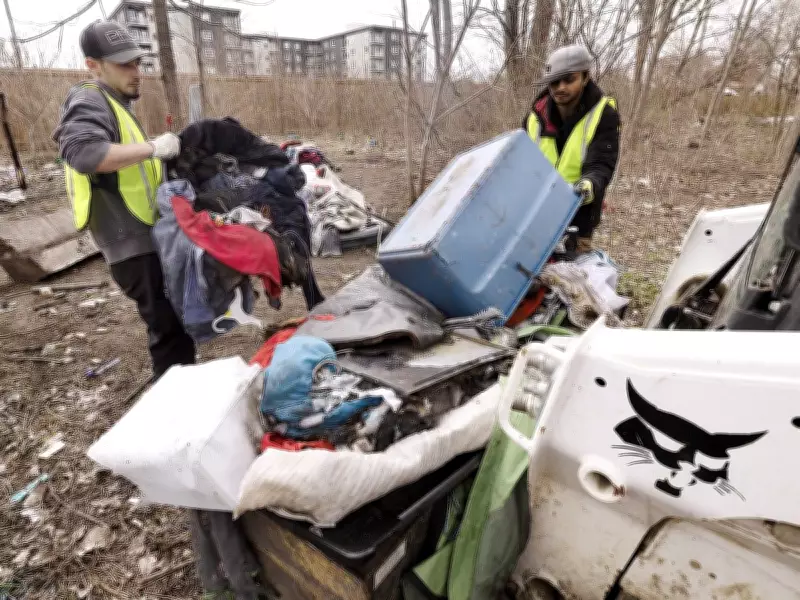
Windsor Clears Downtown Homeless Encampment After Years of Safety Concerns
The City of Windsor has taken decisive action to clear out a long-standing homeless encampment in the downtown core, addressing what officials describe as a "terrible situation" that has plagued the area for years. The removal operation, which began on Wednesday, April 9, 2026, followed extensive preparations and years of mounting complaints from residents and business owners about fires, drug use, and safety hazards.
Years of Community Frustration Lead to Action
Ward 3 Councillor Renaldo Agostino, who represents the downtown area, explained that it took three years for the city to gain "agent status" on the private property, finally granting it the authority to clean up the site and relocate individuals. The encampment was located on a roughly 15,000-square-metre swath of land owned by absentee landlords from Toronto, situated next to railway tracks between University Avenue West and Wyandotte Street West.
"It was basically a tent city," said Agostino. "It was a terrible situation for the area, for the downtown, and for the neighbourhood. You can go back to the lady over on Crawford who was complaining about her kids having to deal with people doing drugs, and fires right behind her backyard. And all these residents here and the business owners in this area that were fed up with the situation that was happening here."

Residents had reported regular sightings of drug use, and mountains of trash had accumulated, blighting the landscape. The situation escalated on March 12 when two early-morning fires ripped through the encampment within hours of each other, with firefighters discovering multiple propane tanks and other combustible materials among the garbage piles.
Compassionate Approach with Shelter Options
City workers, assisted by Windsor police, began clearing the encampment on Wednesday. According to Agostino, about 15 people were living rough on the property at the time, and all were directed to shelters and other housing options. "Everyone's been given options," he stated, emphasizing that the city's teams approached the situation with compassion while asserting that "living in tents in the middle of the downtown core is no longer an option."
Cleanup crews worked throughout Thursday, moving armloads of trash into heaps for an excavator to pile into dumpsters. Agostino reported that three or four dumpsters were already filled with garbage by Thursday morning, with the entire site being thoroughly cleaned.
Advocates Express Concerns About Long-Term Solutions
While officials celebrated the removal as "problem solved," homeless advocates raised serious concerns about the sustainability of simply moving people into shelters. Christine Wilson-Furlonger, administrator of Street Help, an organization that assists Windsor's homeless population, expressed skepticism about the long-term effectiveness of this approach.
"A lot of these people have already been barred from shelters, or they don't want to give up their pet and move because they can't have their pet at the shelter," Wilson-Furlonger explained. "Or they've been beaten up or robbed at the shelter. There's a variety of reasons. It's not the fault of the shelters. But saying we're going to shove them into shelters, I've heard that over and over again."
She emphasized that homeless individuals are "not disposable" and deserve comprehensive support, noting her fear that even if people are moved into shelters temporarily, many will soon end up back on the streets without addressing the root causes of homelessness.
Ongoing Monitoring and Community Impact
Windsor police remained at the scene after the initial clearance to monitor the situation and prevent re-establishment of the encampment. The removal marks a significant moment for downtown Windsor, where the makeshift camp and related safety concerns have frustrated and angered area residents and business owners for years.
The city's action represents a complex intersection of public safety concerns, property rights, and social welfare challenges, highlighting the ongoing struggle municipalities face in addressing homelessness while balancing the needs of all community members.