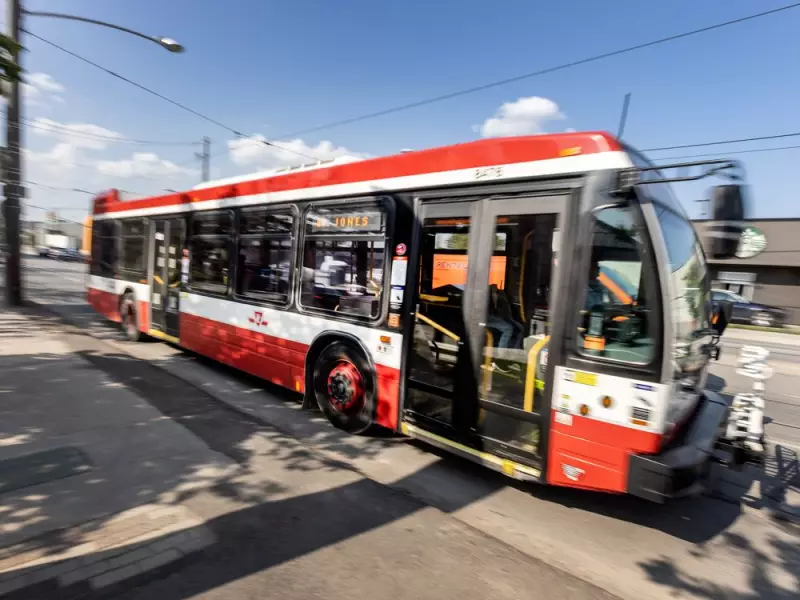
A new national investigation has revealed a stark and sustained surge in violence on public transit systems across Canada, with Toronto experiencing one of the most dramatic increases. According to data featured by the CBC, reported assaults on Toronto-area transit have risen by 160 per cent since 2015, with overall violent incidents up 127 per cent.
A Long-Term Trend, Not an Anomaly
This disturbing rise is not a temporary spike but a long-term trend that has eroded public confidence. The data confirms what countless commuters—parents, seniors, workers, and students—feel daily: the system is less safe than it was a decade ago and has not recovered from the pandemic's social disruptions.
Toronto City Councillor Brad Bradford, writing in the National Post, emphasized the personal impact of this crisis. "I have two young daughters, and like many parents in this city, I don’t feel comfortable taking them on the TTC," he stated. The indiscriminate nature of the violence, occurring in crowded spaces with little room for escape, compounds the fear.

National Crisis with Local Failures
The problem extends far beyond Toronto. Cities like Winnipeg, Edmonton, Montreal, and Kitchener-Waterloo have recorded similar dramatic increases. Experts point to a confluence of factors driving the trend, including the opioid crisis, unmet mental health needs, affordability pressures, and a justice system that allows repeat offenders to remain on the streets.
While other municipalities have launched robust responses, Bradford argues Toronto's efforts have been inadequate. From 2018 to 2024, 2,278 reported acts of violence took place on TTC buses, 1,259 on subway cars, and 499 on streetcars. Despite this, the rate of arrests and charges is falling, leading to a perception that unacceptable behaviour goes unchecked.
Other cities are taking direct action. Calgary now invests $15 million annually in transit safety, adding dozens of officers. Winnipeg has a new violent crime intervention strategy, and Edmonton is expanding specialized transit police teams.
Call for a Stronger Response from City Hall
In contrast, Bradford criticizes Mayor Olivia Chow's administration for a piecemeal approach. This fall, the mayor announced three teams of crisis workers based at only three of 70 subway stations. After voting down a motion from Bradford to boost TTC security, she later announced adding Toronto Police officers to two small segments of one subway line.
While welcoming any additional resources, Bradford contends these measures are "far from adequate given the scale of the problem." He challenges the mayor's attempt to claim progress by citing a rider perception survey that showed a slight improvement in feelings of safety. "A slight decline in people feeling unsafe is not a victory," he writes, noting that incidents remain dramatically higher than a decade ago and that ridership has suffered as people choose to drive instead.
The core issue, according to Bradford, is a loss of public trust in the backbone of Toronto's mobility. The most fundamental duty of government is to keep citizens safe, and on that metric, the current trajectory is failing transit riders across the country.