The president of Iran's soccer federation has publicly voiced significant doubts about the national team's ability to participate in upcoming World Cup matches scheduled in the United States. This uncertainty follows the recent and unexpected military bombardment of Iran by the United States and Israel, which has escalated regional conflicts and created a highly volatile geopolitical environment.
Federation President Expresses Grave Concerns
In a candid interview with the prominent sports portal Varzesh3, Mehdi Taj, the head of Iran's soccer federation, stated emphatically that the national team cannot be expected to approach the World Cup with optimism or hope after such a severe attack on their country. His comments came as Iran engaged in retaliatory strikes against Israel, marking a dangerous expansion of hostilities that began with the initial bombardment.
Military Strikes Continue Amid Leadership Crisis
The joint U.S.-Israeli military operations against Iran persisted into a second day on Sunday, further destabilizing the region. These strikes were triggered by the assassination of Iranian Supreme Leader Ayatollah Ali Khamenei, an event that has plunged the future of the Islamic Republic into profound uncertainty and significantly heightened the risk of widespread regional instability.

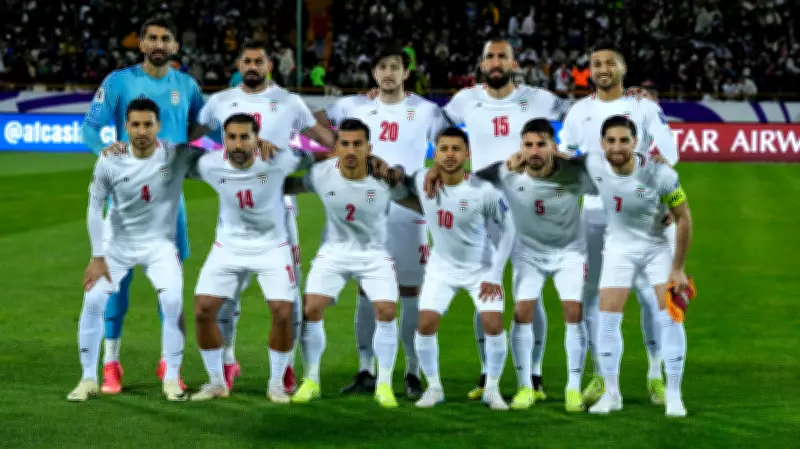
Iran's national soccer team, which recently posed for a team photo during an Asian qualifier match against the UAE in Tehran in March 2025, is now facing unprecedented challenges. The team has been drawn into Group G for the World Cup and is slated to play critical matches in the United States.
Scheduled World Cup Matches in Jeopardy
According to the tournament schedule, Iran is set to compete against New Zealand on June 15 in Inglewood, California, followed by a match against Belgium on June 21 in the same location. The team is then scheduled to conclude the first round against Egypt on June 26 in Seattle, Washington. The World Cup is being co-hosted by the United States, Canada, and Mexico from June 11 to July 19, adding complexity to the situation.
Existing Travel Restrictions Compound Problems
Compounding the issue are pre-existing travel bans that have already prohibited fans from Iran from entering the United States. These restrictions were initially implemented during the Trump administration and remain in effect, creating additional logistical and diplomatic hurdles for the team's participation.
FIFA, the global governing body of soccer, has not yet responded to inquiries from The Associated Press regarding the current status of Iran's involvement in the World Cup. The organization's silence leaves many questions unanswered about potential contingency plans or diplomatic interventions.
Broader Implications for International Sports
This situation underscores the intricate and often fragile relationship between international sports and global politics. The uncertainty surrounding Iran's participation highlights how geopolitical tensions can directly impact major sporting events, affecting athletes, fans, and organizers alike. As the conflict continues to evolve, the soccer world watches closely, awaiting further developments that could reshape the tournament's dynamics.