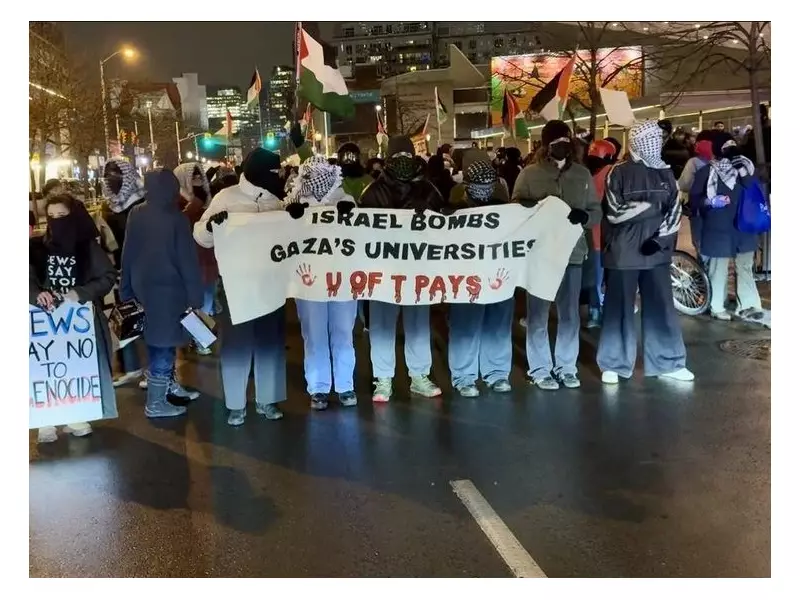
In a city that prides itself on safety and inclusivity, the current reality for many Toronto residents, particularly within the Jewish community, is one of fear and intimidation. Public spaces have transformed from ordinary venues into sites of harassment, with demonstrations encroaching on neighbourhoods, schools, and synagogues, turning daily life into a source of anxiety.
The Core Issue: Safety Versus Slogans
The gap between civic branding and on-the-ground experience is widening. While Toronto promotes itself as safe and governed by the rule of law, the lived experience for many no longer matches that promise. The feeling of security when walking the streets is eroding, replaced by a palpable tension where protests spill beyond their intended scope.
This is not a call to end protests. Freedom of expression, protected under Section 2(b) of the Canadian Charter of Rights and Freedoms, remains a democratic cornerstone. However, this right does not extend to calls for violence, the intimidation of religious groups, or the targeted harassment of civilians. Such actions cross the line from legitimate dissent into coercion.

Why Current Measures Are Failing
Toronto's existing strategy, which includes limited "bubble zones" around specific vulnerable locations, is proving inadequate. Critics describe it as a reactive Band-Aid solution that is too vague and easily circumvented. It leaves law enforcement officers in the difficult position of making real-time judgment calls without clear, enforceable guidelines.
Canadian courts have a history of upholding reasonable limits on rights when necessary to protect public safety and vulnerable populations. The legal framework exists; what is required now is the political will and municipal clarity to apply it effectively.
A Proposed Solution: Designated Protest Zones
The path forward, as outlined, is straightforward: require all protests to be permitted and confined to designated municipal and government spaces. These could include areas like Queen's Park, civic plazas, and other clearly defined municipal zones.
Demonstrations would be legally restricted to these areas, with neighbourhoods, schools, houses of worship, and community centres explicitly off-limits to protest activity. Crossing that line would result in immediate enforcement, charges, and prosecution.
This approach is framed not as silencing dissent, but as containing it within appropriate forums. It aims to protect the fabric of residential communities from becoming flashpoints of fear while ensuring the right to protest is preserved. Crucially, it provides police with an unambiguous mandate, removing the grey areas that often lead to inaction or inconsistent enforcement.
The consequence of inaction is a slow erosion of public trust and a dangerous message that the safety of some residents is negotiable. The recent tragedy in Australia is cited as a stark warning of what hesitation can cost. The argument is clear: Toronto cannot afford to wait for a crisis to force its hand. The time for establishing clear lines, ensuring firm enforcement, and communicating them publicly is now.
Sharon Zohar, a Toronto-based writer and editor, authored this commentary on December 18, 2025.