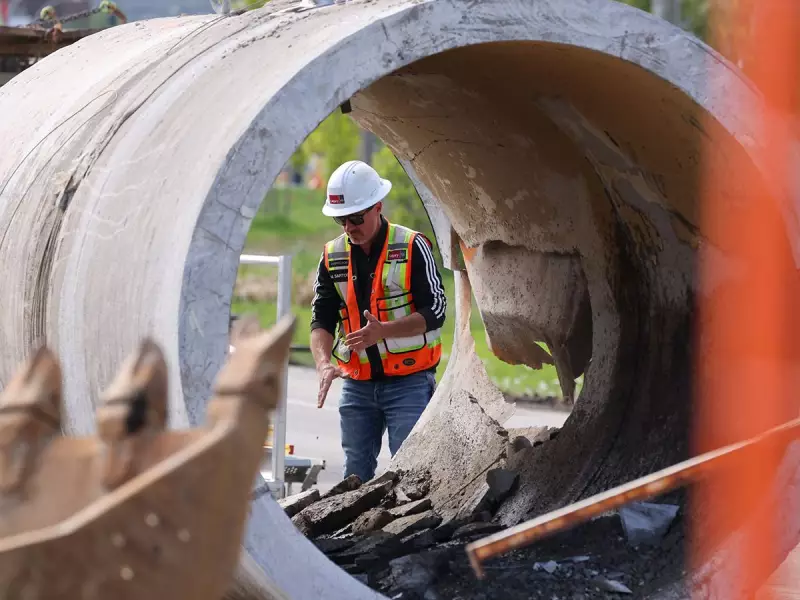
A damning independent review has laid bare the root causes behind the catastrophic failure of Calgary's critical Bearspaw South feeder main in June 2024. The report, released to city council and the public, identifies profound "systemic gaps" within the city's water treatment and distribution system, stemming from "ineffective management" and a "lack of governance oversight."
Key Failures and Deferred Risks
Led by retired ATCO executive Sigfried Kiefer, the 86-page review was commissioned by the previous city council just two weeks after the pipe's "catastrophic failure" on June 5, 2024. The report details how the feeder main, constructed in 1975 and responsible for carrying nearly 60 per cent of Calgary's treated water, was "repeatedly recognized as a high consequence risk." However, inspections were consistently deprioritized due to a perceived low likelihood of failure, causing resources to be directed elsewhere.
Alarmingly, risks to this vital infrastructure were identified as early as 2004, following a similar feeder main burst under McKnight Boulevard. Despite this history, the Kiefer report states the city deferred or redirected recommended inspections on the Bearspaw line in 2017, 2020, and 2022. The review panel traced the systemic gaps to external pressures, flawed asset integrity processes, and the ineffective management structure.

A Culture of Deferral and Unclear Accountability
The investigation paints a picture of an organization struggling to manage its complex water utility. The report describes "an environment of unclear accountability" and a "culture of risk tolerance and decision deferral." It argues that the city's water utility processes were not robust enough to handle a system of this nature, especially under challenging external pressures.
Furthermore, the city's last asset management plan, issued in 2017, did not include an integrated resource plan. This omission left the entire system "without any coordinated, long-term renewal and redundancy planning," according to the report's findings. The lack of a dedicated, oversight-focused governance model allowed these critical issues to persist unchecked.
Three Core Recommendations for Reform
To address the foundational problems, the Kiefer panel issued three primary recommendations. First, it calls for the establishment of an independent water utility oversight board to provide clear governance and accountability. Second, it recommends creating a dedicated utility department with segmented financial statements to ensure focused management and transparent budgeting.
The third key recommendation is for the City of Calgary to strengthen its risk management and asset integrity processes fundamentally. This move is intended to prevent the repeated deferral of critical inspections and ensure high-consequence assets like the feeder main receive the priority attention they require.
The report's release comes at a critical time, as a repeat rupture of the same feeder main on December 30, 2025, has thrust the city's water infrastructure back into crisis. The review panel noted that this most recent incident fell outside its original scope of work. The findings now place immense pressure on current city officials to implement the recommended reforms swiftly to restore public trust and prevent future catastrophic failures.