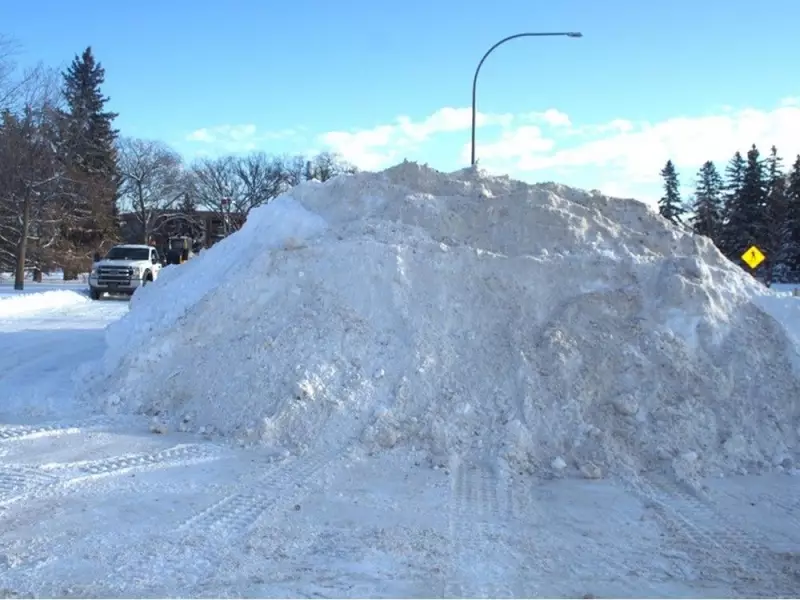
Mayor Andrew Knack is pushing for a fundamental review of Edmonton's snow-clearing policies, driven by an unprecedented winter that has buried the city and left residents struggling on treacherous local roads. The call for change comes as the city digs out from its fifth-largest December snowfall on record, with 50.2 millimetres of precipitation officially recorded.
A Winter of Frustration and Close Calls
In a detailed post on his Substack published last Friday, Mayor Knack acknowledged the widespread frustration he has heard from citizens through calls, emails, and social media. He also shared his own personal experience navigating the challenging conditions. "I drive a smaller vehicle and have had a couple of close calls getting stuck," Knack stated. "I’ve heard from many residents who have been stuck themselves — or who’ve helped to push someone else free."
Despite the difficulties, the mayor expressed gratitude for City of Edmonton crews who have been working around the clock. He emphasized that the winter season is not yet half over and that the sheer volume of snow has been significant, creating especially tough conditions on neighbourhood streets.

By the Numbers: A Historic December
According to Environment Canada meteorologist Danielle Desjardins, the data confirms this winter's exceptional nature. December 2025 now ranks as Edmonton's fifth wettest December since records began. The city received 50.2 mm of precipitation (including both rain and snow), edging out the sixth-place year, 1906, by a mere 0.2 mm.
The top recorded December precipitation totals for Edmonton are:
- 1893: 81.5 mm
- 1933: 72.7 mm
- 1983: 55.4 mm
- 2004: 53.9 mm
- 2025: 50.2 mm
This winter's snowfall dramatically exceeds the 30-year average for the region, placing immense pressure on the city's existing snow removal framework.
Exploring Costly Alternatives for Future Winters
Knack outlined the city's current snow removal priorities, which focus on clearing windrows from major roads before addressing residential areas—a safety-driven protocol. However, he suggested Edmonton must consider whether its current methods are sufficient for increasingly severe winters.
The mayor revealed that the city has previously studied alternative systems, including a fact-finding mission to Stockholm, Sweden, in 2022. Some cities opt for complete snow removal instead of blading and piling. The report presented to council outlined two potential paths for Edmonton:
- Doubling the rate of snow removal, which would add approximately $20 million to the annual budget.
- Cutting snow removal time by about 25%, a more aggressive approach that would increase the annual budget by a staggering $71 million.
Currently, Edmonton's snow and ice control program is budgeted at $67 million per year, a cost that has risen annually. The logistical and financial hurdle of switching to a full-removal system has so far been deemed prohibitively expensive.
Knack's intention is to spark a city-wide conversation about these options and their associated costs as part of the upcoming four-year budget cycle. The goal is to determine if and how Edmonton should invest more heavily in its winter resilience, balancing citizen safety and mobility with the significant financial impact on taxpayers.