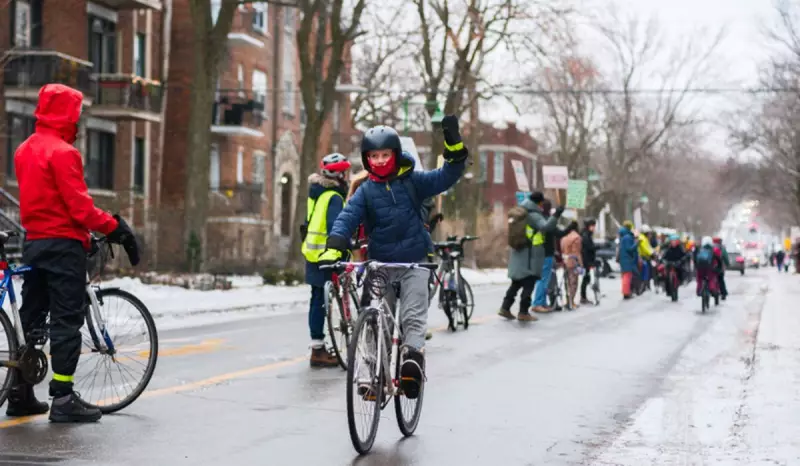
Residents of Montreal's Outremont borough took a dramatic stand on Tuesday, December 2, 2025, forming a human chain to protest the removal of a bicycle path in their neighbourhood. The peaceful demonstration saw community members link arms along the contested route, visually underscoring their opposition to the municipal decision.
A Visual Statement of Opposition
The protest was organized in direct response to the borough's move to dismantle the cycling infrastructure. Participants, ranging from young families to seniors, stood together to physically represent the path they felt was being unjustly taken away. The action served as a powerful, non-confrontational method to draw public and media attention to the issue, highlighting the depth of local support for active transportation options.
The Core of the Conflict
While the specific reasons for the path's removal were not detailed in the initial report, such decisions often stem from debates over street space reallocation, traffic flow changes, or local business concerns. The protest on December 2, 2025, indicates a significant portion of the Outremont community values the bike lane as a crucial asset for safety, sustainability, and healthy living. The event was documented by photographer Martin Reisch, whose images captured the scale and sentiment of the gathering.

Broader Implications for Urban Mobility
This protest in Outremont is not an isolated incident but part of a larger, ongoing conversation in Montreal and cities across Canada about the prioritization of urban space. As municipalities aim to meet climate goals and promote healthier lifestyles, cycling infrastructure has become a frequent flashpoint. The human chain action demonstrates a shift towards more visible and symbolic forms of civic engagement, where residents directly embody the infrastructure they wish to protect.
The aftermath of the protest will likely involve continued pressure on local officials. Community groups often leverage such visible actions to initiate or reopen dialogue with city planners and elected representatives. The outcome of this particular dispute could set a precedent for how similar conflicts over street design and active transportation projects are handled in other Montreal boroughs and beyond.