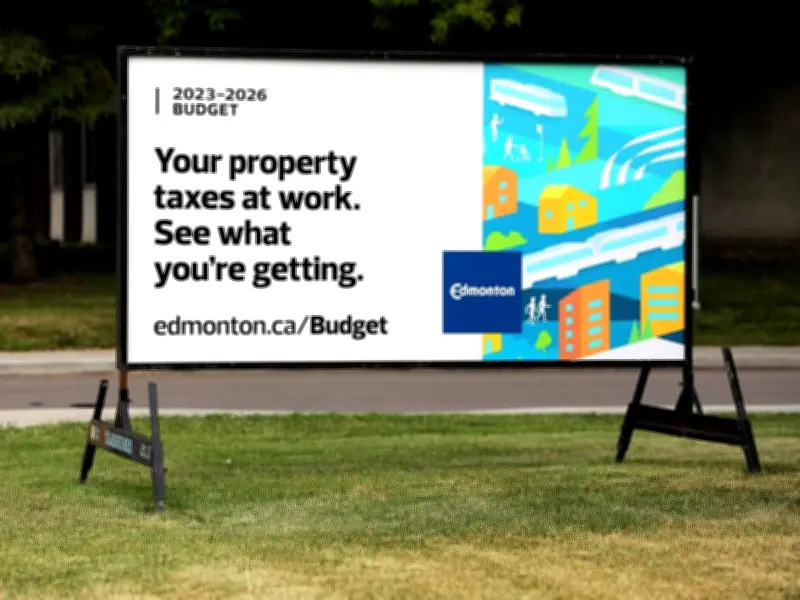
Property taxes have long been Edmonton’s main revenue source, but a new report highlights how user fees—from zoo parking to pool memberships—are falling behind costs, driving up tax rates. The 6.9% tax increase in 2026 is partly due to this shift, which has been building for decades.
Revenue Shift Over 25 Years
Stacey Padbury, a city official, told council’s executive committee that a corporate user fee policy is needed to close the fiscal gap. Over 25 years, the revenue mix changed from 54% non-tax and 46% property tax in 2000 to 37% and 63% in 2025. The last even split was in 2007.
Padbury noted that property tax revenue grew 60% from 2016 to 2025, while Edmonton Transit revenue fell 18%. Recreation and attraction user fees rose only 22%.

Impact on Taxpayers
“Because these two revenue streams have not grown in line with service delivery costs, and because the city is required to balance its operating budget, this has meant that the tax levy has offset the difference resulting in higher tax increases over the entire period,” Padbury said.
Milap Petigara, the city’s principal policy advisor, added: “Non-tax revenues for items such as user fees have not grown in line with expenditures, and therefore has placed an additional burden on the amount needed to be collected through property taxes.”
Balancing Affordability and Sustainability
User fees are not intended to generate profit but to recover delivery costs. However, Padbury emphasized the challenge of balancing financial sustainability with affordability. “Subsidies also support affordability, as we know that target subsidies will be required to ensure that all Edmontonians are included and have access to city services,” she said.
The report underscores ongoing tensions at city council over who pays and who subsidizes services, as Edmonton grapples with rising costs and aging infrastructure.