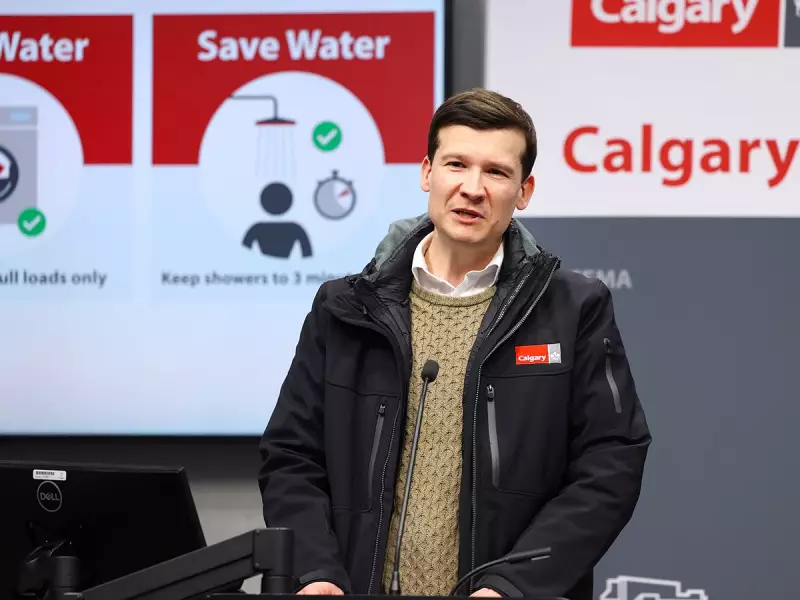
Calgary Mayor Jeromy Farkas delivered a stark and urgent warning to residents on Monday, January 5, 2026, declaring the city's aging Bearspaw South water main a "ticking time bomb" and a "mortal risk" to the community. His alarming assessment came during an update at the Calgary Emergency Operations Centre, following a recent break in the critical pipe.
A Dire Warning and a Failing System
Mayor Farkas did not mince words, stating that the city is now facing a prolonged crisis with no quick fix. The Bearspaw South feeder main, which carries approximately 60% of Calgary's water supply, is in a state of advanced decay. Unlike the repairs undertaken after a major failure in 2024, the current situation requires a complete and complex replacement of the failing infrastructure.
"We're replacing the pipe that carries the heart of Calgary's water system, the beating heart that is sick and terminally ill," Farkas said. He employed a vivid mix of metaphors to underscore the gravity and difficulty of the task, comparing it to "replacing the engine of an aircraft while in mid-flight." He suggested that such dramatic language would only be used if the problem was, in fact, critically serious.

The Roots of the Crisis and a History of Neglect
The current emergency has its roots in decisions made decades ago. In the 1970s, the city installed concrete pipe reinforced with steel wire, believing it would last a century. That faith has proven catastrophically misplaced. Visual evidence presented shows sections of pipe so severely corroded they resemble organic decay.
Farkas placed blame on successive city councils that ignored the deteriorating state of the infrastructure until previous failures forced their hand. Following the 2024 pipe explosion, experts identified nearly 30 additional sections that needed repair or replacement. However, momentum for a full-scale solution slowed once the immediate crisis faded, delaying the crucial project to install six kilometres of new steel pipe.
"What Farkas says now should have been the message in 2024," the report notes, suggesting that had work continued aggressively, the city would be nearing completion of the replacement instead of just beginning.
Implications for Calgary Residents and Businesses
The immediate consequence for Calgarians is a return to water conservation measures. With the Bearspaw line compromised, the city must rely more heavily on the smaller Glenmore water treatment plant. Officials warn that if that system fails under the increased strain, current restrictions will seem mild by comparison.
However, public response to the new call for conservation appears less vigorous than during the summer of 2024. The timing of the latest break, over the holiday period, meant many residents were distracted, leading to lower compliance with water-saving appeals.
Mayor Farkas concluded that there is no avoiding a multi-year effort to solve this foundational problem. The project to replace the critical line has now been re-prioritized and accelerated to "high speed," but the path forward will be long, expensive, and disruptive. The warning is clear: the risk beneath Calgary's streets is real, and the city's water security depends on confronting it head-on.