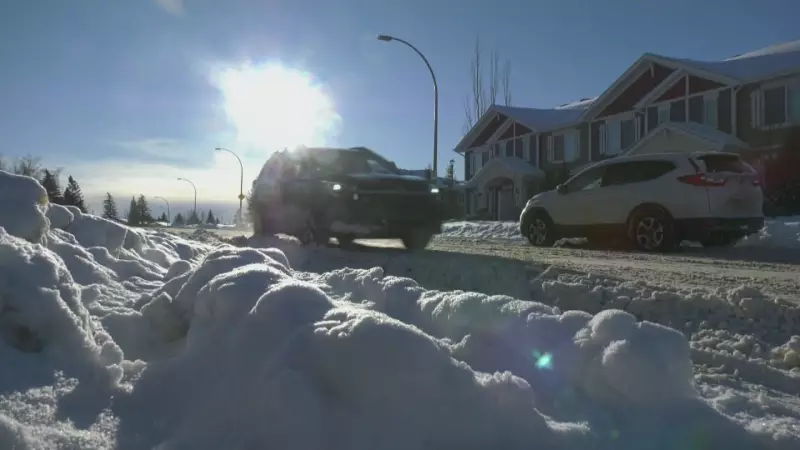
As a fresh blanket of snow settles over Edmonton, the city's winter maintenance operations are once again in the spotlight. While municipal officials assert they are meeting their clearing targets, some residents express frustration over the state of city streets. The financial and operational details behind Edmonton's snow fight are coming into focus as crews prepare to shift their attention to neighbourhoods.
The Price Tag of a Winter City
The City of Edmonton allocates a significant portion of its annual budget to snow and ice control, a necessary expense for a municipality known for its long winters. This complex operation involves a fleet of graders, plows, and sanding trucks working around the clock on a priority-based system. Major roads, bus routes, and emergency corridors receive attention first, followed by collector roads and, finally, residential areas and alleys. The cost encompasses not just equipment and fuel, but also labour, material for sand and gravel, and long-term infrastructure wear and tear.
Residential Clearing Set to Commence
City officials have confirmed that residential snow clearing is scheduled to begin on Monday, January 12, 2026. This phase of the operation is often the most anticipated by homeowners and is triggered by specific snowfall accumulation thresholds as outlined in the city's policy. The move into neighbourhoods will see crews tackling local roads, aiming to improve access and safety for all residents. The city maintains that its operations are on track according to established benchmarks, despite vocal criticism from some drivers who contend that main arteries and secondary streets are not being cleared efficiently or quickly enough.

Balancing Budgets and Public Expectations
The debate over snow removal highlights the perennial challenge Canadian cities face: balancing finite resources with high public expectations for clear roads. Edmonton's approach involves a detailed service level framework that dictates response times based on road classification. The costs associated with these services are reviewed annually and are subject to council approval as part of the broader municipal budget. As climate patterns potentially influence winter weather, cities like Edmonton must continually evaluate whether their funding and strategies for snow clearing are adequate to meet the demands of residents and ensure safe seasonal mobility for all.
With residential plowing now underway, Edmontonians will be watching closely to see how the city manages this critical winter service and whether the operational execution aligns with the substantial financial investment dedicated to keeping the city moving during the snow season.