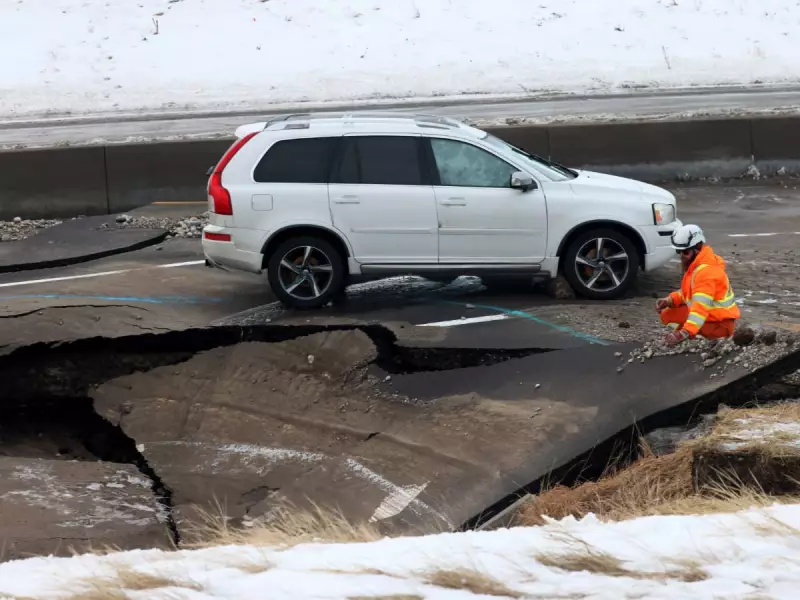
For the second time in less than two years, Calgary's drinking water system has been crippled by a catastrophic rupture, leaving residents searching for answers and accountability. The latest failure of the critical Bearspaw South feeder main on December 30, 2025, has reignited a painful debate: who is to blame for the city's recurring water woes?
The Immediate Crisis and Political Finger-Pointing
The rupture on 16th Avenue N.W. near Sarcee Trail has forced the city into familiar emergency measures, with officials once again pleading with Calgarians to limit showers, reduce toilet flushes, and halt all outdoor water use. In the political arena, some, including Alberta Premier Danielle Smith, have been eager to assign fault to recent civic administrations. This line of criticism conveniently implicates figures like Naheed Nenshi, the former Calgary mayor who now leads the Opposition Alberta NDP.
However, a closer examination reveals a more nuanced and complicated reality. The argument for blaming current or very recent leadership has limited validity. Despite the installation of monitoring equipment designed to catch problems before pipes break, this gear failed to detect any issues prior to the December 30 blowout.

A Pipe's Hidden History and Systemic Vulnerabilities
The true fragility of the Bearspaw South feeder main, which typically carries 60 percent of Calgary's treated water, was not widely known until its initial spectacular failure in June 2024. Even then, it was revealed that plans to inspect the main for deficiencies were already in the works, but time ran out before they could be executed.
When emergency repairs from the first break finally allowed inspectors inside the massive pipe, they made a alarming discovery: dozens more spots required immediate patching. This should not have been a complete surprise. The specific type of pre-stressed concrete cylindrical pipe used in this line has a documented history of shortened life-spans in other North American cities. Compounding the issue, the soil conditions where the Calgary pipe was buried accelerated its early degradation.
A critical unanswered question remains: how many officials within the City of Calgary's bureaucracy were aware of this pipe type's propensity to fail prematurely, and what level of urgency was attached to that knowledge in recent years?
The Root Cause: A Legacy of Missing Redundancy
The core of Calgary's vulnerability lies in a fundamental design flaw decided decades ago. Inspecting the Bearspaw feeder main would require shutting it off, an action that proves impossible without catastrophic consequences. As the city has learned twice in 18 months, moving water around Calgary without this single main is literally impossible.
This lack of a backup system—a critical redundancy—is the legacy of decisions made long before any contemporary city council took office. At some point in the past, civic leaders opted against investing in a parallel distribution system, prioritizing cost savings over long-term resilience. Today, Calgary is paying the price for that historical choice, as crews work to patch the crippled artery that the entire city depends upon.
The search for a simple villain in Calgary's water crisis is a natural impulse, but the truth is woven into the fabric of the city's infrastructure history. The problems erupting today were buried in the ground, and in political ledgers, long ago.