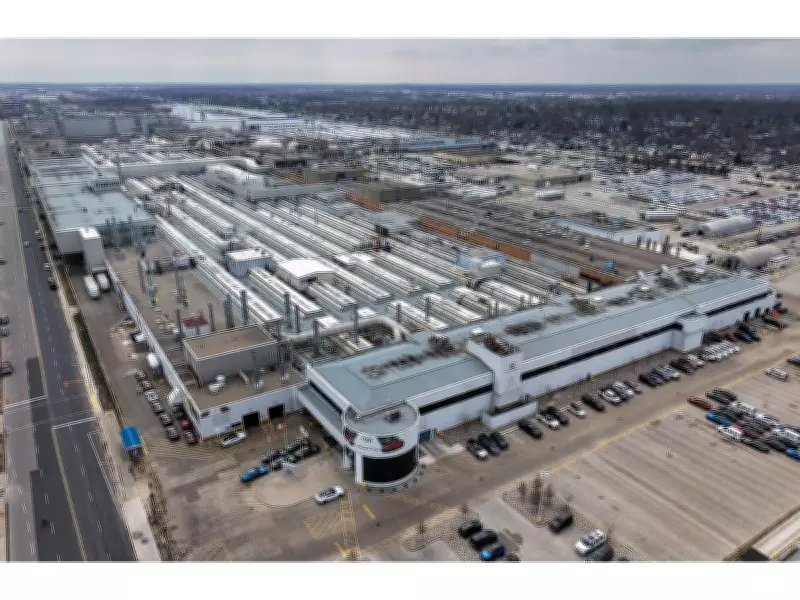
The criminal trial examining a dramatic 2021 explosion at the massive Stellantis Windsor Assembly Plant is now underway in Superior Court, with the central question being whether the incident was an industrial accident or a deliberately planted explosive device.
Defense Concedes Explosion, Disputes Cause
While the defense acknowledges that an explosion occurred at the Windsor Assembly Plant shortly after 4 p.m. on November 4, 2021, they strongly dispute the prosecution's characterization of the event as having been caused by an "explosive device." This fundamental disagreement forms the core of the legal battle now unfolding before Superior Court Justice Bruce Thomas.
The Accused and Allegations
James Harris, now 37 years old, stands accused of having rigged a bomb that detonated inside the sprawling automotive manufacturing complex. According to the prosecution's opening statements, Harris—who worked as a contracted janitorial employee—allegedly set an explosive device with a timer that went off in a storage section above the main assembly area.

The timing of the explosion proved particularly significant, occurring just as thousands of day-shift workers were ending their shifts and thousands of afternoon-shift employees were beginning theirs. This transition period meant the facility was at near-capacity occupancy when the blast occurred.
Eyewitness Testimony Describes Dramatic Scene
Stephanie Salibe, a longtime Stellantis Chrysler security guard and the Crown's first witness, provided chilling testimony about her experience during the explosion. While conducting routine patrols in a three-wheeled vehicle approximately 100 feet from the blast site, she described hearing "a loud bang or explosion" and seeing "a ball of fire come up from the floor."
"The area filled up with smoke and debris were scattered widely," Salibe testified, adding that the explosion left her with one ear deafened and the other ringing. In the immediate aftermath, she encountered a tradesman working nearby and asked him to accompany her to investigate, reasoning that "if it was something electrical, he'd have a better understanding of what to do."
Discovery of Suspicious Evidence
When they reached the blast scene, however, the situation took an even more ominous turn. According to Salibe's testimony, the tradesman examined the damage and declared, "Hey, that doesn't look right ... I'm outta here," before quickly departing the area.
What they discovered included a smashed industrial tote commonly used for parts storage and transport, "a whole bunch of melted material," and a minivan door on the floor that "hadn't previously been there." These heavy doors typically require factory vehicles for movement, raising immediate questions about how it arrived at the scene.
Most notably, investigators discovered a 'Sunbeam' eggtimer connected to an extension cord leading to an electrical outlet on one end, with dangling wires at the opposite end of the cord. This discovery formed a crucial piece of the prosecution's evidence suggesting deliberate intent rather than accidental malfunction.
Context of Workplace Tensions
The trial has revealed that the explosion occurred during a period of heightened workplace tensions, with strict COVID-19 restrictions in place throughout the industrial facility. The prosecution has suggested that Harris, as a contracted worker potentially concerned about job security amid these restrictions, may have been motivated to plant an explosive device.
Additional context emerged regarding recent vandalism incidents in the same second-floor storage area where the explosion occurred. Security patrols had been increased in response to these earlier incidents, adding another layer to the complex workplace environment at the time of the blast.
Immediate Aftermath and Investigation
Following the explosion, company managers, union officials, and plant health and safety members were quickly joined by outside fire and police emergency units. The decision was made to evacuate the entire plant—a massive undertaking given the facility's size and the number of workers present during shift change.

With the trial just beginning, the Crown is currently presenting its case for prosecution. During proceedings, Justice Thomas interjected at one point to ask the defense whether they agreed there had been an explosion—a question that highlights the nuanced legal arguments expected to unfold as the trial progresses.
The case continues to examine whether the 2021 Windsor Assembly Plant explosion represents an unfortunate industrial accident or a deliberate criminal act during a period of unprecedented workplace challenges.