

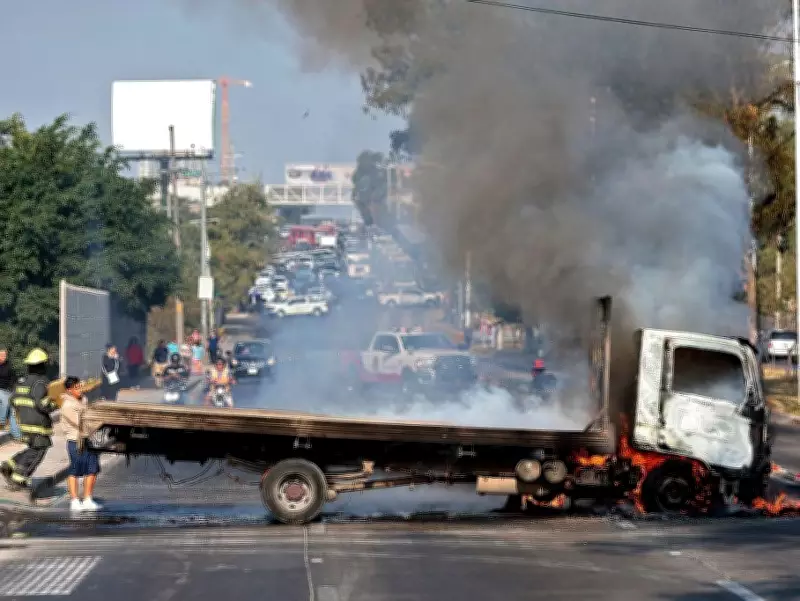
Violence Erupts Across Mexico After Cartel Leader El Mencho Killed
The killing of one of Mexico's most wanted drug lords has unleashed a devastating wave of violence across the country, with cartel members responding aggressively to the death of their leader. Nemesio Oseguera Cervantes, known as "El Mencho," was killed during a military operation in his home state of Jalisco, sparking immediate retaliation from his criminal organization.
National Guard Casualties Mount
Mexico Security Secretary Omar Garcia Harfuch confirmed that 25 members of the National Guard were killed in six separate attacks in Jalisco following El Mencho's death. The violence extended beyond security forces, with a prison guard, a state prosecutor's office agent, and an unidentified woman also losing their lives in the chaos.
El Mencho led the Jalisco New Generation Cartel (CJNG), one of Mexico's most aggressive and feared criminal organizations. His network was notorious for trafficking fentanyl, methamphetamine, and cocaine to the United States while violently confronting any government officials who challenged his operations.

Widespread Disruption and Fear
Cartel members responded to their leader's death with coordinated violence across 20 Mexican states, creating massive disruptions to daily life. Roads were blocked, businesses were torched, and vehicles were set ablaze as criminal groups demonstrated their continued power despite the loss of their leader.
The violence prompted authorities to close schools across several states, with both local and foreign governments warning citizens to stay indoors. In the resort city of Puerto Vallarta, located in Jalisco, Canadians were ordered to shelter in place as Global Affairs Canada updated its travel advisory, warning travelers to "exercise a high degree of caution in Mexico due to high levels of criminal activity and kidnapping."
Airport Operations Disrupted
Passengers arriving at Guadalajara International Airport on Sunday night found the facility operating with limited personnel due to the violence. Many travelers remained stranded as flight suspensions and transportation shortages created logistical nightmares. The airport disruptions highlighted how the cartel violence was affecting not just local residents but international visitors as well.
By Monday morning, however, cars were seen on the streets of Guadalajara before sunrise as residents cautiously resumed their work week routines. This marked a significant change from Sunday when Mexico's second-largest city was almost completely shut down, with fearful residents staying indoors to avoid the violence.
International Implications
The killing of El Mencho represents a significant development in Mexico's ongoing battle against powerful drug cartels. David Mora, Mexico analyst for International Crisis Group, noted that this event marks a turning point in President Claudia Sheinbaum's push to crack down on cartels and address pressure from the United States.
"Ever since President Sheinbaum has been in power, the army has been way more confrontational and combative against criminal groups in Mexico," Mora observed. "This is signalling to the U.S. that if we keep cooperating and sharing intelligence, Mexico can do it. We don't need U.S. troops on Mexican soil."
U.S. Response and Reward
The United States had offered a reward of up to $15 million for information leading to the arrest of El Mencho, highlighting his significance as a transnational criminal threat. White House press secretary Karoline Leavitt acknowledged the operation in an X post, stating that "'El Mencho' was a top target for the Mexican and United States government as one of the top traffickers of fentanyl into our homeland."
While Mexico's efforts against the cartel were well-received by U.S. officials, analysts warn that the violence could continue or even escalate as rival criminal groups attempt to take advantage of the power vacuum created by El Mencho's death. The CJNG's weakened position might encourage competing organizations to expand their control in territories previously dominated by the cartel.

As authorities work to clear more than 250 cartel roadblocks across 20 states, the long-term implications of this operation remain uncertain. The violence has exposed both the persistent power of Mexican cartels and the challenges facing security forces attempting to dismantle these criminal networks while protecting civilian populations.





