President Donald Trump's decision to grant a pardon to former Honduran President Juan Orlando Hernández has ignited significant controversy and confusion within his own party. Hernández was convicted last year for his role in a conspiracy that smuggled hundreds of tons of cocaine into the United States and was serving a 45-year prison sentence before walking free on Monday following the pardon.
Republican Lawmakers Express Disbelief and Condemnation
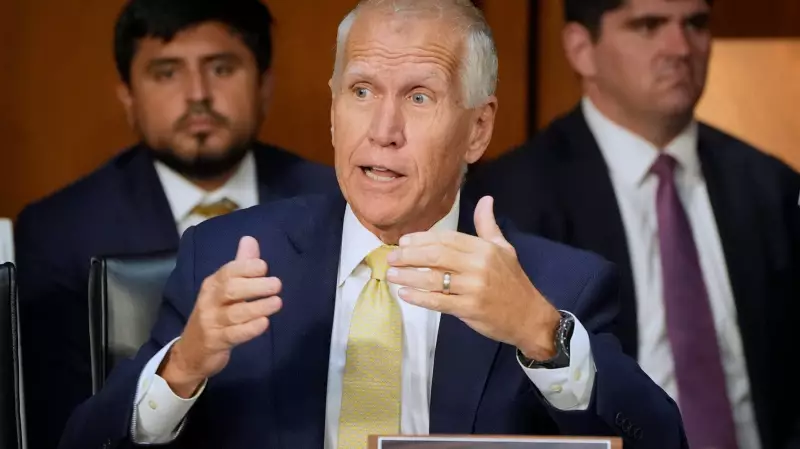
The move left several prominent Republican senators openly critical. Senator Thom Tillis of North Carolina stated he could not comprehend the rationale behind the pardon, arguing it severely undermines the administration's stated crackdown on international drug traffickers. "I hate it," Tillis told reporters. "It's a horrible message. I mean, it's confusing to say, on the one hand, we should potentially even consider invading Venezuela for a drug trafficker, and on the other hand, let somebody go."
He emphasized the mixed signals being sent, noting that Hernández was convicted of trafficking 400 tons of cocaine. The investigation began under the Trump administration, with the trial concluding during President Biden's term.

Senator Rand Paul of Kentucky was equally scathing, calling the pardon policy "craziness." He pointed to the devastating human cost of the drugs Hernández facilitated. "You could literally probably say he's been responsible for hundreds, if not thousands of deaths for what he did. And he gets a break," Paul said.
Trump's Defense and a Pattern of Controversial Clemency
President Trump defended his action, telling reporters that Hernández was a victim of a "setup" orchestrated by the Biden administration. "The people of Honduras really thought he was set up, and it was a terrible thing," Trump claimed. "They basically said he was a drug dealer because he was the president of the country."
This pardon is part of a recent series of clemency actions that have raised bipartisan concerns about Trump's use of this executive power. Other notable grants include:
- The commutation of a seven-year sentence for David Gentile, who defrauded investors of $1.6 billion, shortly after his prison term began.
- The commutation of former Congressman George Santos's sentence for wire fraud and identity theft.
- A pardon for a Chinese crypto billionaire whose company had business ties to a Trump family enterprise.
- Earlier this year, Trump pardoned hundreds of individuals convicted for their roles in the January 6, 2021, Capitol riot, including many convicted of assaulting police officers.
Broader Policy Contradictions and Constitutional Questions
The Hernández pardon created a stark contrast with the administration's aggressive posture toward Venezuela. Trump has recently threatened Venezuelan President Nicolás Maduro, mobilized warships near the country's coast, and ordered missile strikes on boats suspected of drug smuggling.
Senator Paul questioned the legality and wisdom of these military strikes, noting, "We don't know who's in these boats. There could be people being trafficked... It could be illegal drugs. It could be anything."
Other Republicans, like Senator Cynthia Lummis of Wyoming, supported interdicting drugs far from U.S. shores but declined to comment on the pardon, citing a lack of information.
The controversy has reignited a debate about the scope of the presidential pardon power, one of the broadest authorities granted by the U.S. Constitution. Reforming it would require a constitutional amendment, a daunting process needing a two-thirds congressional vote and ratification by three-fourths of states. Nevertheless, some lawmakers, like Democratic Representative Ro Khanna of California, believe it's necessary, having recently called for an amendment "to abolish the pardon power."
The episode leaves the Trump administration facing pointed questions from its allies about consistency in its drug war policy and the appropriate use of clemency for individuals convicted of serious crimes.