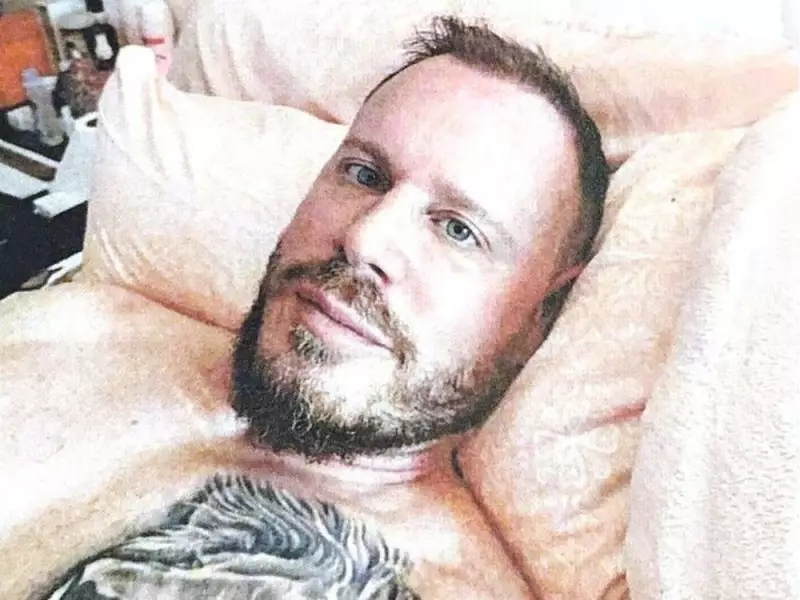
From Olympic Snowboarder to Alleged Cocaine Kingpin: The Montreal Origins of Ryan Wedding's Empire
How a Canadian Olympian's time in Montreal became the launch pad for an alleged cocaine empire that spanned continents and generated billions in illicit revenue.
The Montreal Meeting That Started It All
The plan to smuggle cocaine into Canada by the hundreds of kilograms was allegedly discussed in a downtown Montreal beer hall in January 2015. Ryan Wedding, a towering six-foot-three former Canadian Olympic snowboarder turned alleged cocaine trafficker, was meeting a man called "Joe" at the Bier Markt, according to investigative reports. Joe boasted of his status as a maritime trafficker, while Wedding was introduced as "the man in charge."
Unknown to Wedding, Joe was actually an undercover RCMP officer, part of Operation Harrington, a federal investigation into cartel-linked cocaine imports to Canada. Seemingly unaware of the trap, Wedding allegedly spoke openly about moving massive quantities of drugs into the country, beginning with hundreds of kilograms and potentially escalating to a "mega-import" of up to 5,000 kilograms worth hundreds of millions of dollars.

Building Criminal Connections in Montreal's Underworld
By this time, Wedding had already begun cultivating ties to the Sinaloa cartel, with a Quebec judge later describing his alleged growing scheme as a "high-level" cocaine operation far beyond street-level trafficking. His rise coincided with a unique moment in Montreal's criminal landscape where police operations had debilitated the Hells Angels while internal struggles had destabilized the Italian Mafia, creating opportunities for new players.
Wedding established himself in downtown Montreal on Viger Avenue, where he built a network of trusted associates. One key figure was Philipos Kollaros, a British Columbia native who lived nearby and acted as a trusted lieutenant. Montreal court records described Kollaros as "very close" to Wedding, and he helped arrange the fateful January 2015 meeting with the undercover RCMP officer.
The Olympic Background and Criminal Evolution
Born in 1981 in Thunder Bay, Ontario, Wedding was raised in a well-off family and immersed in competitive sports from an early age. In 2002, at age 20, he represented Canada at the Winter Olympics in Salt Lake City, competing in parallel giant slalom and finishing 24th. What followed marked the beginning of a much darker second career.
By 2006, Wedding was working as a nightclub doorman and briefly attended Simon Fraser University, though he never completed his degree. During this period, he began associating with criminals in Vancouver's nightlife scene. His first significant brush with law enforcement came in September 2006 when the RCMP raided a large marijuana operation in Maple Ridge, B.C., though authorities lacked sufficient evidence to charge him at the time.
The turning point came in 2008 when U.S. authorities arrested Wedding in California with roughly 20 kilograms of cocaine. He was convicted in federal court and sentenced to four years in a Texas prison, missing the chance to compete before a hometown crowd when Vancouver hosted the 2010 Winter Olympics. Prosecutors allege he leveraged his time behind bars to build criminal connections, including meeting Jonathan Acebedo-Garcia, a Montreal-area man with Colombian roots who would later become central to his downfall.
Expanding Beyond Montreal to Global Operations
After being released in 2011 and deported back to Canada, Wedding resurfaced in Montreal where he allegedly built one of North America's most prolific cocaine-trafficking organizations, generating more than $1 billion annually. By the late 2010s, he had moved far beyond Montreal, allegedly overseeing a cross-border trafficking operation that moved cocaine from South America through Mexico and southern California before heading northbound into Canada.
Wedding allegedly relied on encrypted messaging, layered intermediaries and tightly compartmentalized cells designed to shield him from direct exposure while maintaining Canadian connections. His organization developed a hardened reputation for enforcing loyalty through intimidation and alleged murder.

The Investigation Intensifies and Witness Elimination
Things shifted dramatically in July 2023 when the RCMP and FBI joined forces in Operation Giant Slalom. The case accelerated in 2024 when Jonathan Acebedo-Garcia, the associate Wedding had first met years earlier in prison, agreed to co-operate with U.S. authorities. Moving between Canada and Colombia, Acebedo-Garcia threatened to unravel years of insulation around Wedding.
In October 2024, the U.S. Justice Department unsealed an indictment charging 16 defendants linked to the Wedding organization and alleging at least four murders tied to the drug-smuggling operation. Authorities also announced the arrest of Wedding's alleged second-in-command, Andrew Clark, a 34-year-old former elevator mechanic from Toronto.
Wedding, still at large, allegedly placed a $5-million bounty on his former associate's head. He reportedly turned to Atna Onha, a Laval-area man described in court filings as an enforcer with ties to biker gangs and organized crime in Quebec. Wedding's organization also allegedly enlisted Edwin Basora-Hernandez, a Montreal-based reggaeton DJ who performed at clubs along Saint-Laurent Boulevard, paying him $1,000 for contact information.
They tracked Acebedo-Garcia down to Medellín, Colombia, where he was shot five times in the head inside a restaurant at the end of January 2025. Photographs of his body were allegedly sent back to Wedding via encrypted messaging as proof the killing had been carried out.
The Final Chapter: Surrender and Prosecution
The witness killing galvanized U.S. authorities, who raised the reward for information leading to Wedding's arrest from US$50,000 to US$15 million and placed him on the FBI's Ten Most Wanted Fugitives list. Canadian police later in 2025 arrested Onha along with Deepak Paradkar, a Toronto-area lawyer accused of advising Wedding that killing the witness would derail extradition proceedings.
Wedding's years-long run evading law enforcement ended on January 23, 2026, when he surrendered at the U.S. Embassy in Mexico City after weeks of negotiations with the FBI. Mexican media reported he turned himself in at about 2:40 a.m., and hours later, a plane carrying Wedding was seen touching down in Ontario, California.
In jeans and a black cap, the former Olympian towered over the FBI agents who escorted him down the runway in handcuffs. "Make no mistake about it," said prosecutor Kash Patel. "Ryan Wedding is the modern-day iteration of Pablo Escobar."
Wedding now faces trial in Los Angeles, where prosecutors are seeking life in prison on charges including murder, witness tampering, money laundering and drug trafficking. His case represents one of the most dramatic falls from grace in Canadian sports history and underscores how Montreal served as both launching pad and operational base for an alleged criminal empire that spanned the Western Hemisphere.