

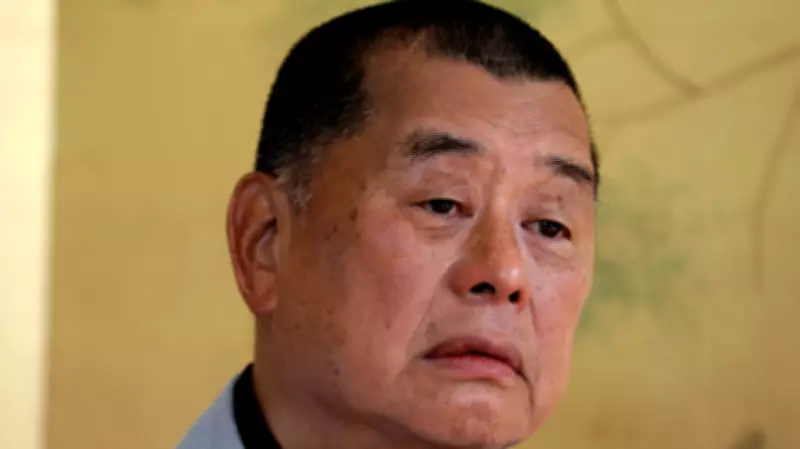
Hong Kong Appellate Court Overturns Fraud Convictions Against Activist Jimmy Lai
In a rare legal victory for prominent activist Jimmy Lai, a Hong Kong appellate court on Thursday quashed fraud convictions against the former media magnate. The 78-year-old founder of the now-defunct Apple Daily newspaper, however, will remain in prison due to a separate 20-year sentence imposed under a China-imposed national security law.
Background of the Fraud Case
The overturned convictions stemmed from a 2022 case where Lai was sentenced to five years and nine months in prison on two fraud charges. Prosecutors had alleged that a consultancy firm controlled by Lai improperly used office space rented by his media business for publication and printing purposes. A lower court judge found that Lai and co-defendant Wong Wai-keung had concealed the firm's occupancy, violating the lease agreement and using the media organization as "a protective shield." Lai was also fined 2 million Hong Kong dollars (approximately $257,000).
Appellate Court's Reasoning
Judges at the Court of Appeal ruled that while Apple Daily Printing had breached lease terms by allowing the firm to use part of the space, it did not owe a duty to disclose that breach. They further stated that even if such a duty existed and was breached, it could not be legally attributed to Lai and Wong. The appellate judges wrote that the trial judge's "reasoning in concluding that the applicants were liable for the concealment as the prosecution contended is unsupportable."

Additionally, the court ruled that the prosecution failed to prove beyond reasonable doubt that the defendants had made false representations, leading to the quashing of both convictions and sentences. Neither defendant appeared in court for this ruling.
Impact on Lai's Overall Sentence
This ruling could potentially reduce Lai's total prison time. Previously, judges handling his national security case had allowed the fraud and security law sentences to be served concurrently for only two years, with the remaining 18 years to be added after the fraud sentence. The lengthy 20-year national security sentence has raised concerns that Lai, who is a British citizen, might spend the rest of his life in prison.
Government Response and International Reaction
The Hong Kong government stated that the Department of Justice would thoroughly study the judgment and consider whether to appeal. While acknowledging the court's finding that the breach of contract did not meet the threshold for fraud, authorities maintained that it did not change the fact that Lai had used the office space for illegitimate personal purposes.
Lai's legal plight has sparked international concern:
- U.K. Foreign Secretary Yvette Cooper has called for Lai's release on humanitarian grounds, stating he was sentenced for exercising his right to freedom of expression.
- Lai's children have expressed hope that a planned visit by U.S. President Donald Trump to Beijing could help secure their father's release.
- Chinese and Hong Kong authorities have defended the national security sentencing, saying it reflects the spirit of the rule of law and is necessary for the city's stability.
Broader Context
Lai's case comes more than five years after his initial arrest under the national security law, which has been used in a yearslong crackdown on many of Hong Kong's leading activists. His situation has evoked grief over the city's loss of press freedom and generated significant international outcry, though Hong Kong authorities insist his case has nothing to do with media independence.
The appellate court's decision represents a notable development in the complex legal battles surrounding one of Hong Kong's most prominent dissident figures, even as he remains imprisoned under separate charges that carry substantially longer sentences.






