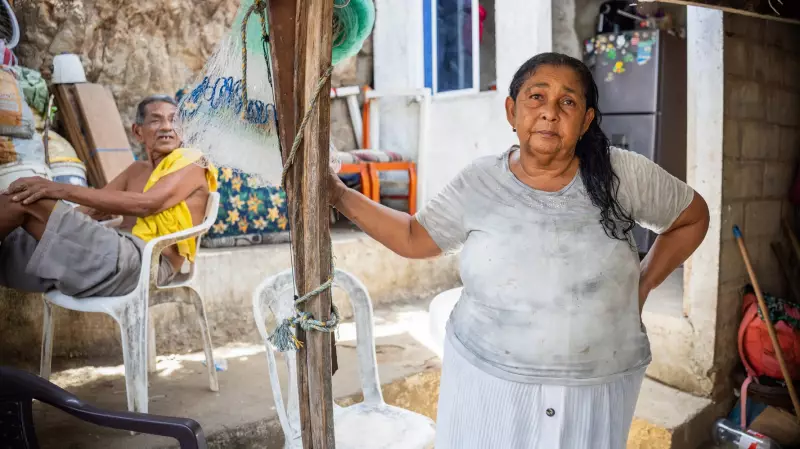
The family of a Colombian fisherman has launched a formal legal challenge against the United States government, alleging he was the victim of an illegal extrajudicial killing during a U.S. military operation in the Caribbean.
A Deadly Strike at Sea
Alejandro Carranza lost his life on September 15 when the small boat he was on was targeted by a U.S. military strike. The operation was part of a broader anti-narcotics campaign conducted by American forces in the region. However, Carranza's family insists he was an innocent fisherman, simply heading out to catch food for his family, and that no drugs were found on his vessel.
"Why did they just take his life like that?" his wife, Katerine Hernandez, asked in an interview. "The fisherman have a right to live. Why didn't they just detain him?" She described her husband as a "good man" whose life was unjustly taken.

Formal Complaint and Escalating Death Toll
On Tuesday, Carranza's family filed a formal complaint with the Inter-American Commission on Human Rights (IACHR). The document directly accuses U.S. Secretary of Defense Pete Hegseth of responsibility for ordering the strikes that led to Carranza's death and the deaths of others on similar boats.
This incident is not isolated. More than 80 people have been killed so far by U.S. strikes in the Caribbean and eastern Pacific under the Trump administration's policy. While officials, including Hegseth and President Donald Trump, argue these operations target drug smugglers bringing substances like fentanyl into the U.S., they have frequently provided no public evidence for individual strikes.
Analysts and reports, including from The Washington Post, note that many of the boats targeted are too small and ill-equipped to make the journey to the United States, raising serious questions about the intelligence behind the operations.
Controversial Policy and a Puzzling Pardon
The military campaign has been mired in controversy. In the same month Carranza was killed, Hegseth ordered consecutive strikes on a Venezuelan boat near Trinidad, an act some legal experts have described as a potential war crime. Internal blame for that incident was later shifted by Hegseth onto Joint Special Operations Command Admiral Frank Bradley.
This aggressive "narcoterrorist" policy stands in stark contrast to another of Trump's recent actions: the pardon and release of former Honduran President Juan Orlando Hernández. Hernández was serving a 45-year prison sentence for conspiring to import hundreds of tons of cocaine into the U.S. Trump defended the pardon, calling the conviction a "Biden administration set-up" and agreeing with claims that Hernández was only deemed a drug dealer because he was a national president.
The family of Alejandro Carranza now seeks accountability through an international human rights body, hoping to challenge a policy they say has cost dozens of lives without due process or transparency.