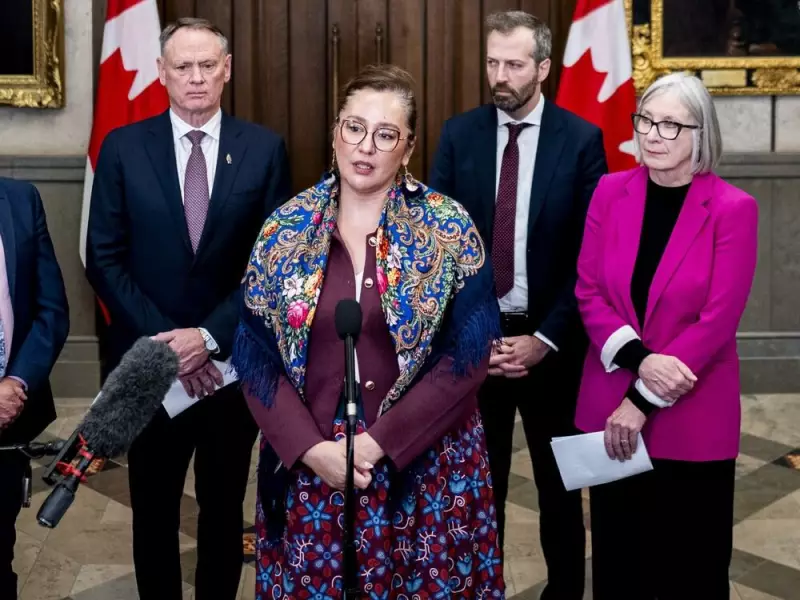
An internal government email has revealed that Federal Indigenous Services Minister Mandy Gull-Masty informed First Nations chiefs of discovered "abuses" within the funding framework of Jordan's Principle and suggested the funding should be prioritized for "emergencies." The comments, made shortly after her appointment, have sparked scrutiny and pushback from long-time advocates for Indigenous children.
Internal Remarks Spark Debate
According to a meeting summary obtained through access-to-information legislation, Minister Mandy Gull-Masty discussed her new role with chiefs in Quebec in June 2025. The summary notes that after 30 days in her post, she intended to take on a significant role regarding Jordan's Principle. It was during this discussion that she raised concerns about how the funding was being used.
The initiative, named for Jordan River Anderson, a young boy from Norway House Cree Nation in Manitoba, is designed to prevent First Nations children from being denied or delayed essential services due to jurisdictional disputes between governments. Anderson spent his entire five-year life in hospital while governments argued over who should pay for his home care before he died in 2005.

Background of Jordan's Principle and Recent Changes
Jordan's Principle is not a federal program but a legal principle adopted by the House of Commons. It allows families, social workers, and other professionals to request funding for a wide range of products and services related to a child's well-being, from medical equipment to educational supports.
Its implementation has been enforced through multiple orders from the Canadian Human Rights Tribunal, following a landmark 2016 ruling on First Nations child welfare. Since that ruling, the federal government has reported an explosion in requests, leading to concerns about sustainability.
In February 2025, the previous minister, Patty Hajdu, issued an operational bulletin that limited eligibility for what products and services would be covered, citing the need for "long-term sustainability." These changes have been controversial, with advocates calling for their repeal.
Advocates Question Minister's Claims
Cindy Blackstock, executive director of the First Nations Child and Family Caring Society—which co-filed the original human rights complaint—has been a vocal critic of the eligibility changes. Responding to Minister Gull-Masty's comments about "abuses," Blackstock redirected focus to the government's own actions.
"There's serious questions about the legality of that bulletin, and it's important that the minister focuses her efforts on stopping her own department's discrimination. That's got to be job one," Blackstock stated.
Her response underscores a key tension: while the minister points to potential misuse of funds, advocates argue the primary issue remains the federal government's failure to fully and properly implement the principle as ordered by the Tribunal, thereby continuing systemic discrimination.
Path Forward Under a New Minister
Minister Gull-Masty, appointed under Prime Minister Mark Carney, is now undertaking a review of Jordan's Principle. The internal email indicates her intent to play a major role in shaping the initiative's future. The situation places her at the centre of a complex file that sits at the intersection of human rights, government policy, and fiscal management.
The coming months will reveal whether her review leads to a tightening of controls, as her comments to the chiefs might suggest, or a reversal of the previous government's restrictive changes, as advocates demand. The fundamental goal—ensuring First Nations children receive equitable and timely services—remains the critical benchmark for any policy shift.