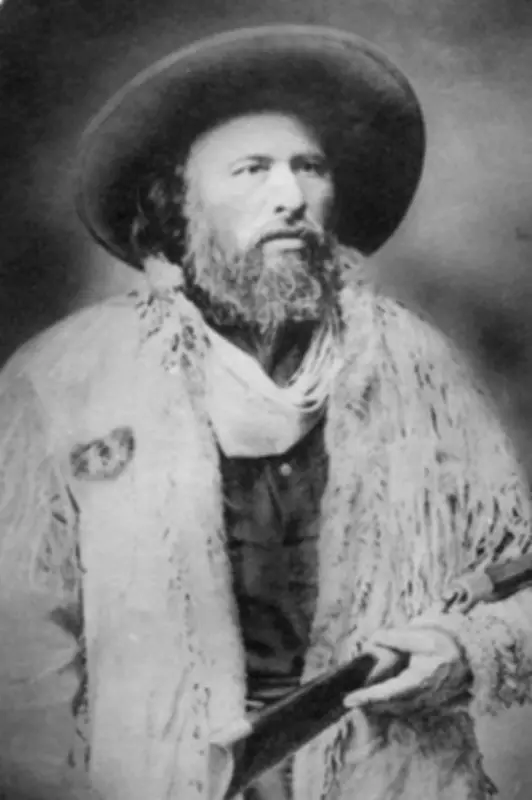
As both a historian specializing in the political and military history of Canada during the late 19th century and a member of the Métis Nation with ties to Batoche, Gabriel Dumont has always been a fascinating figure to me. May 19 marked 120 years since the passing of this legendary Métis leader, military commander, and political activist.
Early Life and Skills
Dumont spent most of his later years in the village of Batoche on the South Saskatchewan River. He was born in the Red River Settlement (present-day Winnipeg, Manitoba) in December 1837, as part of the famous Dumont family of Métis buffalo hunters and free traders. He possessed all the skills of a frontiersman and could converse in Michif, Blackfoot, Sioux, Cree, French, and some English.
Political and Military Leadership
In 1863, Dumont became the Hunt Chief, a crucial political role in Métis society. With the decline of the bison in the late 19th century, he turned to farming and operating a ferry called Gabriel's Crossing on the South Saskatchewan River near Batoche. As Canada encroached on traditional Métis lands in Saskatchewan due to the railroad, Dumont organized the Council of Saint Laurent to present grievances to Ottawa, but the Canadian government ignored them.

Dumont sought help from exiled Louis Riel, the principal figure in the Red River Resistance, who was living in Montana. He smuggled Riel back across the border. More petitions followed, and eventually, a clash between the North West Mounted Police and volunteers against Dumont's Métis near Duck Lake sparked the North West Rebellion/Resistance.
The North West Rebellion
Canadian forces were dispatched on April 24, 1885, and a wounded Dumont fought them at Fish Creek. During the fall of Batoche, his home was ransacked and burned. His forces incapacitated the Canadian warship Northcote, but due to lack of ammunition and overwhelming odds, the Métis were defeated. Louis Riel was executed in Regina on November 14, 1885, and Dumont was forced to flee to the United States.
Later Life and Legacy
In the U.S., Dumont joined Buffalo Bill Cody's Wild West show, performing sharpshooting alongside figures like Annie Oakley. In July 1886, he was granted amnesty and allowed to return to Canada. He engaged in public speaking and advocated for Métis rights. In 1893, he returned to Batoche, where he died on May 19, 1906.
Dumont's skills as a frontiersman and his willingness to fight for his people cement his status as a legendary figure in Canada's past. I was honored to visit the battlefields at Batoche and pay respects at Gabriel Dumont's grave during a research trip in 2026.