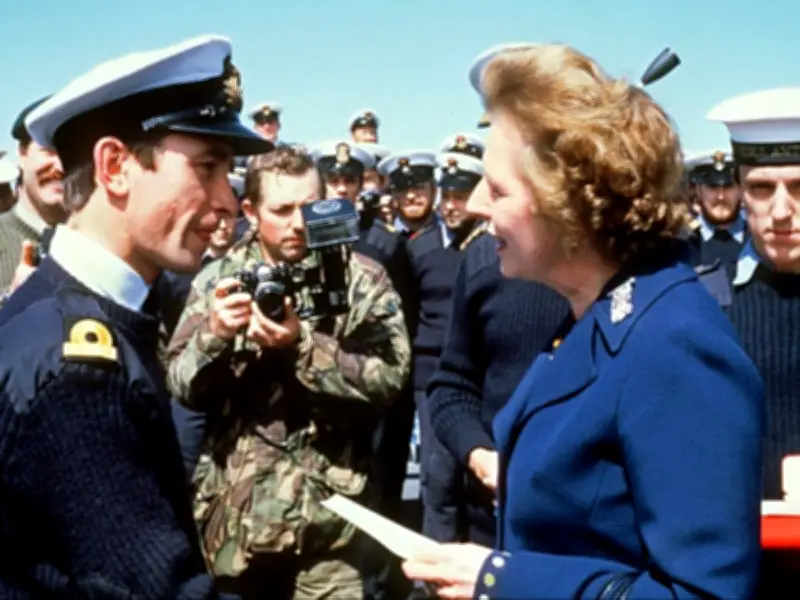
A delegation from the Falkland Islands recently visited Ottawa, lobbying Canadian politicians on the importance of supporting the British Overseas Territory (BOT) in the face of Argentina’s ongoing claims to ownership. Two politicians from the South Atlantic archipelago met with officials from Global Affairs, senators, and members of Parliament to push for support for their sovereignty.
Background of the Dispute
Argentina has long laid claim to the islands, which they call Islas Malvinas, despite never having owned them. Britain has administered the islands since 1833. In 1982, Argentina invaded the islands, triggering a war. Britain’s indomitable Prime Minister Margaret Thatcher deployed an armada to defend the islands. The bitter, 74-day conflict that ensued claimed 255 British and 649 Argentine lives before that country surrendered to the British.
The war was not, as some have characterized it, a skirmish over a remote sheep-strewn outcropping. The location of the Falklands and the economic potential of its resources give Britain a strategic toehold in the region.

Referendum and Recent Developments
In 2013, after continued pressure from Argentina for sovereignty negotiations, Falklanders reiterated their desire to remain a BOT in a referendum. An overwhelming 99.8% of its estimated 3,500 islanders voted to remain British. Apparently, Argentina wants to make the war a best two out of three.
It gained urgency for Falklanders recently with rumblings from U.S. President Donald Trump that he might refuse to support Britain’s claim to the Falklands to express his displeasure with the U.K. over its lack of support for his Iran war. Trump has slammed outgoing British Prime Minister Keir Starmer for his lack of support.
U.S. Precedent and Canada's Role
There’s a precedent for Trump’s position. Fearing conflicts with its allies in South America, the U.S. remained officially neutral during the Falklands War. While the government of former U.S. president Ronald Reagan provided key intelligence and strategic information to Britain, it did not send military support. Secret U.S. documents declassified in 2012 revealed that senior members of Reagan’s administration feared it could become a lengthy war and Russia would be drawn into it on Argentina’s side on a continent the U.S. considers its zone of influence.
No nation has the right to impose sovereignty on another, be it Greenland or Canada. It is a moral imperative for Canada to support the Falkland Islanders in their claims to remain British.