

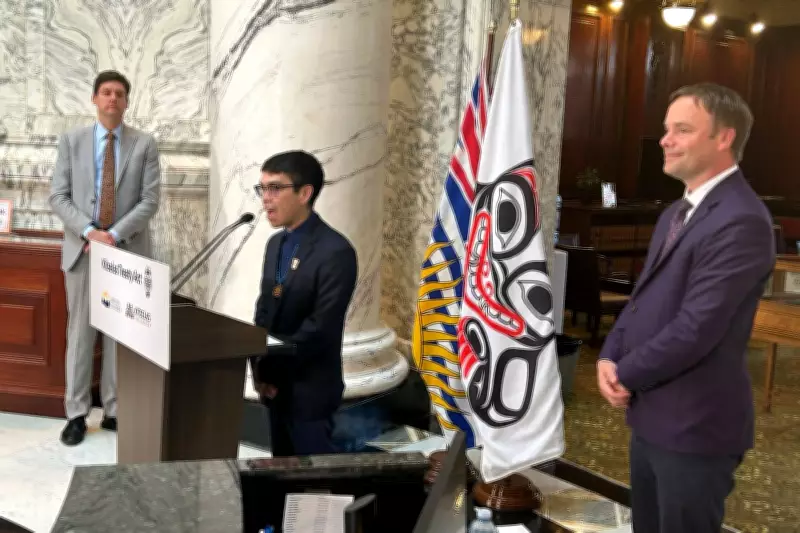
B.C. Tables Kitselas First Nation Treaty Legislation
In a landmark move for Indigenous reconciliation, the British Columbia government has tabled provincial legislation to advance the ratification of a treaty with the Kitselas First Nation. The legislation was introduced at the B.C. Legislature in Victoria on Wednesday, April 15, 2026, during a ceremony attended by key political figures and community leaders.
Ceremony Highlights Commitment to Reconciliation
The event featured Deputy Chief Coun. Cyril Bennett-Nabess of the Kitselas First Nation, who spoke passionately about the treaty's significance. He was joined by Premier David Eby and Spencer Chandra Herbert, the Minister of Indigenous Relations and Reconciliation, both of whom expressed strong support for the initiative. This legislative step is seen as a crucial part of ongoing efforts to address historical injustices and build stronger relationships with Indigenous communities across the province.
Details of the Treaty Legislation
The proposed legislation aims to formalize the treaty agreement, which includes provisions for land rights, self-governance, and economic development opportunities for the Kitselas First Nation. By tabling this bill, the provincial government is taking a concrete action to fulfill its commitments under the United Nations Declaration on the Rights of Indigenous Peoples (UNDRIP), which B.C. adopted into law in 2019. The treaty is expected to provide long-term stability and empowerment for the Kitselas community, fostering cultural preservation and sustainable growth.

Broader Implications for Indigenous Relations
This development comes amid a national context of increasing focus on Indigenous rights and reconciliation. The B.C. government's move is likely to set a precedent for other provinces and territories, encouraging similar treaty processes. It also reflects a growing recognition of the importance of collaborative governance and respect for Indigenous sovereignty in Canada. As the legislation moves through the provincial parliament, stakeholders will be closely monitoring its progress and potential impacts on future Indigenous policy.
The introduction of this treaty legislation marks a pivotal moment in B.C.'s journey toward reconciliation, highlighting the ongoing work needed to heal historical wounds and build a more inclusive society.






