

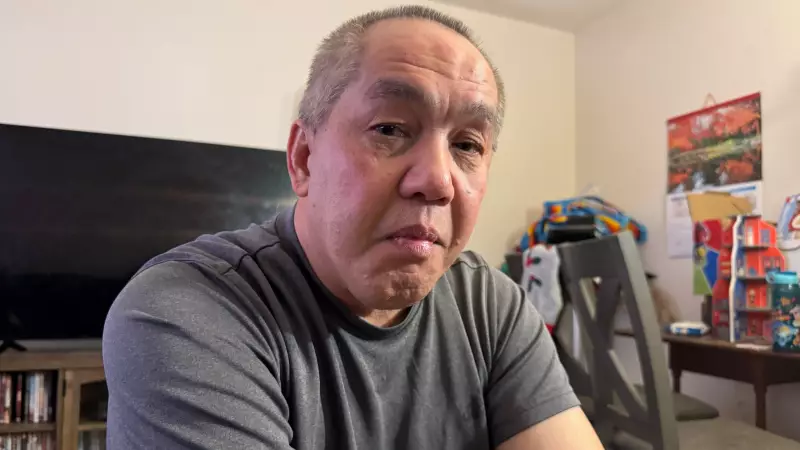
A Minnesota man is demanding answers after federal immigration officers forcibly entered his home, handcuffed him, and detained him in freezing temperatures while he was barely clothed. The incident, which occurred on Sunday, January 18, 2026, in Saint Paul, has ignited fresh concerns about aggressive law enforcement tactics.
"Why Do They Do This to Me?"
ChongLy "Scott" Thao, a 56-year-old naturalized U.S. citizen, recounted the traumatic experience to Reuters from his home on Monday. Thao, who is Hmong and was born in Laos, said he was singing karaoke when a loud noise erupted at his door. He and his family hid in a bedroom, where officers from U.S. Immigration and Customs Enforcement (ICE) found them with guns drawn.
"I was praying. I was like, God, please help me, I didn't do anything wrong," Thao said. He described being handcuffed and dragged outside into the snow wearing only boxer shorts and Crocs, despite pleas to put on more clothes. The high temperature in Saint Paul that day was a frigid 14 degrees Fahrenheit (-10 Celsius). Thao managed to grab a blanket belonging to his four-year-old grandson to cover himself.

Conflicting Accounts of the Raid
The Department of Homeland Security (DHS) provided a starkly different rationale for the operation. In a statement, DHS spokeswoman Tricia McLaughlin said officers were investigating two convicted sex offenders at the address. She stated that a U.S. citizen there refused to be fingerprinted or facially identified and was therefore detained.
"He matched the description of the targets. As with any law enforcement agency, it is standard protocol to hold all individuals in a house of an operation for safety of the public and law enforcement," McLaughlin said.
DHS published wanted posters for two men described as "criminal illegal aliens" from Laos who were subjects of deportation orders. Relatives close to the situation confirmed one of the men had previously lived at the house but had moved out; they identified him as the ex-husband of a member of the Thao family.
After taking his fingerprints and a photograph in a vehicle, officers returned Thao to his home without explanation or apology. Neighbors were later seen repairing his broken door.
Broader Context and Legal Challenges
Photographs of Thao's ordeal spread on social media, amplifying criticism that federal officers are overstepping their authority. The incident is viewed as part of President Donald Trump's immigration crackdown, which has seen approximately 3,000 officers deployed in the Minneapolis-St. Paul area.
The raid occurred just days after a significant legal development. On Friday, January 16, a U.S. District Judge in Minnesota, Katherine Menendez, issued an injunction blocking the Trump administration from using certain aggressive tactics against protesters. The judge wrote that conduct like drawing weapons and making arrests could "chill" an ordinary citizen's constitutional rights.
The Trump administration is appealing that injunction. Thao's family released a statement calling the raid on their home "unnecessary, degrading, and deeply traumatizing."
Thao, who came to the United States from Laos in 1974 at age four and became a citizen in 1991, said he feared being sent back to a country where he has no relatives. His experience has shaken his faith in the American dream.
"We came here for a purpose, right? ... To have a bright future. To have a safe place to live," he said. "If this is going to turn out to be America, what are we doing here? Why are we here?"






