

Montreal Advocates Condemn Federal Bill Tightening Refugee Rules
Montreal-based migrant justice advocates are raising alarms over a federal bill that they say will severely restrict access to Canada's asylum system, potentially leaving more individuals without legal status and increasing vulnerability among refugees. The proposed legislation, Bill C-12, has passed the Senate with minor amendments and now awaits approval in the House of Commons.
Personal Experience Highlights Risks
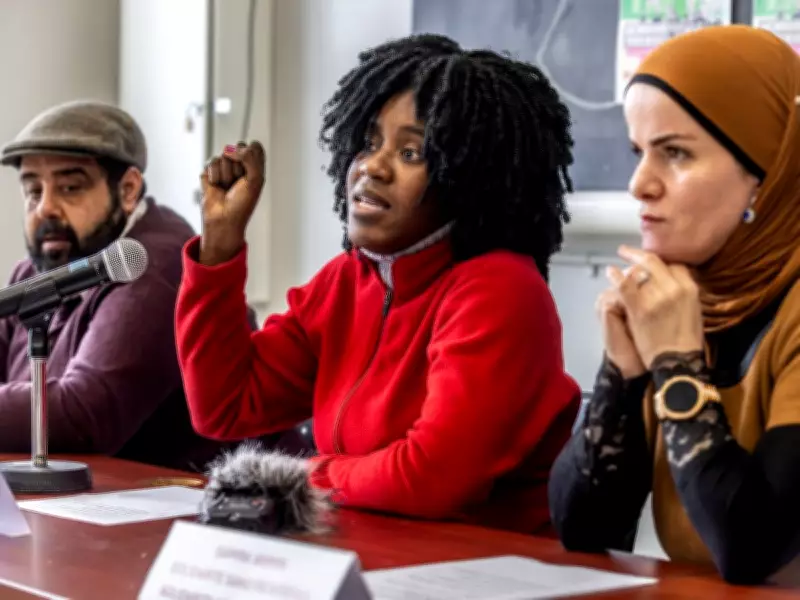
Tania Henriques, an activist with Solidarity Across Borders, knows firsthand the challenges faced by asylum seekers. She fled Angola in 2021 due to violence, eventually making her way to Canada via Brazil, Nicaragua, and the now-closed Roxham Road crossing in Quebec in February 2023. Henriques was granted refugee status in 2025, but she fears that under the new rules, others like her would have little chance of finding refuge.
"Imagine if they'd closed Roxham Road before I was able to cross," Henriques said. "What would have happened to me?" She warns that the bill will "make people more vulnerable" and "increase the number of people without status."

Key Changes in Bill C-12
The bill introduces several significant restrictions to the asylum process:
- Eliminates refugee hearings for migrants who first entered Canada more than a year before making their claim.
- Removes access to hearings for those who cross the Canada-U.S. border without going through an official port of entry, even if they evade detection for 14 days.
- Shifts some claimants to a paper-driven process determined by civil servants, rather than hearings with the Immigration and Refugee Board of Canada.
Sharry Aiken, a law professor at Queen's University specializing in border and immigration policy, criticizes the changes as "completely arbitrary." She notes that the bill risks denying protection to those who may have come to Canada without intending to stay, only to face war or dangers in their home countries later.
Impact on Asylum Seekers
Under the new system, many asylum seekers will be forced to rely on pre-removal risk assessments, which are written applications with no guarantee of a hearing. Mary Foster, another activist with Solidarity Across Borders, points out that this poses a significant challenge for migrants who may struggle to articulate their cases in writing.
"You might have a very good case, but you might have absolutely no way of putting that case into the boxes provided on the form," Foster said. She adds that hiring a lawyer is often unaffordable, and legal aid options are limited.
Government Justification and Criticism
The federal government defends the changes as necessary to "deter people from using the asylum system to bypass regular immigration rules." However, critics argue that this approach merely shifts the administrative burden and could leave many in legal limbo, especially those from countries deemed too dangerous for deportation, such as Haiti, Ukraine, and Iran.
Henriques emphasizes that refugees are not seeking to abuse the system. "We just want to protect our lives," she said, reflecting on her own journey and the ongoing effort to reunite with her older daughter in the Democratic Republic of Congo.
As the bill moves forward, advocates continue to urge lawmakers to reconsider its implications, warning that it could undermine Canada's commitment to refugee protection and humanitarian values.






