Federal Grand Jury Subpoenas Target Minnesota Officials in Immigration Probe
Federal prosecutors have served grand jury subpoenas to multiple Minnesota officials as part of an ongoing investigation into whether they obstructed or impeded law enforcement during a major immigration operation in the Minneapolis-St. Paul area. The subpoenas, which were delivered on Tuesday, seek various records from the offices of key state and local leaders.
Scope of the Investigation
The subpoenas were sent to the offices of Governor Tim Walz, Attorney General Keith Ellison, Minneapolis Mayor Jacob Frey, St. Paul Mayor Kaohly Her, and officials in Ramsey and Hennepin counties. According to individuals familiar with the matter who spoke on condition of anonymity, the investigation focuses on whether public statements made by these officials constituted obstruction of federal immigration enforcement efforts.
The probe is examining potential violations of a conspiracy statute, with federal authorities scrutinizing actions and communications that may have hindered the execution of immigration operations. This development comes amid heightened tensions between state and federal authorities over immigration enforcement policies.

Political Reactions and Official Responses
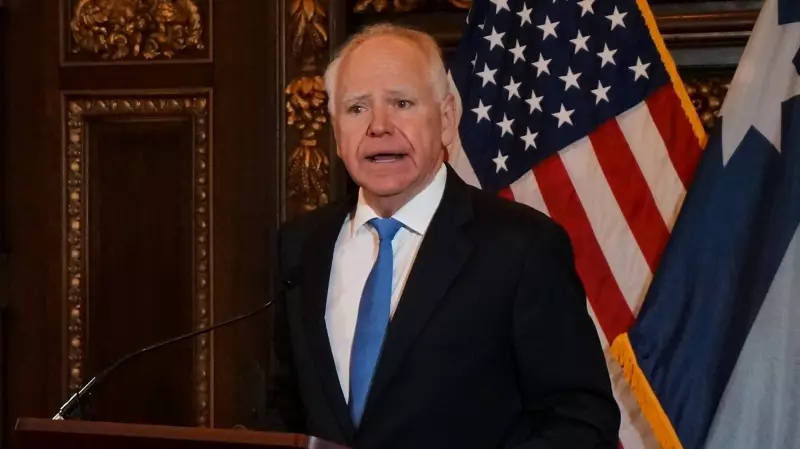
Governor Tim Walz and Mayor Jacob Frey, both Democrats, have characterized the investigation as a bullying tactic designed to suppress political opposition. Frey's office released a copy of the subpoena, which demands a comprehensive list of documents for presentation to a grand jury on February 3. The requested materials include "any records tending to show a refusal to come to the aid of immigration officials."
"We shouldn't have to live in a country where people fear that federal law enforcement will be used to play politics or crack down on local voices they disagree with," Frey stated in response to the subpoena.
Mayor Kaohly Her, a Hmong immigrant and Democrat, also acknowledged receiving a subpoena, declaring she remains "unfazed by these tactics." The governor's office directed reporters to an earlier statement in which Walz accused the Trump administration of creating distractions rather than pursuing genuine justice.
Legal Context and Constitutional Questions
The subpoenas arrived just one day after the federal government urged a judge to reject Minnesota's efforts to halt the immigration enforcement surge that has disrupted the Twin Cities for several weeks. The Justice Department dismissed the state's lawsuit as "legally frivolous," arguing in court filings that "Minnesota wants a veto over federal law enforcement."
Attorney General Keith Ellison countered that the federal government is violating constitutional rights, including free speech protections. He criticized the conduct of armed immigration officers, describing them as poorly trained and calling for an end to what he termed an "invasion." The timing of U.S. District Judge Katherine Menendez's decision on these matters remains uncertain.
Ilan Wurman, a constitutional law professor at the University of Minnesota Law School, expressed skepticism about the state's legal arguments, noting that immigration enforcement traditionally falls under federal jurisdiction.
Enforcement Operations and Community Impact
Greg Bovino of U.S. Border Patrol, who commands the Trump administration's urban immigration crackdown, reported that more than 10,000 individuals residing in the U.S. illegally have been arrested in Minnesota over the past year. He highlighted that 3,000 "of some of the most dangerous offenders" were apprehended during the last six weeks of Operation Metro Surge, including individuals with criminal records from Laos, Guatemala, and Honduras.
"These are not technical violations. As I mentioned, these are individuals responsible for serious harm," Bovino asserted during a recent news conference.
However, immigrant advocates have raised concerns about transparency and accountability. Julia Decker, policy director at the Immigrant Law Center of Minnesota, expressed frustration about the inability to verify the government's arrest statistics and descriptions of detained individuals.
"These are real people we're talking about, that we potentially have no idea what is happening to them," Decker emphasized.

Community Tensions and Protest Activities
The immigration operations have sparked significant community unrest, particularly following the January 7 fatal shooting of Renee Good, a 37-year-old woman killed while moving her vehicle during an ICE operation. While Trump administration officials claim the officer acted in self-defense, video evidence shows the vehicle slowly turning away from the officer.
Since the shooting, public confrontations with immigration officers have intensified, with protesters using whistles and verbal challenges, while officers have responded with tear gas and chemical irritants. Documented incidents include officers using battering rams to enter residences and smashing vehicle windows to extract individuals.
Bovino defended his personnel, stating their actions are "legal, ethical and moral," and characterizing some protesters as "agitators" and "anarchists" rather than ordinary citizens.
Additional Developments and Political Movements
Local law enforcement agencies have reported incidents where off-duty officers were allegedly racially profiled and stopped without cause by federal immigration authorities. Brooklyn Park Police Chief Mark Bruley confirmed receiving complaints from U.S. citizens, including members of his own department.
In a separate development, Cities Church in St. Paul condemned a recent protest where approximately three dozen individuals entered the sanctuary during a service. Pastor Jonathan Parnell denounced the disruption as unlawful, stating that "invading a church service to disrupt the worship of Jesus — or any other act of worship — is protected by neither the Christian Scriptures nor the laws of this nation."
Homeland Security Secretary Kristi Noem described the protesters as "agitators" in a social media post, warning that "arrests coming." Meanwhile, Vice President JD Vance is scheduled to visit Minneapolis for a roundtable discussion with local leaders, according to sources familiar with his travel plans.
The situation continues to evolve as legal proceedings advance and community tensions persist around immigration enforcement practices in the Twin Cities region.