

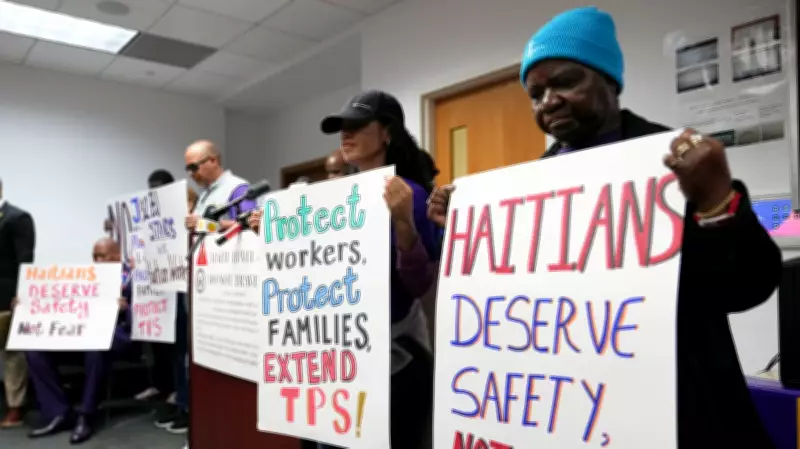
Federal Judge Issues Injunction Against Termination of Haitian TPS Program
A federal judge in Washington, D.C. has intervened to prevent the Trump administration from proceeding with its planned termination of Temporary Protected Status (TPS) for Haitian nationals residing in the United States. U.S. District Judge Ana Reyes granted a preliminary injunction on Monday, effectively pausing the scheduled February 3 termination date while litigation challenging the decision continues through the courts.
Protecting Approximately 350,000 Haitian Nationals
The ruling provides immediate relief for roughly 350,000 Haitians who have been living and working legally in the United States under the TPS designation. This humanitarian program, administered by the Department of Homeland Security, allows individuals from designated countries to remain in the U.S. when conditions in their home countries are deemed unsafe due to natural disasters, armed conflict, or other extraordinary circumstances.
Temporary Protected Status does not create a direct pathway to citizenship, but it does grant recipients authorization to live and work in the United States without fear of deportation during the designated protection period. The program has been particularly crucial for Haitian nationals since 2010, when TPS was initially activated following the devastating earthquake that killed hundreds of thousands and crippled the country's infrastructure.

Ongoing Safety Concerns in Haiti
Attorneys representing Haitian TPS holders presented compelling arguments about the dangerous conditions that persist in Haiti. The Caribbean nation continues to experience extreme gang violence that has displaced hundreds of thousands of residents and created what many describe as a humanitarian crisis.
In court documents filed in December, legal representatives for the plaintiffs made stark predictions about the potential consequences of terminating TPS protections. "If the termination stands, people will almost certainly die," they wrote. "Some will likely be killed, others will likely die from disease, and yet others will likely starve to death."
The legal challenge argues that Homeland Security Secretary Kristi Noem failed to properly evaluate whether Haiti currently experiences an ongoing armed conflict that would pose a "serious threat" to personal safety, as required by statute governing TPS determinations. Furthermore, plaintiffs contend that racial animus influenced the decision to terminate Haiti's protected status.
Administration's Position and Broader Context
The Trump administration has maintained that conditions in Haiti have improved sufficiently to warrant ending the temporary protections. In a November government notice announcing the termination, officials pointed to what they described as positive developments, including authorization of a new multinational force to combat gang violence.
Department of Homeland Security attorneys responded to the racial bias allegations in December court filings, stating that claims of animus were based on statements "taken out of context, often from other speakers and from years ago, and without direct links to the Secretary's determinations." They asserted that Secretary Noem provided "reasoned, facially sufficient explanations" for her decision and determined that allowing Haitians to remain in the United States was against national interest.
This legal battle occurs within the broader context of the administration's immigration enforcement agenda, which has included aggressive efforts to remove temporary protections for various immigrant groups. In addition to the approximately 350,000 Haitians affected by this case, the administration has terminated or attempted to terminate TPS for:
- Approximately 600,000 Venezuelans
- Roughly 60,000 people from Honduras, Nicaragua, and Nepal
- More than 160,000 Ukrainians
- Thousands of individuals from Afghanistan and Cameroon
Many of these termination decisions face similar legal challenges in federal courts across the country. The preliminary injunction granted by Judge Reyes represents a significant development in what promises to be an extended legal confrontation over the scope and implementation of Temporary Protected Status programs.

As the litigation proceeds, Haitian TPS holders and their advocates continue to emphasize the life-or-death stakes of the policy decision. Community organizations have mobilized support, including a January 28 rally in Fort Lauderdale, Florida, where demonstrators urged extension of protections for Haitian immigrants before the scheduled expiration date.





