Alberta's Recall Legislation Faces Practical Challenges as Petitioners Encounter Signature Hurdles
The province's accountability law, enacted in 2019 by the United Conservative Party government, has recently undergone significant testing through multiple recall petitions. This legislation empowers citizens to initiate processes that could potentially lead to the removal of their elected representatives, marking a substantial shift in provincial democratic mechanisms.
Citizen Frustration Sparks Political Action
Derek Keenan, an Airdrie resident and high school principal, found himself at the forefront of this movement last autumn. His growing dissatisfaction with the UCP government's approach to the teachers' strike prompted an unprecedented personal decision: to attempt the removal of his local MLA through formal channels.
"We couldn't get time to speak to her, and when we were able to get a response to an email, it was very dismissive and just along party lines," Keenan explained regarding his interactions with MLA Angela Pitt. "We didn't really feel like she was recognizing that there were other perspectives out there."

The Mechanics of Modern Political Dissent
Keenan's individual action coincided with broader political developments, particularly the government's controversial invocation of the notwithstanding clause to resolve the teachers' labor dispute. This constitutional maneuver, which temporarily suspended certain Charter rights, galvanized numerous Albertans who felt their democratic voices were being marginalized.
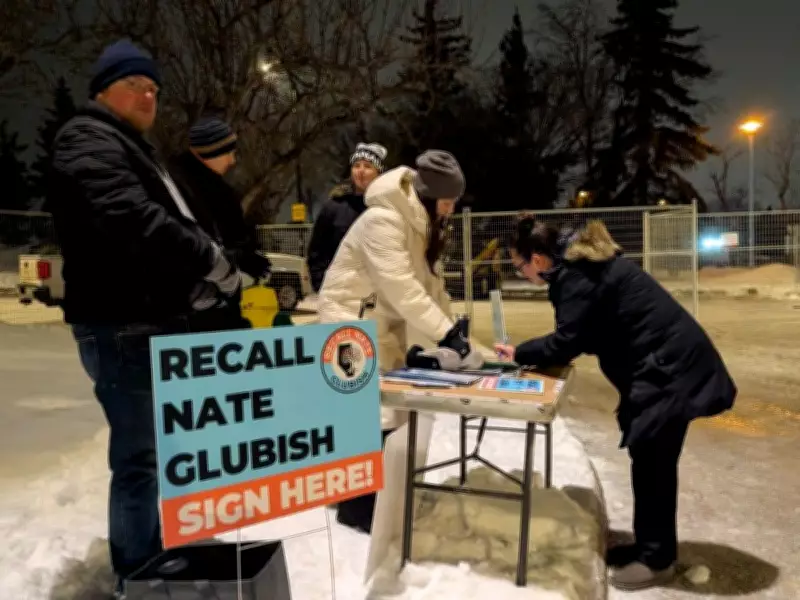
Within three months of Keenan initiating his petition, more than two dozen similar efforts emerged across the province. Each represented a citizen-driven attempt to hold elected officials accountable through the very legislation those officials had previously enacted.
The Signature Gap: Between Aspiration and Reality
Despite this surge in political engagement, petitioners have encountered substantial practical challenges. The recall legislation requires organizers to gather signatures from 40 percent of eligible voters in their constituency within a 60-day window—a threshold that has proven difficult to achieve.
Keenan's experience illustrates this challenge starkly. His petition required approximately 15,000 signatures to trigger a byelection, but his team managed to collect only about 2,200 before the deadline expired. "It was an unlikely result that we were going to be successful in this particular riding anyway," he acknowledged. "It was a highly UCP-driven riding."
Political Identity and Policy Disagreement
Interestingly, Keenan identifies as conservative but finds himself at odds with current government policies. "The conservative values that I grew up with entail building strong community, supporting infrastructure, supporting our basic needs in terms of health care and education," he stated. "And so absolute cuts and not funding things don't work. It needs to be done prudently, but it also needs to be done responsibly."
Official Response and Counter-Narratives
MLA Angela Pitt expressed confusion about Keenan's petition, noting that they had met multiple times previously. "I had just met with Derek Keenan in my office prior to the launch of the petition," she told media. "I've also spoken with him a number of times. I visited his school and so on. It really doesn't add up."
Pitt has previously suggested that Keenan might be leveraging his professional position for political purposes, though Keenan maintains he is not involved in union management and initiated the petition as a concerned citizen.
Broader Implications for Democratic Engagement
The collective experience of recall petitioners across Alberta raises important questions about:

- The practical accessibility of accountability mechanisms for ordinary citizens
- The relationship between political dissatisfaction and actionable democratic tools
- The effectiveness of recall legislation in highly partisan constituencies
- The balance between representative democracy and direct citizen action
While most petitions have failed to reach the required signature thresholds, they nevertheless represent significant expressions of political engagement. These efforts demonstrate that Albertans are willing to utilize available legal mechanisms to voice their concerns, even when success appears unlikely from the outset.
The ongoing testing of Alberta's recall legislation continues to reveal both the possibilities and limitations of citizen-driven accountability in contemporary provincial politics.