

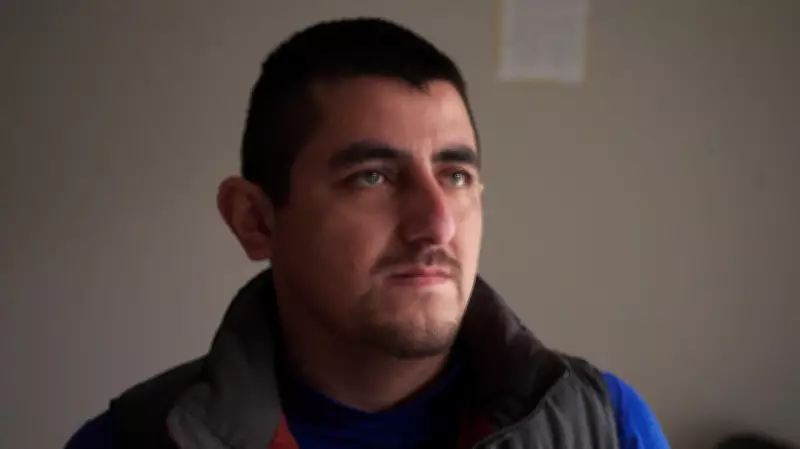
Mexican Immigrant Details Severe Brain Injuries Following Alleged ICE Beating in Minnesota
Alberto Castañeda Mondragón, a 31-year-old Mexican immigrant living in Minnesota, says his memory remains fragmented and damaged following a violent encounter with Immigration and Customs Enforcement officers last month. The beating was so severe that he initially could not remember he had a daughter and still struggles to recall cherished moments, such as the night he taught her to dance. However, the details of the alleged assault are vividly etched into his traumatized mind.
Violent Arrest and Subsequent Hospitalization
Castañeda Mondragón recounts being pulled from a friend's car on January 8 outside a St. Paul shopping center by ICE agents. He says they threw him to the ground, handcuffed him, and then proceeded to punch him and strike his head with a steel baton. After being dragged into an SUV and taken to a detention facility, he alleges the beating continued. The incident resulted in a trip to the emergency room, where he was diagnosed with eight skull fractures and five life-threatening brain hemorrhages.
"They started beating me right away when they arrested me," Castañeda Mondragón told The Associated Press this week. His case has contributed to growing friction between federal immigration agents and a Minneapolis hospital, as reported by AP.

Conflicting Accounts and Medical Evidence
ICE officers provided a different narrative to medical staff at Hennepin County Medical Center, claiming Castañeda Mondragón "purposefully ran headfirst into a brick wall." Healthcare providers immediately doubted this account. A CT scan revealed fractures to the front, back, and both sides of his skull—injuries a doctor told AP were inconsistent with a fall or collision with a wall.
Castañeda Mondragón insists there was never a wall. He recalls officers striking him with a metal rod, later identified as an ASP telescoping baton, which is routinely carried by law enforcement. According to training materials and use-of-force policies across the United States, such batons can be used to hit arms, legs, and the body, but striking the head, neck, or spine is considered potentially deadly force.
"The only time a person can be struck in the head with any baton is when the person presents the same threat that would permit the use of a firearm—a lethal threat to the officer or others," explained Joe Key, a former Baltimore police lieutenant and use-of-force expert who testifies in defense of police.
Allegations of Racism and Continued Abuse
After being taken to an ICE holding facility at Fort Snelling in suburban Minneapolis, Castañeda Mondragón says officers resumed beating him. He pleaded with them to stop, recognizing he was seriously hurt, but they allegedly "laughed at me and hit me again." He described the officers as "very racist people" and attributed their actions to prejudice against immigrants.
The Department of Homeland Security, which includes ICE, did not respond to repeated requests for comment over the last two weeks regarding Castañeda Mondragón's injuries. It remains unclear whether his arrest was captured on body-camera footage or if additional recordings exist from security cameras at the detention center.
Legal and Political Fallout
In a recent declaration filed in federal court, ICE deportation officer William J. Robinson did not explain how Castañeda Mondragón's skull was fractured. He noted that during the intake process, it was determined the immigrant "had a head injury that required emergency medical treatment." The declaration also stated Castañeda Mondragón entered the U.S. legally in March 2022 and that ICE determined only after his arrest that he had overstayed his visa. A federal judge later ruled his arrest unlawful and ordered his release from ICE custody.

Video footage posted to social media shows the moments immediately after his arrest, depicting Castañeda Mondragón stumbling and unsteady while being walked handcuffed through a parking lot by four masked men. Witnesses can be heard shouting, "Don't resist" and "Hope they don't kill you." The individual who posted the video declined to speak with AP or provide consent for its publication, but Castañeda Mondragón confirmed he is the handcuffed man in the recording.
Calls for Investigation and Accountability
Minnesota Governor Tim Walz shared AP's prior story on social media, stating, "Law enforcement cannot be lawless. Thousands of aggressive, untrained agents of the federal government continue to injure and terrorize Minnesotans. This must end." However, his office has not indicated whether state authorities will pursue an investigation.
Elected officials, including St. Paul Mayor Kaohly Her and Minnesota congressional leaders, have called for an investigation into Castañeda Mondragón's injuries. The Ramsey County Attorney's Office urged him to file a police report to prompt an inquiry, and he plans to do so. A St. Paul police spokesperson said the department would investigate "all alleged crimes that are reported to us."
Despite the Trump administration's insistence that ICE limits operations to immigrants with violent criminal records, Castañeda Mondragón has no criminal history. Democratic Senator Tina Smith of Minnesota criticized the administration, saying, "We are seeing a repeated pattern of Trump Administration officials attempting to lie and gaslight the American people when it comes to the cruelty of this ICE operation in Minnesota."
Personal Background and Ongoing Struggles
A native of Veracruz, Mexico, Castañeda Mondragón came to Minnesota nearly four years ago on a temporary work visa, working as a driver and roofer to support his elderly, disabled father and his 10-year-old daughter. On the day of his arrest, he was running errands with a friend when they were surrounded by ICE agents. He says the first officer who hit him "got ugly with me for being Mexican" and not having documents showing his immigration status.
About four hours after his arrest, court records show he was taken to an emergency room in Edina with swelling, bruising around his right eye, and bleeding. He was then transferred to Hennepin County Medical Center, where his condition deteriorated. A week into his hospitalization, caregivers described him as minimally responsive. As he slowly improved, hospital staff gave him his cellphone, and he spoke with his daughter in Mexico, whom he could not remember.
"I am your daughter," she told him. "You left when I was 6 years old." His head injuries erased past experiences, including birthday parties and the day he left for the U.S. She has been trying to revive his memory in daily calls, reminding him of moments like when he taught her to dance at age five. "All these moments, really, for me, have been forgotten," he said.
Long Road to Recovery and Uncertain Future
Despite gradual improvement and an unexpected release from the hospital on January 27, Castañeda Mondragón faces a long recovery. The effects of his traumatic brain injuries persist, including memory problems, balance issues, and coordination difficulties that could be debilitating for a roofer. He is unable to bathe himself without help and says, "I can't get on a roof now."
Without health insurance, he needs ongoing medical care but is unable to work. He relies on support from co-workers and the Minneapolis-St. Paul community, who are raising money for food, housing, and medical expenses through a GoFundMe campaign. He hopes to stay in the U.S. and eventually provide for his family again, distinguishing between welcoming Minnesotans and the federal officers who beat him.
"It's immense luck to have survived, to be able to be in this country again, to be able to heal, and to try to move forward," he said. "For me, it's the best luck in the world." However, fear dominates his dreams at night, and he is now terrified to leave his apartment, haunted by the possibility of another encounter with ICE.
"You're left with the nightmare of going to work and being stopped," Castañeda Mondragón said, "or that you're buying your food somewhere, your lunch, and they show up and stop you again. They hit you."





