Calgary's Curling Dynasty Confronts Olympic Challenge in Cortina
The city of Calgary, long celebrated as a global epicenter for curling excellence, is confronting a moment of intense scrutiny at the 2026 Winter Olympics. The Canadian mixed doubles curling team, featuring Brett Gallant, suffered a disappointing defeat against Great Britain during the round-robin phase in Cortina d'Ampezzo, Italy. This loss has sent ripples through the nation's curling community, raising questions about the team's performance on the world's biggest stage.
A Storied Legacy Under Pressure
Calgary has earned its reputation as a historic curling powerhouse through decades of dominance in international competitions. The city's world-class facilities and deep talent pool have produced numerous champions. However, the pressure to uphold this legacy is palpable as the Olympic tournament unfolds. The match against Britain, held on Saturday, February 7, 2026, showcased a hard-fought battle that ultimately ended in favor of the British squad.
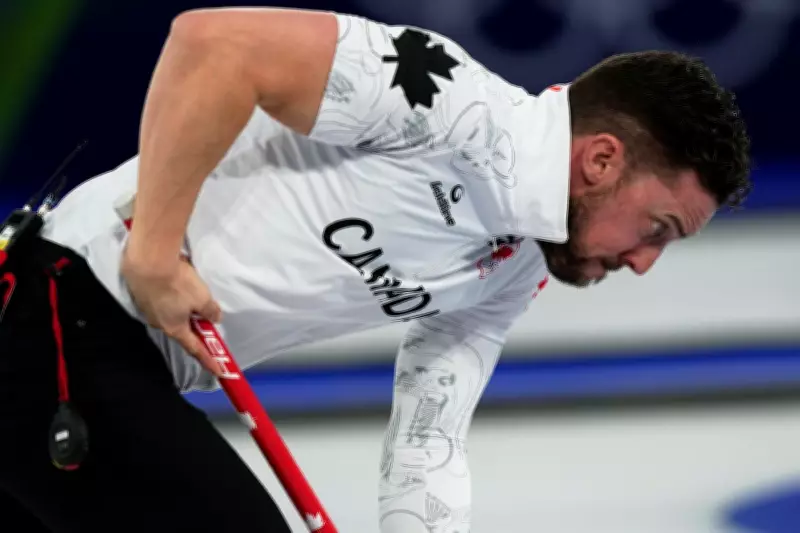
Brett Gallant, a key figure in Canadian curling, was seen in action during the intense competition. The Associated Press captured moments of the game, highlighting the strategic plays and emotional highs and lows experienced by both teams. This early setback in the mixed doubles event underscores the unpredictable nature of Olympic sports, where past successes do not guarantee future victories.

Analyzing the Olympic Performance
The defeat to Great Britain marks a critical juncture for Canada's curling campaign at the Winter Olympics. Analysts point to several factors that may have influenced the outcome:
- International Competition: The global standard of curling has risen significantly, with nations like Britain investing heavily in training and development.
- Team Dynamics: Mixed doubles requires seamless coordination between partners, and any minor misstep can be costly in a high-stakes environment.
- Olympic Pressure: The unique atmosphere of the Games can affect even the most seasoned athletes, impacting focus and execution.
Despite this loss, the Canadian team remains in contention, with opportunities to rebound in subsequent matches. The round-robin format allows for recovery, but the margin for error has narrowed. Fans and experts alike are watching closely to see how the squad adapts and whether Calgary's curling heritage can inspire a comeback.
The Broader Context of Canadian Curling
This Olympic moment reflects broader trends in Canadian curling, where maintaining supremacy requires continuous innovation and adaptation. The sport's grassroots in cities like Calgary have fueled national success, but international rivals are closing the gap. The 2026 Winter Olympics serve as a litmus test for the health and competitiveness of Canada's curling programs.
As the tournament progresses, all eyes will be on the Canadian team's resilience. A single defeat does not define a legacy, but it does highlight the challenges of sustaining excellence in a rapidly evolving sport. The coming days will reveal whether Calgary's curling powerhouse can rise to the occasion and reclaim its winning form on the Olympic ice.