

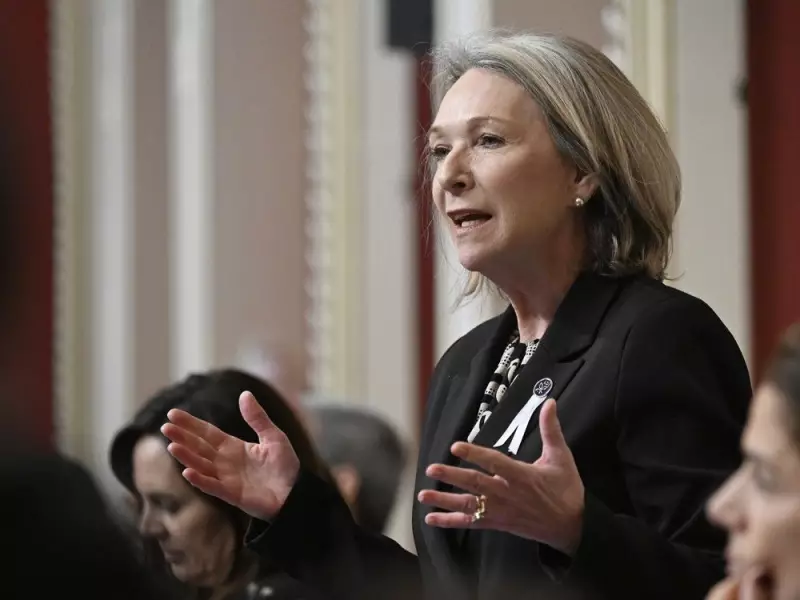
Quebec's New Health Minister Confronts Complex Healthcare Landscape
Sonia Bélanger, Quebec's recently appointed Minister of Health, Social Services, and Seniors, finds herself at the helm of a healthcare system in flux during a period of significant political transition. Following the abrupt resignation of her predecessor Christian Dubé in December 2025, Bélanger assumed her multifaceted role just before Christmas, inheriting a portfolio marked by recent tensions and unresolved challenges.
Navigating Multiple Ministerial Responsibilities
Bélanger now stands as the sole remaining figure from Premier François Legault's original trio of health and social services ministers. Her appointment comes after both Dubé and Social Services Minister Lionel Carmant departed their positions amid controversy surrounding Bill 2, the government's contentious legislation proposing a new physician compensation model. Carmant, himself a physician with family members in the medical profession, resigned over disagreements with the bill's provisions.
With these departures, Bélanger has consolidated responsibilities across three critical portfolios, creating an unprecedented concentration of healthcare authority within a single minister's office. This consolidation occurs against the backdrop of Premier Legault's announced resignation, which has triggered a leadership race within the Coalition Avenir Québec party that will determine Quebec's next premier by April 12.

Immediate Challenges and Tight Deadlines
The new minister faces several pressing obligations with firm deadlines:
- Revising the text of Bill 2 when the National Assembly reconvenes in February
- Negotiating the specific details of a mixed pay model with the Fédération des médecins omnipraticiens du Québec
- Developing a comprehensive plan to assign approximately 500,000 orphan patients to family medicine groups (GMFs) by June
These tasks represent what former Premier Legault described as a "revolution" in physician compensation, a vision he and Dubé had passionately pursued. However, Bélanger must advance this agenda amid political uncertainty, with the possibility of a snap election looming once the new CAQ leader assumes power.
Healthcare System in Transition
While the immediate crisis surrounding Bill 2 has subsided since late last year, Quebec's healthcare system continues to grapple with the aftermath of the government's confrontation with physicians. The province's medical community remains cautiously observant, with many doctors and clinics awaiting the outcome of ongoing negotiations before making definitive decisions about their futures.
Some positive developments have emerged from the revised approach. Several physicians who had planned to leave Quebec have reconsidered their decisions, and clinics that announced closures have reversed course. Notably, 19 doctors in the Outaouais region who had indicated their departure have decided to remain, while only 11 will proceed with leaving.
Progress Amid Persistent Challenges
The government has taken tentative steps toward reconciliation with the medical community. A new five-year contract for GMFs addresses many concerns present in the original agreement tabled alongside Bill 2. This revised contract provides approximately 30 percent of GMF funding directly, with the remainder coming from physician salary contributions—details that will be finalized in upcoming negotiations.
Additionally, the Guichet d'accès à la première ligne program, which facilitates appointments for patients without regular doctors, has been preserved through the revision of Bill 2. This initiative, established in 2022 to alleviate emergency room pressures, will continue with funding attached to match 500,000 orphan patients with GMFs.
Ongoing Systemic Issues
Despite these positive developments, Quebec's healthcare system continues to face significant structural challenges:

- The province faces a shortage of approximately 2,000 family physicians
- Recent medical residency placements in Montreal left 50 newly trained doctors without positions despite 173 candidates interviewing for 123 available spots
- Restrictions under Bill 83 prevent physicians from leaving Quebec or transitioning to private practice without substantial financial penalties
The Legault government's healthcare reforms, including the creation of Santé Québec as a centralized decision-making body, have fundamentally altered Quebec's medical landscape. These changes have centralized authority while simultaneously straining relationships between the government and medical professionals.
A Minister Operating in Uncertain Times
Bélanger brings relevant experience to her challenging role, having previously served as president and director general of the CIUSSS du Centre-Sud-de-l'Île-de-Montréal during the pandemic. Her visibility during COVID-19 press briefings alongside public health director Dr. Mylène Drouin established her as a familiar figure to many Montrealers.
However, the minister now operates within a unique political context. With Premier Legault transitioning to lame-duck status and the future leadership of both the CAQ and Quebec Liberals uncertain, Bélanger must advance healthcare reforms without clear knowledge of her government's long-term direction or the support she will receive from Quebec's next premier.
The coming months will test Bélanger's ability to navigate complex negotiations, implement necessary reforms, and stabilize a healthcare system that has recently weathered significant turmoil. Her success will depend not only on her ministerial skills but also on the political environment that emerges from Quebec's ongoing leadership transitions.





