

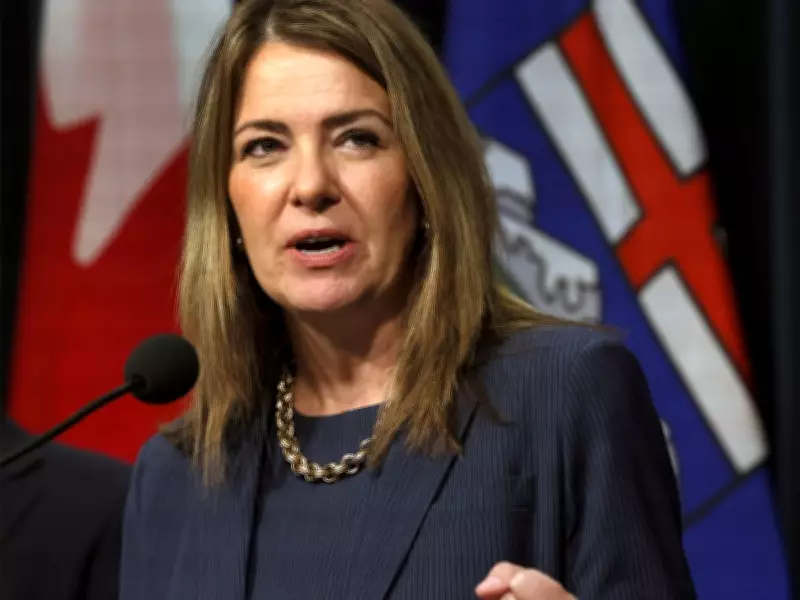
Alberta Government Moves to Impose Strict Restrictions on Medical Assistance in Dying
In a significant policy shift, the Alberta government has introduced new legislation that would impose substantial restrictions on access to medical assistance in dying (MAID). Premier Danielle Smith announced the proposed changes, which would effectively limit MAID to individuals suffering from terminal illnesses where natural death is expected within twelve months.
Key Provisions of Bill 18
The legislation, officially titled Bill 18 — Safeguards for Last Resort Termination of Life Act, represents the first provincial legislation of its kind in Canada. The bill contains several critical provisions:
- Prohibition of MAID for individuals whose sole underlying medical condition is mental illness
- Restriction of MAID to Track 1 cases only, where natural death is reasonably foreseeable within twelve months
- Implementation of mandatory sanctions against healthcare professionals who violate the legislation
- Exclusion of individuals with degenerative diseases like Parkinson's, dementia, or Alzheimer's unless they maintain decision-making capacity
Premier Smith's Stance on Constitutional Challenges
Premier Danielle Smith has stated unequivocally that her government is prepared to defend the legislation if challenged in court. "We fully anticipate this legislation will become law in Alberta," Smith declared during a press conference in Calgary.

The Premier emphasized that while the courts may sometimes disagree with provincial legislation, her government is prepared to use all available constitutional tools. "Sometimes the courts disagree, and they offer to strike down our bills, at which point we have the way of engaging with them in conversation by using the notwithstanding clause," Smith explained.
She further asserted that "We think that our bill should qualify as reasonable and justified under section one of the charter."
Federal vs. Provincial Jurisdiction
The proposed legislation creates a potential conflict with federal MAID regulations. While MAID is primarily governed by federal laws, individual provinces and territories are responsible for its implementation and delivery.
In 2021, the federal government passed legislation to expand MAID access to include those with mental illness as their sole underlying medical condition — known as Track 2 MAID. This federal expansion is scheduled for implementation on March 17, 2027.
Alberta's Bill 18 would specifically prohibit Track 2 MAID cases, which refer to individuals whose natural death is not reasonably foreseeable.
Justice Minister's Perspective on Balancing Interests
Justice Minister Mickey Amery addressed the delicate balance the legislation attempts to achieve. "I believe the legislation strikes a balance between the original intention of MAID and protecting vulnerable Albertans," Amery stated.
He emphasized that decisions about MAID eligibility should remain between patients and their healthcare providers. "If it falls within the framework of what the original intention of MAID was and it complies with Bill 18, then that is a conversation that has to happen between a patient, a doctor and perhaps family members," Amery explained, noting that each case must be assessed individually.
Implications for Healthcare Professionals and Patients
The legislation introduces significant changes for healthcare providers who administer MAID in Alberta. The mandatory sanctions provision creates new accountability measures for professionals who violate the proposed regulations.
For patients, the legislation would substantially narrow eligibility criteria, particularly affecting those with mental illness as their primary medical condition and individuals with degenerative diseases who may have previously considered MAID as an option.
The government's position reflects ongoing debates about the appropriate scope of medical assistance in dying, balancing individual autonomy with concerns about protecting vulnerable populations.






