

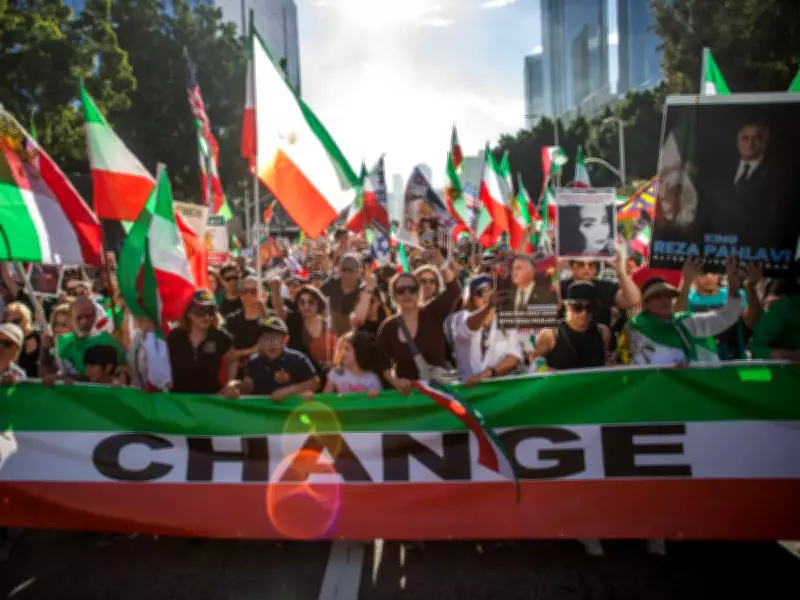
The World's Moral Imperative to Shield Iranian Citizens from Oppressive Regime
When authoritarian governments systematically commit atrocities against their own populations, leaving citizens desperate for external intervention, global silence and inaction cannot be considered neutrality. According to international law experts Michal Cotler-Wunsh and Becca Wertman-Traub, such passive responses represent active complicity with oppressive regimes.
Questioning Interpretations of International Law
On February 28, former Canadian Foreign Affairs Minister Lloyd Axworthy publicly criticized Prime Minister Mark Carney for failing to condemn American military strikes against Iran as violations of international law. However, Cotler-Wunsh and Wertman-Traub contend that Axworthy's own interpretation of international legal frameworks deserves scrutiny, particularly regarding his apparent neglect of a doctrine he helped establish during his tenure.
While serving as Canada's foreign minister, Axworthy spearheaded the initiative that created the International Commission on Intervention and State Sovereignty (ICISS). This commission developed the groundbreaking "Responsibility to Protect" (R2P) framework, which United Nations member states unanimously adopted during the 2005 World Summit.

The Responsibility to Protect Doctrine Explained
The R2P doctrine affirms that sovereign states bear primary responsibility for protecting their populations from four specific crimes:
- Genocide
- War crimes
- Crimes against humanity
- Ethnic cleansing
When states fail to fulfill this fundamental obligation, the international community assumes a corresponding responsibility to intervene through diplomatic, humanitarian, and—as a last resort—military means. Although the UN resolution specifies that only the Security Council can authorize military force, the original ICISS report acknowledged the Security Council's historical failures to act during humanitarian crises.
The 2001 ICISS report explicitly addressed this dilemma, questioning: "Where lies the most harm: in the damage to international order if the Security Council is bypassed or in the damage to that order if human beings are slaughtered while the Security Council stands by?"
Iran's 47-Year Pattern of Atrocities
For nearly five decades, the Iranian regime has engaged in systematic human rights violations against its civilian population while simultaneously threatening international security. The regime has:
- Violently suppressed domestic protests, resulting in thousands of civilian deaths in recent months alone
- Pursued nuclear weapons capabilities despite international agreements and sanctions
- Developed extensive ballistic missile and drone arsenals
- Openly declared intentions to destroy Israel and the United States
- Funneled financial resources, weapons, and support to terrorist proxies worldwide
- Committed atrocities against citizens of multiple nations including Israel, America, Canada, and Argentina
Despite ongoing diplomatic negotiations, international sanctions, and the 2015 nuclear agreement, the Iranian regime has consistently demonstrated disinterest in peaceful resolutions while continuing its brutal domestic oppression and aggressive international posturing.
The Contradiction in Current Positions
Cotler-Wunsh and Wertman-Traub highlight the fundamental contradiction in Axworthy's current position. While acknowledging the Iranian regime's extensive abuses, Axworthy maintains that "change must come from within Iranian society and not through military campaigns that kill civilians." This stance directly conflicts with the R2P doctrine he helped establish, which explicitly recognizes military intervention as a legitimate last resort when all other options have failed.
The authors argue that the February 28 military strikes by Israel and the United States represented precisely such a war of last resort, undertaken only after decades of diplomatic efforts proved futile against a regime determined to continue its oppressive practices and military aggression.

The international community faces a critical choice: uphold the principles of the Responsibility to Protect doctrine it created or continue enabling a regime that systematically violates fundamental human rights while threatening global stability.





