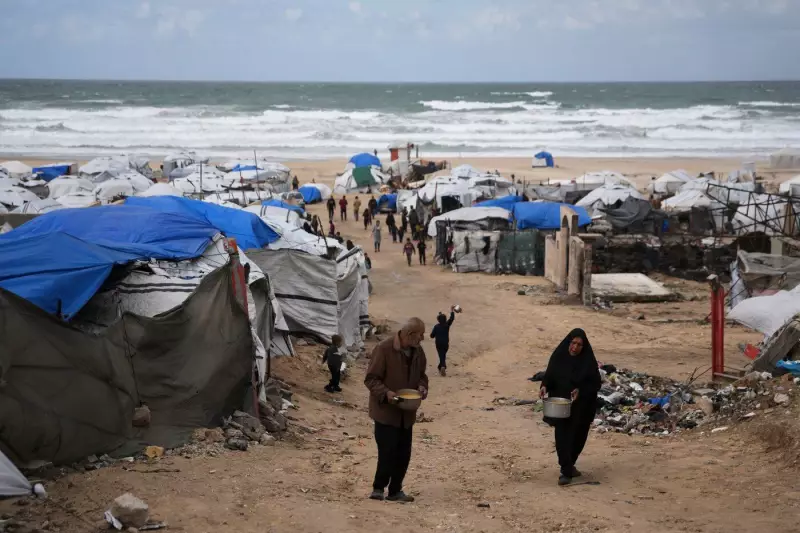
Heavy winter rains have inundated makeshift camps across the Gaza Strip, flooding the tents of displaced Palestinians and worsening an already severe humanitarian crisis. The severe weather struck on Sunday, December 28, 2025, as Israeli Prime Minister Benjamin Netanyahu prepared for a critical meeting in the United States.
Dire Conditions in Displacement Camps
The Associated Press reported from Gaza City, where Palestinians were seen receiving donated food at a temporary camp set up on a beach near the port. Photographic evidence from the scene, credited to AP photographer Jehad Alshrafi, depicted the harsh realities of life for those forced from their homes. The winter storm transformed already precarious living conditions into a quagmire, with floodwaters entering shelters and soaking the few possessions of displaced families.
The timing of the storm is particularly cruel, adding a natural disaster layer to the man-made crisis of the ongoing conflict. Aid workers on the ground have expressed grave concerns about the spread of waterborne diseases and the extreme difficulty of distributing aid in such conditions.

Netanyahu's Diplomatic Mission
As the rains fell in Gaza, Israeli Prime Minister Benjamin Netanyahu was en route to the United States for high-level talks. The agenda for the meeting, while not fully detailed in the initial report, is widely understood to center on the ongoing war with Hamas, regional security, and potentially the management of the humanitarian situation in Gaza.
This diplomatic move comes at a pivotal moment, with international pressure mounting for a sustainable ceasefire and a long-term political solution. The juxtaposition of the leader's travel and the suffering in the camps underscores the complex political and human dimensions of the conflict.
A Deepening Humanitarian Catastrophe
The flooding is a stark reminder of the vulnerability of Gaza's displaced population, estimated to be over a million people. Many are living in tents or makeshift structures with little protection from the elements. The winter rains have exposed the inadequacy of current shelter solutions and the urgent need for more robust humanitarian infrastructure.
The crisis extends beyond immediate shelter. Access to clean water, sanitation, food, and medical care remains critically limited. The flooding likely contaminated water sources and damaged remaining infrastructure, setting back recovery efforts and threatening public health. The international community continues to call for increased and unimpeded aid access to prevent further loss of life.
The events of December 28, 2025, paint a grim picture: a region battered by conflict now also grappling with nature's fury, while political discussions that could determine its future are held thousands of miles away. The immediate need for emergency shelter, warm clothing, and food for Gaza's displaced is more acute than ever.