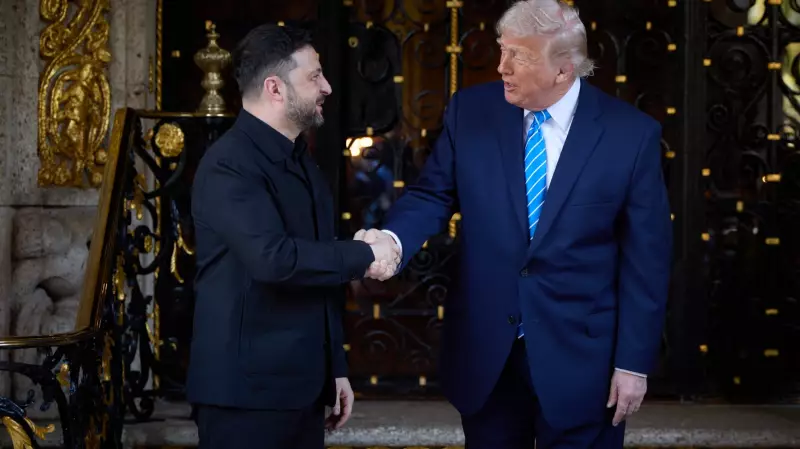
In a significant development toward ending the war in Ukraine, the United States has proposed offering Kyiv security guarantees for a period of 15 years as part of a broader peace initiative. The announcement came from Ukrainian President Volodymyr Zelenskyy on Monday, following a high-stakes meeting with U.S. President Donald Trump at his Mar-a-Lago resort in Florida on Sunday, December 28, 2025.
Mar-a-Lago Talks and the Push for Peace
President Trump hosted President Zelenskyy for a meeting and a closed-door lunch, later stating that Ukraine and Russia are "closer than ever before" to reaching a settlement. However, Trump also cautioned that the months-long, U.S.-led negotiations could still fall apart. Key sticking points remain unresolved, including the withdrawal of forces from contested territories and the future status of the Russian-occupied Zaporizhzhia Nuclear Power Plant, one of the largest such facilities in the world.
Zelenskyy, communicating with reporters via voice messages on WhatsApp, emphasized the critical nature of security assurances. "Without security guarantees, realistically, this war will not end," he stated. While details of the proposed U.S. guarantees are not public, Zelenskyy indicated they involve mechanisms for monitoring a peace deal and the "presence" of international partners—a point likely to draw Russian opposition, as Moscow has repeatedly rejected any NATO troop deployments in Ukraine.

Diverging Timelines and Battlefield Claims
While the U.S. offer is for 15 years, President Zelenskyy expressed a preference for a much longer American commitment of up to 50 years, which he believes is necessary to deter future Russian aggression. The security guarantees would require approval from the U.S. Congress and other national parliaments involved in overseeing a final settlement. Zelenskyy also stated his desire for any final 20-point peace plan to be ratified by Ukrainians in a national referendum, a process that would require a ceasefire of at least 60 days—a condition Moscow has not yet accepted.
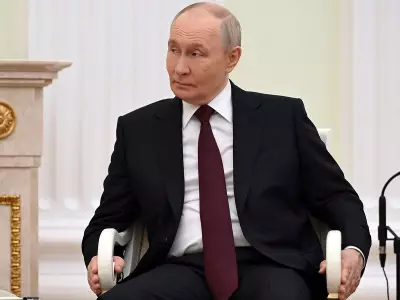
As diplomatic efforts intensify, with indications that negotiations could reach a critical point in January 2026, Russian President Vladimir Putin claimed on Monday that his forces are advancing in the eastern Donetsk region and pressing their offensive in southern Zaporizhzhia. Putin, aiming to negotiate from a position of strength, also stressed the need to establish military buffer zones along Russia's border for security. Kremlin spokesman Dmitry Peskov confirmed that Putin and Trump are expected to speak soon, but there are no plans for direct talks between Putin and Zelenskyy.
Skepticism in Kyiv and International Coordination
On the snowy streets of Ukraine's capital, residents expressed deep skepticism about the prospects for a lasting peace. A 65-year-old military veteran with the call sign "Sensei," who was wounded in the battle for Bakhmut, told The Associated Press that Putin's record shows he cannot be trusted. "But all these sacrifices, they are not in vain, because we need to prove ... that we exist," he said.
Political analyst Oleh Saakian viewed Zelenskyy's ability to build a relationship with Trump as a positive sign but warned that the negotiations are based on a flawed premise of equality between aggressor and victim. Meanwhile, international coordination continues. French President Emmanuel Macron announced that Kyiv's allies will meet in Paris in early January to finalize concrete contributions to the security guarantee package.
The diplomatic flurry was also marked by a claim from Russian Foreign Minister Sergey Lavrov that Ukraine launched 91 long-range drones at Putin's residence in the Novgorod region overnight Sunday to Monday. Zelenskyy dismissed the allegation as "another lie" motivated by Moscow's unease over peace progress. Lavrov stated all drones were destroyed with no casualties or damage and hinted at planned retaliation.