The United States launched a second round of airstrikes on Iran early Thursday morning, following President Donald Trump's warning that Tehran would "pay the price" for stalled negotiations. In response, Iran fired missiles targeting Bahrain, Kuwait, and Jordan.
Escalation of Hostilities
The new American assault across multiple Iranian cities appeared more intense and wider than the previous day's strikes. However, Iran released limited information on the extent of the damage. The U.S. Central Command stated that the strikes targeted "Iranian military surveillance capabilities, communication systems and air defense sites" in response to Iran's "unwarranted and continued aggression."
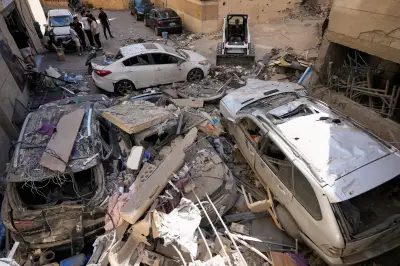
Kuwait closed its airspace for several hours due to the attack but did not elaborate on any damage. Jordan reported intercepting 20 Iranian missiles aimed at an area housing a U.S. military base, with no injuries. In Bahrain, an 11-year-old girl was hurt, and cars and homes were damaged by falling debris from interceptions.

Impact on Regional Stability
These back-and-forth strikes have tested a two-month shaky ceasefire. The first attacks occurred between Iran and Israel over the weekend, followed by two rounds of fire between the U.S. and Iran. An Indian official confirmed that a U.S. attack on an oil tanker allegedly violating the Iran blockade killed three Indian mariners, highlighting the danger to seafarers.
Trump has urged Iran to sign a deal to end the war, suggesting an agreement could be reached within days. However, Iran remains resilient, betting on its ability to effectively close the Strait of Hormuz—a crucial passageway for oil and natural gas—as a strong bargaining chip.
Obstacles to Peace
Both countries appear to be seeking a way to end the conflict, but major disagreements persist. The U.S. demands Iran give up its stockpile of highly enriched uranium, which Iran insists is for peaceful purposes. Iran refuses to relinquish the uranium and demands sanctions relief and the release of frozen assets before any final agreement.
Israeli Prime Minister Benjamin Netanyahu also seems intent on pursuing goals that make compromise harder, including the collapse of Iran's government and the elimination of its nuclear program.
Economic Consequences
The conflict has shaken the global economy, driving up energy prices and making food and other basics more expensive. The international benchmark for crude oil traded above $93 a barrel on Wednesday, up more than 25% since the war began.
Trump claimed the U.S. military has undertaken a "secret mission" to sneak oil shipments past Iran's forces in the Strait of Hormuz, with more than 100 million barrels of oil evading Iran's chokehold. However, the seas remain dangerous, with 43 attacks on international shipping in the area since the start of the war, according to the International Maritime Organization.