In a notable public intervention, a group of prominent American Catholic cardinals has issued a direct appeal to the administration of President Donald Trump, urging it to embrace a clear moral compass in the conduct of U.S. foreign policy. The call highlights a growing concern among religious leaders about the ethical dimensions of international relations.
A Direct Appeal for Ethical Leadership
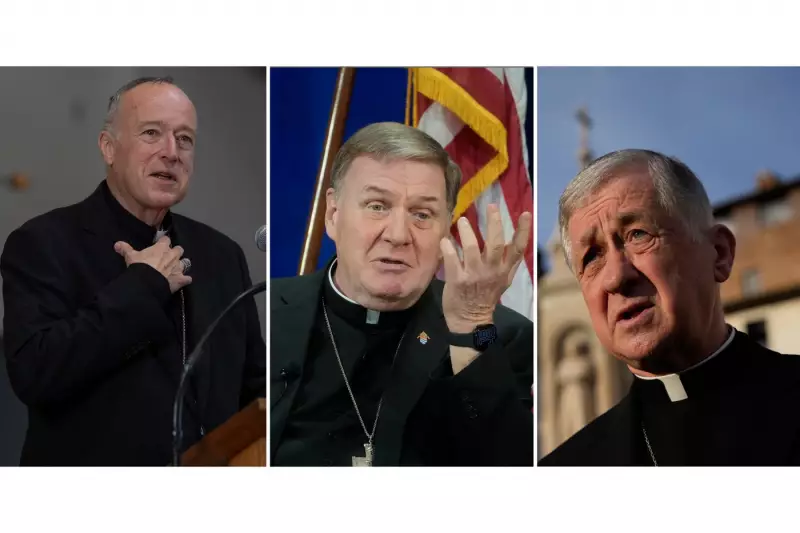
The cardinals, including Cardinal Robert McElroy of San Diego, Cardinal Joseph Tobin of Newark, and Cardinal Blase Cupich of Chicago, made their collective stance known. Their appeal, reported by The Associated Press on January 19, 2026, does not delve into specific policy critiques but instead focuses on the foundational need for principles such as human dignity, the common good, and a commitment to peace to guide America's actions on the world stage.
This move represents a significant moment of dialogue between high-ranking religious figures and the political establishment. The cardinals are leveraging their moral authority to advocate for a foreign policy framework that prioritizes ethical considerations alongside strategic and economic interests.

Context and Implications
The appeal comes at a time of complex global challenges, where U.S. foreign policy decisions have far-reaching consequences. By invoking the need for a moral compass, the church leaders are emphasizing that power must be exercised with responsibility and a vision for global justice and stability.
While the statement from the cardinals is broad, it implicitly touches upon contemporary issues where ethical questions are paramount, including the treatment of migrants and refugees, responses to international conflicts, and commitments to humanitarian aid and development.
A Broader Conversation on Values
The cardinals' intervention is likely to resonate within Catholic communities across the United States and beyond, potentially influencing the perspectives of millions of faithful. It also places the administration's policy directions under a specific kind of scrutiny, one measured against long-standing social teachings of the Church.
This public call serves as a reminder of the ongoing role that religious institutions play in civic discourse, particularly on matters of conscience and international affairs. Whether this appeal will translate into tangible shifts in policy direction remains to be seen, but it undoubtedly adds a prominent voice to the debate over the soul of American foreign policy.