

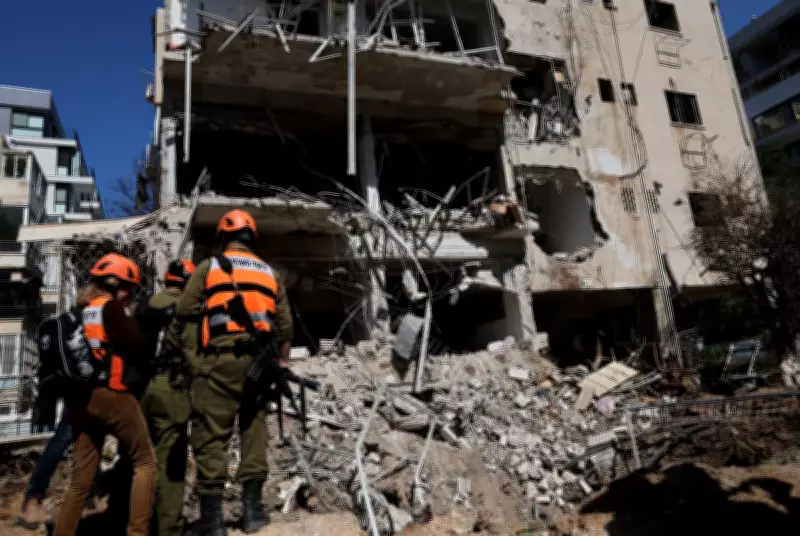
Iran has persisted with missile and drone assaults on Israel and Arab Gulf nations, despite the United States presenting a comprehensive peace proposal aimed at ending a devastating war that has disrupted the Middle East and global markets. According to government and non-government agencies, the conflict has resulted in more than 4,300 fatalities, underscoring the severe human toll.
Escalating Attacks and Regional Impact
Recent incidents include Saudi Arabia intercepting a drone in its eastern region and a strike in Kuwait that ignited a fuel tank at the country's primary airport. Iranian media has reported additional missile launches targeting Israel, highlighting the ongoing military aggression. These actions occur as the U.S. awaits a formal response from Iran to a 15-point peace plan, delivered via Pakistan, which emphasizes the urgency within President Donald Trump's administration to resolve the conflict initiated alongside Israel nearly a month ago.
Details of the U.S. Peace Proposal
The Associated Press revealed on Wednesday that Iran has received Trump's proposal, citing two Pakistani officials. The plan encompasses a rollback of Iran's nuclear program, including resumed monitoring by the International Atomic Energy Agency, limitations on missile capabilities, and guaranteed access for shipping through the Strait of Hormuz. In exchange, Iran would receive relief from stringent economic sanctions. However, Iran has not officially commented on the proposal, with several officials denying that negotiations are underway. In a statement, Iran's military criticized the U.S., urging it not to "call your defeat an agreement," and accused the U.S. of internal conflicts leading to self-negotiation.

Economic and Global Repercussions
The economic consequences of the war are intensifying, with the effective closure of the Strait of Hormuz triggering a global energy supply shock. This has sparked fears of an inflation crisis and potential worldwide food shortages. Oil prices fell approximately 5.5% on Wednesday, with Brent crude trading just under $99 per barrel in London, as traders responded to signs of potential conflict resolution. The benchmark has declined from $112 per barrel last week following Trump's announcement of talks.
Challenges to Peace Negotiations
Trump has publicly stated that any peace agreement must include a prohibition on Iran obtaining nuclear weapons or enriching radioactive material for civilian purposes. He expressed hope for an agreement by Friday, but significant obstacles remain. Wide gaps persist between the sides, and it is unclear who the U.S. would negotiate with, given the lack of clarity in Iran's power structure after Supreme Leader Ali Khamenei was killed on the first day of the conflict, along with several other government and military officials. Additionally, uncertainties surround whether Iran will immediately allow safe passage for commercial ships through the Strait of Hormuz and how Israel might respond to any potential deal.






