

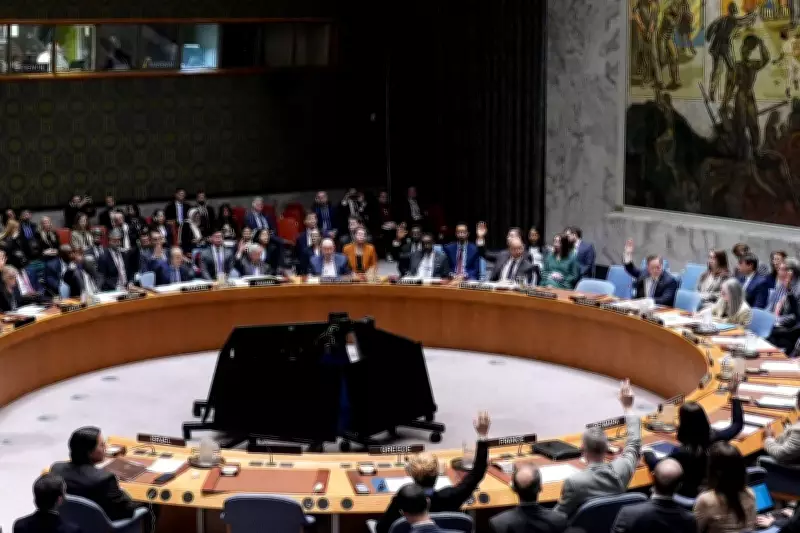
UN Security Council Prepares for Crucial Vote on Weakened Strait of Hormuz Resolution
The United Nations Security Council is poised to hold a decisive vote on a substantially diluted proposal intended to guarantee open maritime passage through the strategically vital Strait of Hormuz. This critical waterway serves as a primary conduit for a significant portion of the world's seaborne oil shipments, making its security a matter of global economic and geopolitical concern.
A Proposal Lacking Teeth
The resolution scheduled for the vote represents a markedly watered-down version of earlier drafts. Initial proposals called for more robust measures to ensure freedom of navigation and address escalating regional tensions that threaten to disrupt this essential maritime corridor. The current text, however, has been stripped of several key enforcement mechanisms and stronger diplomatic language, reflecting the complex political divisions within the Council.
Diplomatic sources indicate that negotiations among the permanent and non-permanent members have been fraught, leading to compromises that significantly weakened the resolution's potential impact. The final proposal focuses primarily on reaffirming existing international law regarding freedom of navigation, rather than introducing new, actionable protocols or mandates.

Global Implications of the Strait
The Strait of Hormuz is arguably one of the most significant chokepoints for global energy supplies. Situated between Oman and Iran, it connects the Persian Gulf with the Gulf of Oman and the Arabian Sea. An estimated one-fifth of the world's oil passes through this narrow passage, meaning any disruption can send shockwaves through international markets and economies.
This vote comes amid a backdrop of persistent regional instability and heightened military posturing by various state actors. Incidents involving commercial shipping have occurred in recent years, underscoring the vulnerability of this route. The Security Council's action, albeit limited, is seen as an attempt to project a unified international stance on maintaining open sea lanes, even if the practical measures are minimal.
Anticipated Council Dynamics
The voting patterns within the 15-member Security Council are expected to reveal the ongoing geopolitical fissures. Permanent members with vested interests in the region's stability and energy flows are likely to support the resolution, despite its shortcomings. However, the diluted nature of the proposal may lead to abstentions or even votes against it from members who view it as insufficient or diplomatically problematic.
The outcome of this vote will be closely monitored by governments, energy markets, and international shipping agencies worldwide. While a successful passage would at least signal a collective diplomatic concern, analysts note that the resolution's lack of concrete enforcement means it is largely a symbolic gesture. The real test will be whether it can deter future actions that might impede traffic through the strait or if more substantive measures will be required should tensions escalate further.






