Treasury Secretary Rejects Nobel Prize Connection to Trump's Greenland Pursuit
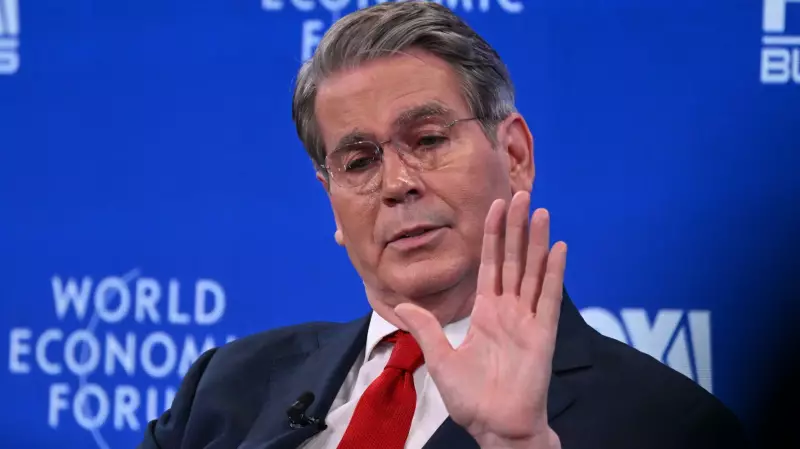
In a striking assertion at the World Economic Forum in Davos, Switzerland, U.S. Treasury Secretary Scott Bessent firmly denied any correlation between President Donald Trump's persistent efforts to acquire Greenland and his failure to secure the Nobel Peace Prize. This declaration comes amidst mounting scrutiny over the president's motivations, particularly following revelations of his private communications.
Contradictory Narratives Emerge
Bessent characterized the notion of a link between the Nobel snub and Greenland ambitions as "a complete canard", emphasizing that the territorial acquisition has been a longstanding objective for Trump since his initial term. "This has been on the president's mind since his first term," Bessent stated during an interview with CNBC on Tuesday, attempting to frame the issue as a matter of strategic continuity rather than personal grievance.
However, this portrayal directly conflicts with Trump's own documented explanations. A text message to Norwegian Prime Minister Jonas Gahr Støre, disclosed by PBS on Monday, revealed Trump writing that he no longer felt an "obligation to think purely of Peace" after being overlooked for the prestigious award. The Nobel Peace Prize is determined by an independent committee, not the Norwegian government, a distinction Trump has repeatedly muddled in his public remarks.

Trump's Mixed Messages on the Nobel Prize
While speaking to reporters on Monday, Trump denied that the prize influenced his stance on Greenland, yet simultaneously accused Norway of controlling the Nobel selection process. "What I care about is saving lives. And I think I've saved tens of millions of lives," Trump asserted, making an unsubstantiated claim that he ended eight wars during his first year back in office. This pattern of contradictory statements has fueled speculation about the true drivers behind his foreign policy initiatives.
The Nobel Peace Prize was awarded in October to Venezuelan opposition leader María Corina Machado, who later presented her medal to Trump during a visit to Washington, D.C. This gesture occurred just weeks after U.S. forces assisted in ousting Venezuelan President Nicolás Maduro, adding another layer of complexity to the geopolitical context surrounding these events.
Broader Implications for U.S. Foreign Policy
The ongoing discourse highlights significant tensions within the administration's narrative regarding Greenland. Key points of contention include:
- The apparent disconnect between Bessent's claims of long-term planning and Trump's personal communications linking the Nobel disappointment to his foreign policy outlook.
- Trump's persistent conflation of the Norwegian government with the independent Nobel committee, despite clarifications from officials.
- The strategic value of Greenland, a self-governing Danish territory, in U.S. geopolitical calculations, irrespective of the Nobel controversy.
As this story develops, it underscores the challenges in reconciling official administration positions with the president's own statements, particularly on matters of international significance. The Greenland question remains a focal point of debate, with implications for U.S. diplomatic relations and global perceptions of American leadership under Trump.