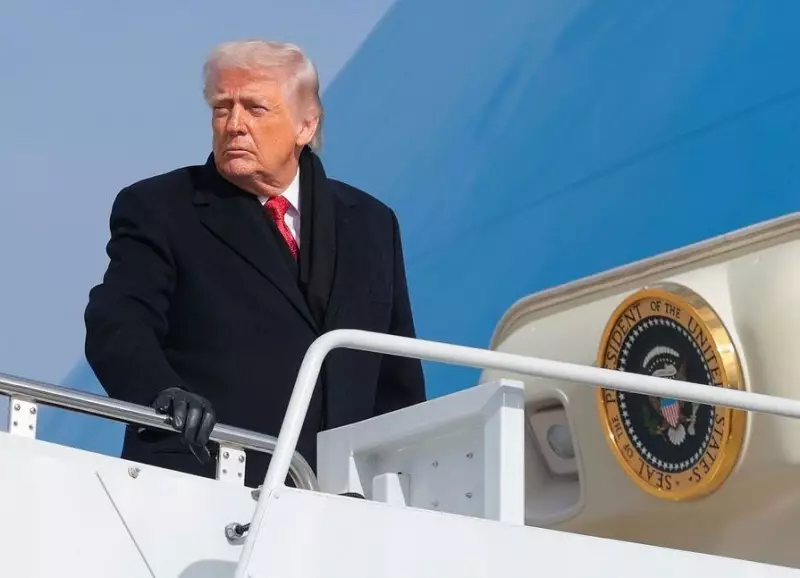
Proposed by U.S. President Donald Trump, a new international body dubbed the 'Board of Peace' is already mired in controversy and diplomatic hesitation just days before its intended launch. The initiative, conceived to oversee post-war Gaza's redevelopment, is meeting resistance from several allied nations over its substantial cost and governance structure.
Steep Price and Ultimate Authority Raise Eyebrows
According to sources familiar with the matter, a primary point of contention is a $1 billion fee for permanent membership, a condition confirmed by the White House. This demand has reportedly blindsided and bewildered many world leaders who received invitations.
Further concern stems from the board's charter, which has been seen by Bloomberg News. The document reportedly grants ultimate decision-making power to President Trump, raising serious questions about the body's autonomy and the destination of the massive membership payments.

Global Reactions: From Rejection to Reluctant Engagement
The proposed board has elicited a spectrum of reactions globally. French President Emmanuel Macron has already declined his invitation, which was also extended to controversial figures like Belarus's autocratic leader Alexander Lukashenko.
Israeli Prime Minister Benjamin Netanyahu's office offered public pushback, stating that while supportive of the board's concept, the makeup of an associated Gaza committee was "not coordinated with Israel and runs contrary to its policy." The inclusion of officials from Qatar and Turkey was a particular point of friction.
Meanwhile, Moscow has reportedly celebrated the proposal, which some fear could evolve into a rival for the United Nations.
Canada's Stance and European Maneuvering
Canadian Prime Minister Mark Carney is among the invitees. While Carney has expressed a willingness to join the board "in principle," he emphasized that the terms require discussion. A source close to the matter made it clear that Canada would not pay the $1 billion fee.
European allies are actively working to modify the terms and coordinate a joint response, according to insiders. Their strategy involves engaging with Arab nations to collectively lobby Trump for changes. This cautious approach reflects a broader European tactic for Trump's second term: engage, delay, and attempt to negotiate.
The diplomatic conversations are especially delicate as they coincide with sensitive negotiations concerning Russia's war in Ukraine and amid reports of Trump's threats regarding Greenland.
A Rushed Timeline and an Uncertain Future
President Trump is pushing for the board's constitution and remit to be signed in Davos on Thursday, January 19, 2024, leaving potential members with little time to decide. Other confirmed invitees include Turkish President Recep Tayyip Erdogan.
As liberal democracies grapple with how to respond without offending the U.S. president, the 'Board of Peace' begins its existence not as a unifying force, but as a fresh source of international discord and diplomatic calculation.