

Trump Accuses NATO Allies of Deliberately Withholding Support in Iran Conflict
Former U.S. President Donald Trump launched a sharp critique against NATO member nations on Monday, alleging they intentionally avoided providing assistance to the United States during the war in Iran. In a series of remarks that have reignited tensions with the defense alliance, Trump characterized NATO as ineffective while simultaneously reiterating his longstanding desire to annex Greenland.
NATO Characterized as "Paper Tiger" Amidst Criticism
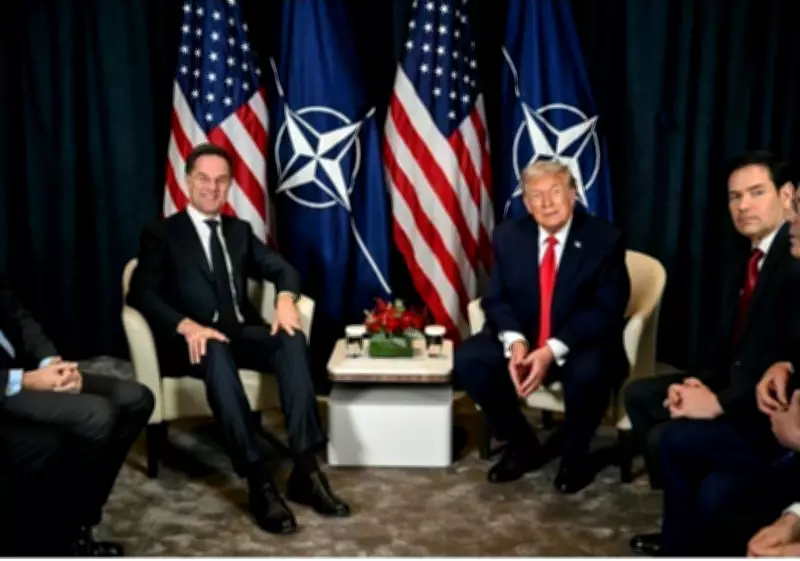
Trump's comments emerged ahead of an anticipated visit by NATO Secretary General Mark Rutte to Washington later this week. "Look, we went to NATO," Trump recalled. "I didn't ask very strongly, I just said, 'Hey, if you want to help, great.'" According to Trump, the response was unequivocal: "'No, no, no we will not help.'"
The former president went further, asserting that NATO members had "actually gone out of their way not to help" during the conflict. He dismissed the alliance as "a paper tiger" that Russian President Vladimir Putin "is not afraid of." These remarks represent the latest in a series of contentious exchanges between Trump and the North Atlantic Treaty Organization during and after his presidency.

Greenland Controversy Resurfaces as Central Issue
Trump revealed that his dissatisfaction with NATO originated with the Greenland dispute. "It all began with — if you want to know the truth — Greenland," he stated. The former president has made no secret of his ambition to acquire Greenland, which is controlled by NATO ally Denmark, despite strong resistance from the alliance and the Danish government.
"We want Greenland," Trump declared. "They don't want to give it to us. And I said, 'bye, bye.'" This territorial ambition has been a persistent theme throughout Trump's political career and continues to influence his perspective on international alliances and agreements.
Broader Critique Extends Beyond NATO Membership
The criticism extended beyond traditional NATO allies to include other nations that have historically maintained close relationships with the United States. Trump specifically mentioned South Korea, Australia, and Japan as countries that failed to provide adequate support during the Iran war.
Conversely, the former president praised several Gulf nations for their assistance during the conflict. He highlighted Saudi Arabia, Kuwait, Bahrain, Qatar, and the United Arab Emirates as countries that demonstrated reliable support when needed.
Upcoming Diplomatic Engagement with NATO Leadership
Despite his harsh criticism, Trump described NATO Secretary General Mark Rutte as "a great person" ahead of their scheduled meeting. Rutte is expected to hold discussions with Trump, along with U.S. Secretary of State Marco Rubio and Defense Secretary Pete Hegseth, during his Washington visit this week.
These diplomatic engagements come at a time of renewed scrutiny regarding America's commitment to international alliances and the future direction of NATO under potential future Trump administration policies. The Greenland issue continues to serve as a symbolic representation of broader tensions between unilateral American interests and multilateral alliance obligations.
The persistent focus on Greenland acquisition and criticism of traditional allies reflects Trump's distinctive approach to foreign policy, which prioritizes bilateral relationships and transactional diplomacy over established multilateral frameworks. As NATO prepares for leadership discussions in Washington, these comments underscore the ongoing debate about the alliance's effectiveness and America's role within it.






