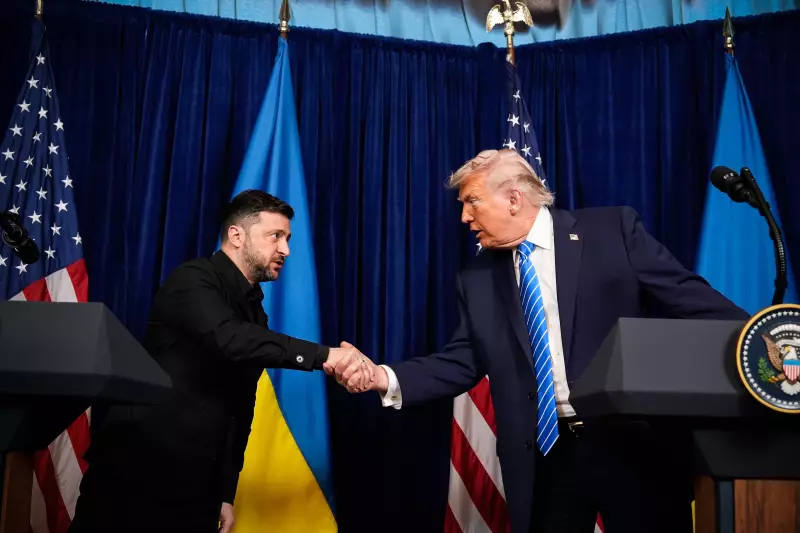
Former U.S. President Donald Trump has stated that Ukraine and Russia are moving closer to a potential peace agreement, a claim met with immediate skepticism from a former top American diplomat with deep experience in the region.
Diverging Views on Diplomatic Progress
The comments, made on December 29, 2025, present a starkly optimistic view of the ongoing conflict. However, John E. Herbst, the former U.S. Ambassador to Ukraine, directly challenged this assessment. In a reaction to the statements from both Trump and Ukrainian President Volodymyr Zelenskyy, Herbst stated he sees "zero indication" from Moscow that it is genuinely interested in peaceful negotiations.
Herbst's perspective carries significant weight given his tenure as ambassador from 2003 to 2006 and his subsequent role as senior director of the Atlantic Council's Eurasia Center. His analysis suggests a deep disconnect between the political rhetoric surrounding peace efforts and the observable actions and signals emanating from the Kremlin.

The Context of the Statements
While the exact details of Trump's remarks were not fully elaborated in the initial report, the implication of imminent diplomatic progress stands in contrast to the continued military engagements and hardened positions that have characterized the war. The former president's assertion adds to the complex and often contradictory narratives about how and when the conflict might end.
President Zelenskyy's own comments, which Herbst was also reacting to, have consistently emphasized Ukraine's conditions for peace, including the restoration of territorial integrity. The juxtaposition of these views highlights the ongoing challenge of finding a diplomatic path forward that is acceptable to both Kyiv and the international community supporting it, while also being something Moscow would genuinely entertain.
Expert Analysis and the Road Ahead
Ambassador Herbst's blunt rebuttal underscores a prevailing concern among many Western analysts and officials: that without a demonstrable shift in Russia's strategic goals, any talk of peace may be premature or even misleading. This expert pushback serves as a reminder of the deep-seated issues at the core of the war, which extend beyond the battlefield to questions of international law, security guarantees, and accountability.
The public disagreement between a former U.S. president and a former senior diplomat also reflects the broader, often politicized, debate over foreign policy direction and the interpretation of geopolitical events. As the conflict continues into another year, the clarity of signals from all parties involved will remain critical for assessing the true prospects for negotiation.
For now, the expert view from Herbst suggests that observers should treat claims of imminent peace with caution, focusing instead on concrete actions and verified diplomatic movements. The path to ending the war appears to remain fraught with significant obstacles, despite optimistic political pronouncements.