

Trump Warns of Summit Delay Over China's Role in Hormuz Crisis
In a significant diplomatic development, former US President Donald Trump has indicated he might postpone his planned summit with Chinese President Xi Jinping if Beijing fails to contribute to efforts aimed at securing the vital Strait of Hormuz. This revelation comes from an exclusive interview with the Financial Times, highlighting escalating tensions as the ongoing US-Israel conflict continues to disrupt global oil supplies and unsettle relations between the world's two largest economies.
Urgent Calls for Chinese Assistance in Key Waterway
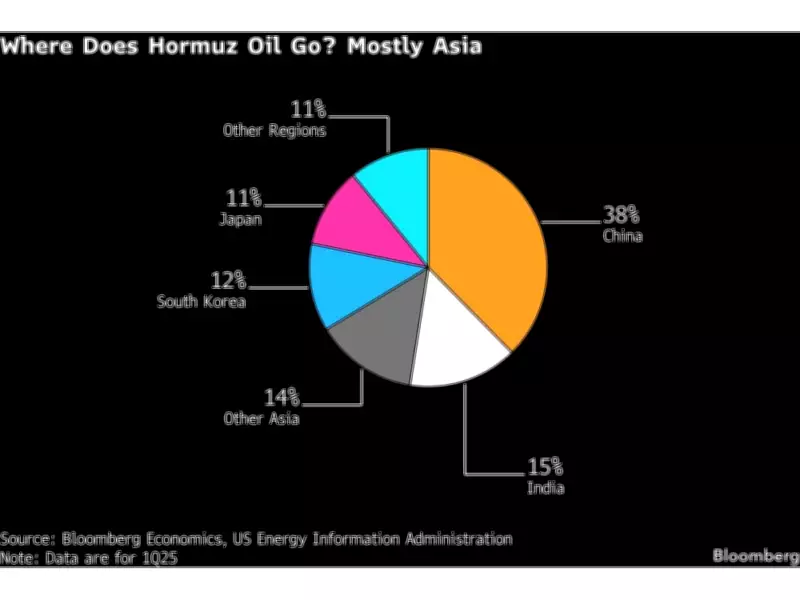
Trump emphasized China's heavy reliance on Middle Eastern oil during his conversation with the Financial Times, reiterating his demand for Beijing to help unblock the strategic strait. Just one day prior to this interview, the Republican leader had publicly appealed to China to join a multinational initiative to deploy naval vessels to the area, through which approximately one-fifth of the world's oil supply passes daily.
"It's only appropriate that people who are the beneficiaries of the strait will help to make sure that nothing bad happens there," Trump stated during the Sunday interview. He added that his scheduled trip to Beijing at the end of the month would be "too late" to address the growing urgency surrounding Iran's increasing control over the critical maritime passage.

China's Cautious Response and Diplomatic Positioning
While Chinese officials have not issued any direct response to Trump's specific request, the state-run Global Times newspaper published a commentary dismissing the proposal as an attempt by the US president to "spread the risk of a war that Washington started and can't finish." The nationalist publication, known for reflecting government perspectives, outlined several reasons why Beijing would likely decline participation in such a military initiative.
At a regular briefing in Beijing, Chinese Foreign Ministry spokesman Lin Jian carefully avoided addressing the question of sending ships to the strait while confirming that both nations remain in communication regarding the potential summit. "Head of state diplomacy plays an irreplaceable role in providing strategic guidance to China-US relations," Lin noted, without providing specific timing details for the leaders' meeting.
Broader Diplomatic Context and Expert Analysis
Trump's comments emerge as US and Chinese trade officials convene in Paris to prepare for the potential summit, with negotiations scheduled to resume this week. The Trump administration has reportedly engaged with allies including the United Kingdom, South Korea, and Japan regarding securing the strait, though most nations have expressed caution about committing resources to an active conflict zone.
According to Wu Xinbo, director at Fudan University's Center for American Studies in Shanghai, "That's his war, not our war." Wu, who has previously advised China's Foreign Ministry, questioned the logic of Chinese involvement: "Why should we send ships there — for what purpose? To join the US and its allies to fight Iran? I don't think it is a wise thing for China to do under the current circumstances."
Chinese officials have consistently criticized Trump's military actions against Iran, a diplomatic ally of Beijing, and appear unlikely to deploy naval assets. This reluctance stems partly from the fact that some oil tankers destined for China continue to navigate the strait successfully. Additionally, China maintains substantial petroleum reserves that could help mitigate any temporary supply disruptions.
Historical Context of Trump's Negotiation Tactics
This diplomatic maneuver follows a familiar pattern in Trump's approach to international negotiations. The former president has frequently employed last-minute threats to cancel agreements as a leverage strategy during delicate diplomatic phases. In a similar incident weeks before a planned meeting with Xi in October, Trump issued comparable warnings accompanied by proposals for significant tariff increases. That particular summit ultimately proceeded as scheduled and resulted in an extension of the trade war truce between the two economic superpowers.

The current situation underscores the complex interplay between energy security, military conflict, and great power diplomacy, with the Strait of Hormuz serving as a critical flashpoint in US-China relations during a period of global economic uncertainty.





