

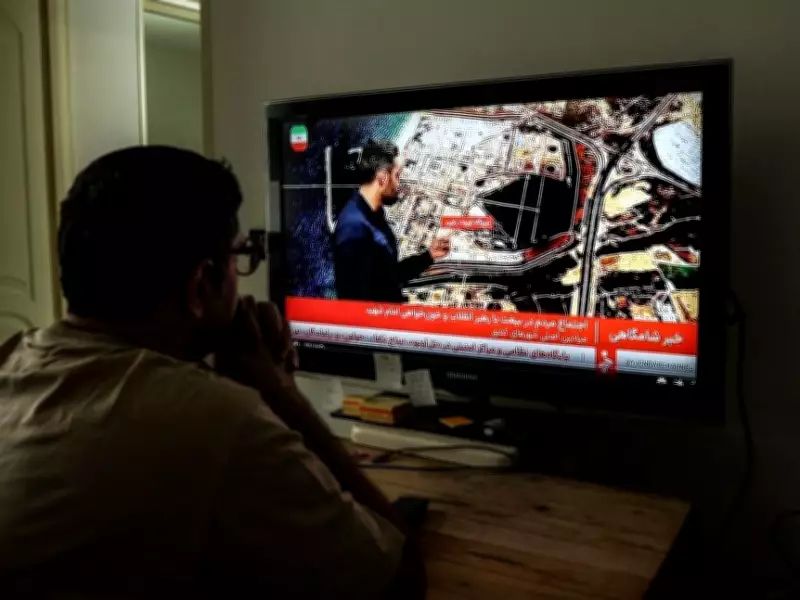
Trump Delays Military Action as U.S. and Iran Engage in Diplomatic Discussions
In a significant development in the ongoing Middle East conflict, U.S. President Donald Trump has announced an extension of the deadline for Iran to reopen the strategically vital Strait of Hormuz. The decision, communicated via Trump's Truth Social platform just hours before the original deadline was set to expire, represents a temporary pause in escalating military tensions.
The American president revealed that Washington and Tehran have been engaged in what he described as "very good and productive conversations" that could potentially lead to "a complete and total resolution" of the conflict. These diplomatic exchanges are scheduled to continue throughout the coming week, according to official statements from the White House.
Military Threats Temporarily Suspended
As part of this diplomatic overture, Trump has agreed to hold off on previously threatened strikes against Iranian power plants for a period of five days. However, this suspension remains conditional, with the president explicitly stating it is "subject to the success of the ongoing meetings and discussions."

The announcement came amid renewed regional hostilities, with the United Arab Emirates reporting that its air defense systems were actively attempting to intercept incoming Iranian fire on Monday afternoon. This ongoing military activity underscores the fragile nature of the current ceasefire arrangement.
Escalating Humanitarian Crisis
The conflict has already exacted a heavy human toll, with current estimates indicating more than 1,500 fatalities in Iran, over 1,000 deaths in Lebanon, 15 casualties in Israel, and 13 U.S. military personnel killed. Additionally, numerous civilians operating in the Gulf region have lost their lives in the hostilities.
The humanitarian impact extends beyond direct casualties, with millions of people in both Lebanon and Iran displaced from their homes due to the fighting. This mass displacement represents one of the most significant refugee crises in the region in recent years.
International Reactions and Regional Diplomacy
Iranian Foreign Minister Abbas Araghchi confirmed prior communications with Turkish counterpart Hakan Fidan, acknowledging Turkey's ongoing role as an intermediary between Tehran and Washington. This diplomatic channel has been utilized previously during tense periods in U.S.-Iran relations.
Meanwhile, Indian Prime Minister Narendra Modi addressed his parliament, expressing serious concerns about how the conflict is straining India's energy security. Drawing parallels to challenges faced during the COVID-19 pandemic, Modi emphasized the need for preparedness as summer approaches and energy demand increases.
"This war is not in the interest of humanity," Modi stated unequivocally. "India is encouraging all sides to end war peacefully." The Indian leader confirmed that the country's power plants maintain adequate coal reserves and that all supply systems are being closely monitored during this period of uncertainty.
Critical Infrastructure at Risk
Among the potential targets should hostilities resume are Iran's major natural gas facilities, including the Damavand Power Plant, Shahid Salimi Neka Power Plant, and Shahid Rajaee Power Plant—all located in proximity to Tehran. These facilities continued operating despite Israel's bombing of Iran's South Pars offshore natural gas field in the Persian Gulf last week.
The disruption of these critical energy installations could have severe consequences for businesses and residential areas in Tehran, potentially affecting everything from gas stations to essential services throughout the capital region.
International Criticism and Blame
China's Middle East envoy, Zhai Jun, offered pointed criticism of the conflict during a press briefing in Beijing. Following a diplomatic tour that included Saudi Arabia, the UAE, Bahrain, Kuwait, and Egypt, Zhai placed responsibility squarely on the United States and Israel for initiating hostilities.

"We all know who started this war," Zhai stated bluntly, describing the conflict as dealing "a heavy blow to the global economy and shipping lanes." The Chinese diplomat employed a traditional saying to illustrate his government's position: "To untie a belt, the person who tied it is needed."
Zhai's delegation experienced the conflict firsthand, witnessing missile interceptions during their travels. "We heard explosions and sirens for the first time in a real war," he recounted, emphasizing the unusual circumstances of their diplomatic mission.
The Chinese envoy reiterated Beijing's consistent call for the United States and Israel to immediately cease military operations and return to negotiation tables to resolve the conflict through diplomatic means.





