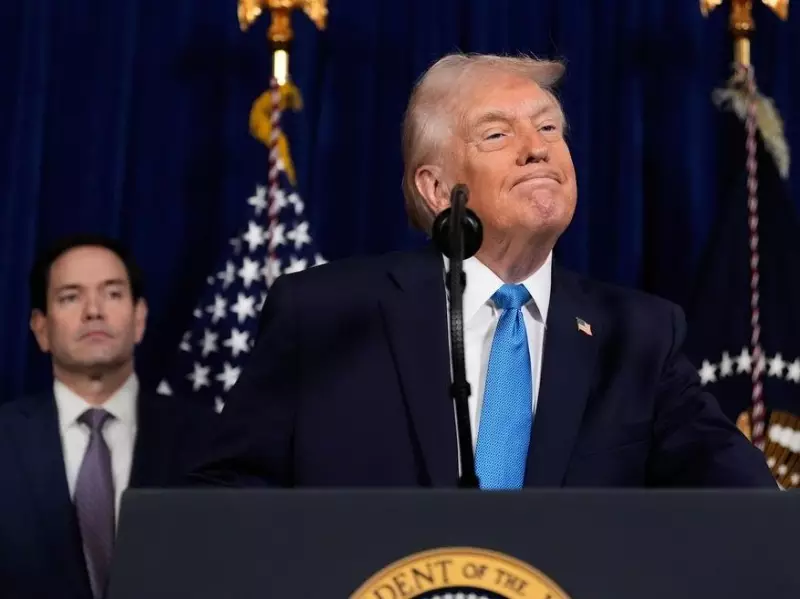
In a significant diplomatic development, U.S. President Donald Trump announced he has called off a second planned military strike against Venezuela. The decision, revealed in a social media post on Friday, January 9, 2026, comes after what Trump described as positive cooperation from the South American nation.
Prisoner Release Prompts Change in Strategy
The key factor leading to the de-escalation was Venezuela's release of a large number of political prisoners. President Trump hailed this move as a very important and smart gesture from Venezuelan authorities. This action follows a U.S. military operation just one week prior, which resulted in the capture of Venezuelan President Nicolas Maduro.
In his statement on Truth Social, Trump directly linked the prisoner release to his decision to cancel the previously expected second Wave of Attacks. He indicated the follow-up assault now looks like it will not be needed. However, he emphasized that U.S. naval assets would remain deployed in the region for safety and security purposes.

High-Profile Detainees Freed
The prisoner release, which began on Thursday, January 8, included several prominent figures. Among those freed were Enrique Marquez, a former presidential candidate, and Biagio Pilieria, a former Venezuelan lawmaker. They had been held at the El Helicoide detention facility in Caracas.
International observers confirmed the releases. Spanish Foreign Minister Jose Manuel Albares stated that five Spanish nationals were among those freed and were already aboard a flight back to Spain. The Venezuelan government framed the releases as a sign of Seeking Peace.
A Swift Pivot Following Initial Attack
This reversal in strategy comes swiftly after the initial U.S. attack. In the aftermath of that operation, President Trump had told reporters the United States was ready to stage a second and much larger attack if needed. He had initially assumed a second wave would be necessary.
However, the success of the first strike, which captured Maduro, and the subsequent conciliatory actions from Venezuela's interim leadership altered the calculus. We actually assumed that a second wave would be necessary. But now it’s probably not, Trump was quoted as saying by CNBC in the days following the initial military action.
The situation remains fluid, with U.S. military forces maintaining a presence offshore. The developments mark a rapid shift from military confrontation to a tentative diplomatic engagement, centered on the confidence-building measure of releasing political detainees.